Artem Voloskovets

Global comparable sales increased 1.3%, missing the 1.39% consensus estimate. Sales growth also fell short of forecasts in each of the company’s three geographic divisions.
| Metric | Reported | Estimate |
| Adjusted EPS | $3.38 | $3.32 |
| Revenue | $7.10B | $7.12B |
| U.S. comparable sales | +0.8% | +0.93% |
| International Developmental Licensed Markets | +1.9% | +2.05% |
| International Operated Markets | +1.5% | +1.53% |
| Global comparable sales | +1.3% | +1.39% |
Bar chart comparing reported and estimated adjusted EPS, revenue, global comparable sales and U.S. comparable sales.
The quarter produced a split result: earnings exceeded expectations, while revenue and comparable sales came in slightly below consensus.
U.S. sales rose just 0.8%
Comparable sales in the United States increased 0.8%, making it McDonald’s slowest-growing geographic segment during the quarter. The result also fell below the 0.93% expected by analysts. For McDonald’s, even a small slowdown in the United States matters because the division is the company’s largest market and a major source of operating profit.
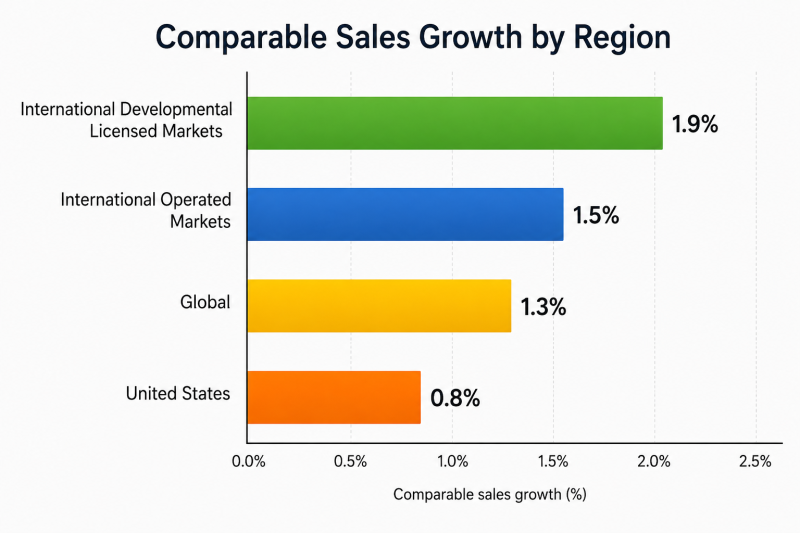
The gap between the United States and international markets was modest but consistent. Both international divisions grew faster than the domestic business, although neither reached analyst expectations.
Higher spending can mask weaker traffic
Comparable sales measure changes in revenue at restaurants open for at least 13 months. They can rise because more customers visit, because customers spend more per order, or through a combination of both.
This distinction is important for McDonald’s after several years of menu-price increases across the restaurant industry. Higher average checks can support sales even when transaction volumes are flat or declining.
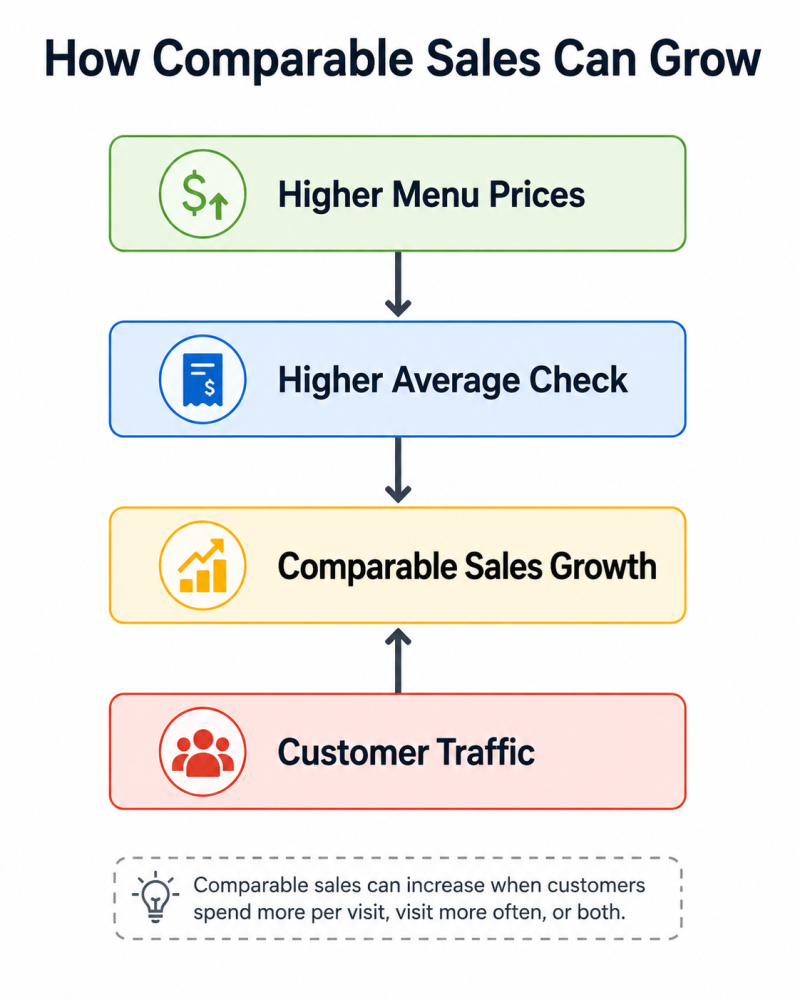
Price-led growth has limits. Consumers can reduce visit frequency, trade down to cheaper items or switch to competitors when the perceived value of a meal deteriorates.
That risk is most visible among lower-income customers, a group that has historically been central to McDonald’s value proposition.
Read More: Amazon's Biggest Rally Since 2012 Wasn't About Earnings — It Was About AI Finally Paying Off
International markets outpaced the United States
International Operated Markets generated 1.5% comparable sales growth, narrowly below the 1.53% estimate.
International Developmental Licensed Markets grew 1.9%, compared with the 2.05% expected by analysts. This segment includes markets operated largely by developmental licensees and affiliates rather than directly by McDonald’s.
The international results did not offset every shortfall, but they prevented the weaker U.S. performance from pulling global comparable sales lower. Geographic diversification remains important when consumer demand differs across regions.
Skye Anderson takes control of McDonald’s USA
McDonald’s also named Skye Anderson President of its U.S. division. The appointment places new leadership over the company’s largest market at a time when domestic sales growth is trailing international operations. The immediate priorities are likely to include restaurant execution, menu value, service speed and customer traffic.
The leadership change does not alter the second-quarter figures, but it increases the importance of upcoming U.S. performance. Investors will be watching whether the division can accelerate sales without relying heavily on further price increases or margin-reducing promotions.
Traffic matters more than the six-cent earnings beat
McDonald’s exceeded the adjusted EPS estimate by $0.06, but missed revenue expectations by $20 million and fell slightly short on comparable sales across every reported division.
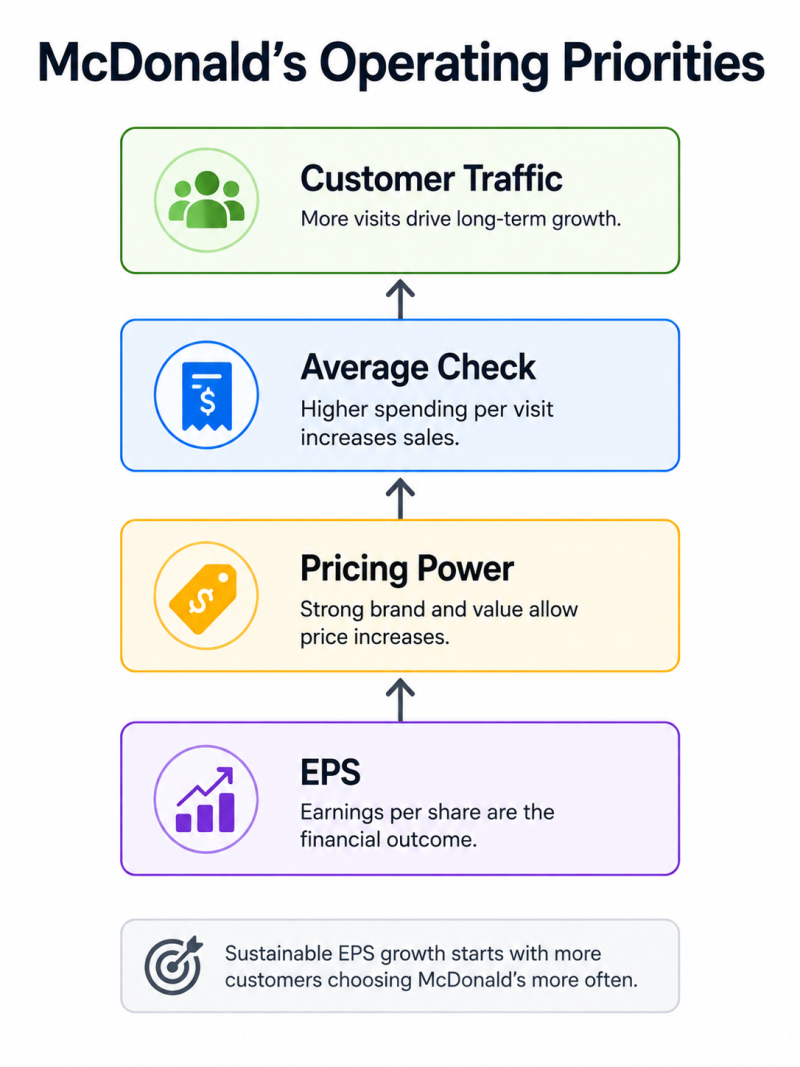
EPS shows the final financial outcome. Traffic indicates whether the restaurant network is attracting more customers. If traffic improves, McDonald’s can grow sales with less dependence on pricing. If traffic remains weak, the company must choose between accepting slower growth, increasing promotions or continuing to raise average checks.
The second-quarter report showed that McDonald’s can still protect earnings. The next test is whether its U.S. restaurants can produce stronger demand.
 Artem Voloskovets