
 Sergey Diakov
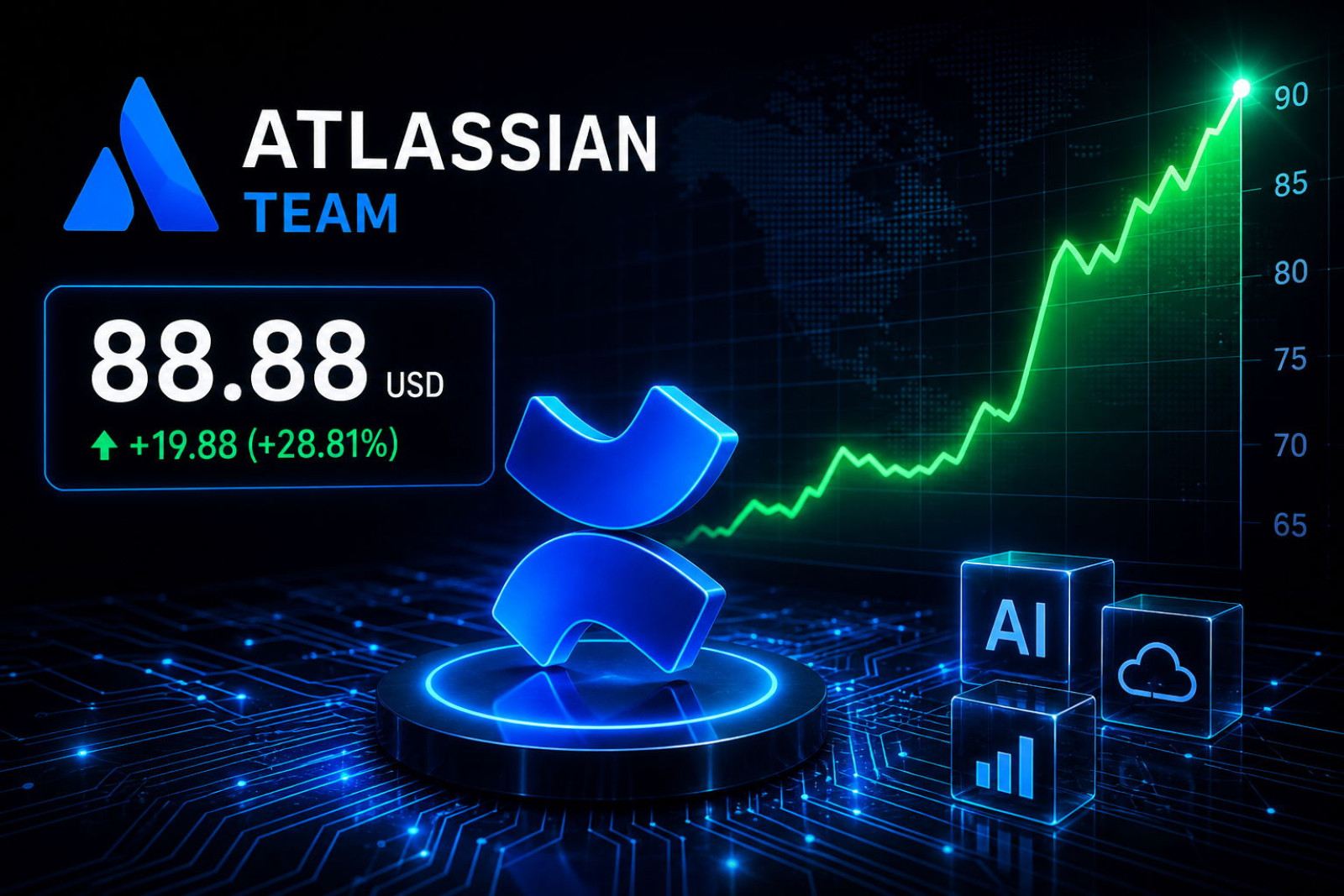
Atlassian (TEAM) is no longer just another earnings story - it is becoming a signal. Over the past several sessions, the stock has surged nearly 30%, breaking out of a prolonged consolidation range and forcing a reassessment of the SaaS narrative.
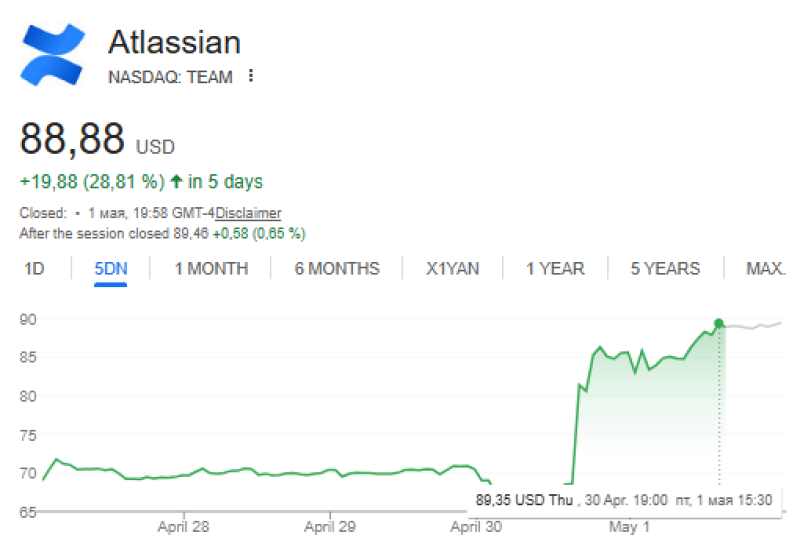
The move reflects a deeper shift in how the market interprets artificial intelligence in enterprise software. For months, investors questioned whether AI could compress the value of SaaS platforms by replacing workflows with autonomous agents. Atlassian’s performance is now challenging that assumption.
Technical Breakout Confirms Repricing
A closer look at the chart reinforces the significance of the move. TEAM had been trading in a defined range around the low $70s, showing limited momentum and clear resistance. The recent breakout pushed the stock into the high $80s, where it is now attempting to consolidate. This type of move expansion from a tight range followed by stabilization near new highs is often associated with structural repricing rather than short-term speculation. If the stock holds above the previous resistance zone, it may confirm a new support level and a shift in market positioning.
Importantly, Atlassian is not moving in isolation, but it is moving differently. Compared to other SaaS names such as Salesforce (CRM) and ServiceNow (NOW), which have shown more gradual recoveries, TEAM’s price action is sharper and more decisive. Meanwhile, companies like HubSpot (HUBS) have also benefited from AI-driven narratives, but without the same magnitude of re-rating in a compressed timeframe.
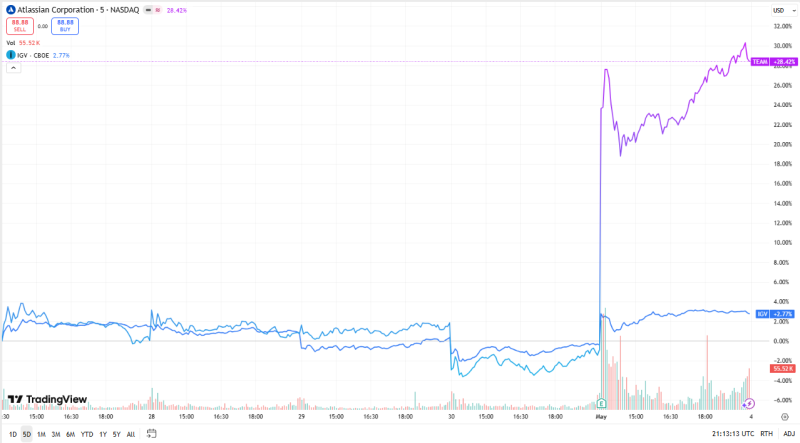
This divergence becomes even more apparent when compared to the broader software sector. While the iShares Expanded Tech-Software ETF (IGV) gained only around 2–3% over the same period, TEAM surged by more than 25%, highlighting a clear gap between individual лидеров и сектором в целом. This suggests that investors are not broadly rotating into SaaS, but are instead selectively repricing companies with stronger AI monetization potential.
AI Is Driving a New SaaS Cycle
TEAM sharply outperformed the broader software sector, reinforcing the idea of selective repricing rather than a broad SaaS recovery.
This leads to a broader conclusion: Atlassian may be acting as an early indicator of a new SaaS cycle. Its product ecosystem is deeply embedded in enterprise workflows, making it a natural layer for AI integration. As businesses look to enhance productivity rather than replace entire systems, platforms like Atlassian can capture incremental demand through AI-enhanced features.
The key shift is conceptual. The market narrative appears to be evolving from “AI replaces software” to “AI monetizes software.” Instead of reducing the need for SaaS, AI is increasing its value by enabling higher pricing power, deeper integration, and expanded use cases. This transition changes how investors evaluate the entire sector.

At the same time, expectations are rising. The market is becoming more selective, and not all SaaS companies will benefit equally. Execution, product depth, and the ability to convert AI capabilities into measurable revenue will determine which names participate in this potential re-rating.
 Sergey Diakov


