Artem Voloskovets
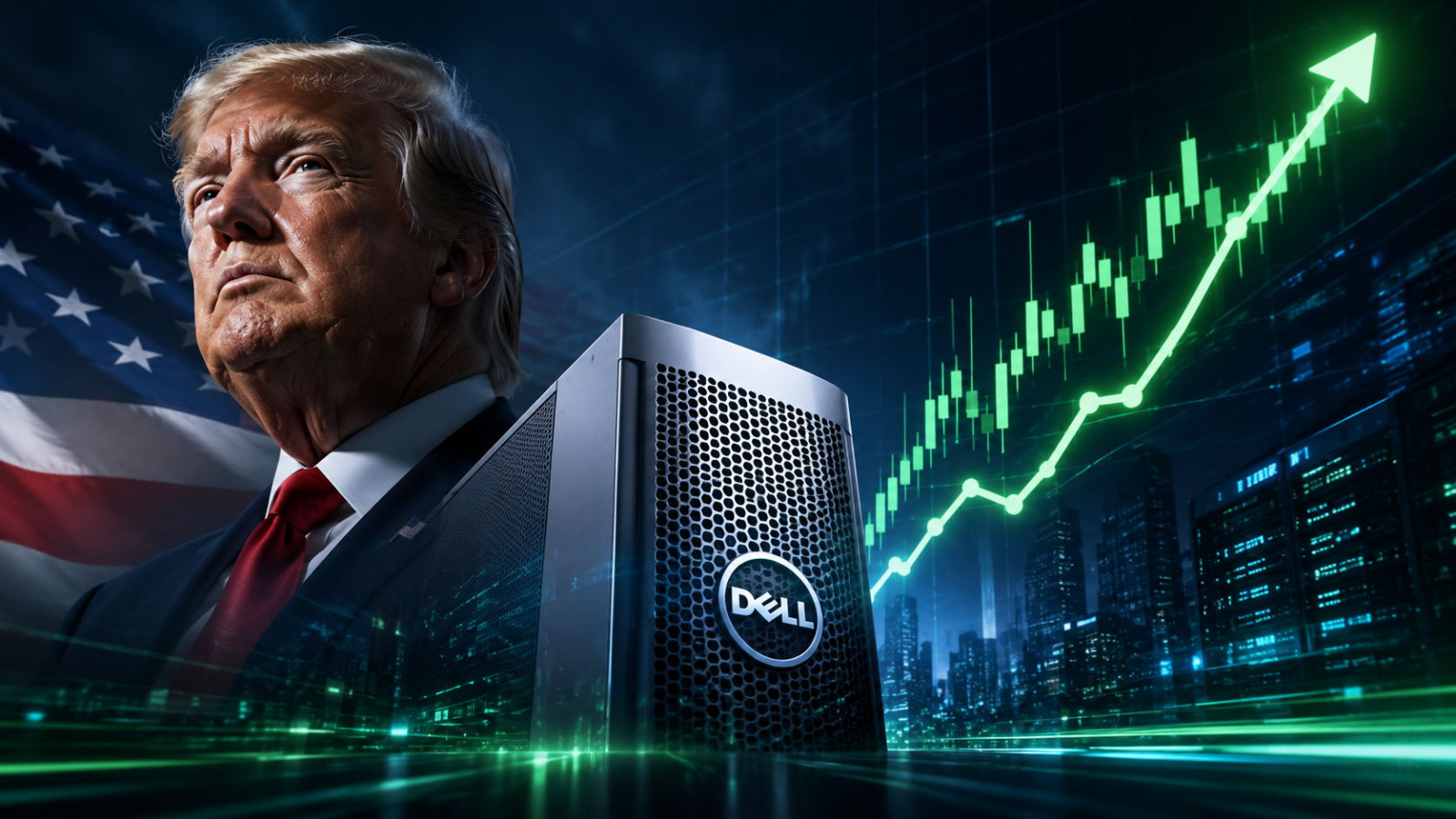
There was no earnings release, no guidance update and no business announcement. Nevertheless, the market quickly reassessed the stock. The reaction demonstrates how modern equities increasingly respond to changes in perceived risk rather than changes in operating performance.
A $37 Swing in One Trading Session
The session initially looked ugly for Dell. Shares slid from roughly $427 to an intraday low near $387, a decline of almost 9%. After Trump's remarks, the trend reversed almost immediately. Buyers pushed the stock back to around $424, recovering roughly $37 per share and erasing nearly the entire selloff.
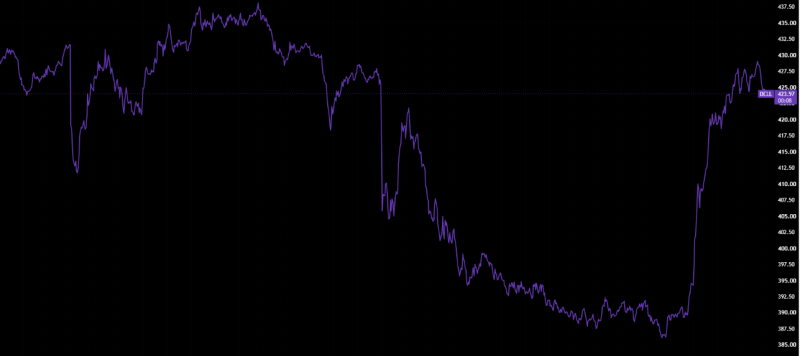
The rebound wasn't driven by new business information. Dell's AI server backlog didn't change. Revenue projections stayed intact. Margins and cash flow were exactly where they had been an hour earlier. Only the market's perception changed.
Pricing Tomorrow, Not Today
Stocks rarely wait for financial statements. Every headline forces investors to reconsider the same question:
Has future risk increased or decreased?
Trump's comments were widely interpreted as reducing uncertainty surrounding Michael Dell's involvement with the administration's savings initiative. Whether that assumption ultimately proves correct is almost secondary. Once investors concluded that one source of uncertainty had eased, the stock was repriced accordingly. This is how markets increasingly behave. Expectations move first. Financial data usually catches up later.
Politics Has Become Another Market Variable
Technology companies no longer operate in isolation from Washington. Export controls influence semiconductor sales. Industrial policy shapes investment cycles. Government procurement affects demand. Regulatory decisions alter competitive dynamics.
Political developments have therefore become part of everyday valuation. Dell's rally wasn't driven by stronger fundamentals. Investors simply assigned a lower probability to political risk. That may sound like a subtle distinction, but markets routinely add or erase billions of dollars in market value based on exactly that calculation.
One Headline Inside a Decade-Long Trend
The intraday move was dramatic. The long-term chart tells a different story.
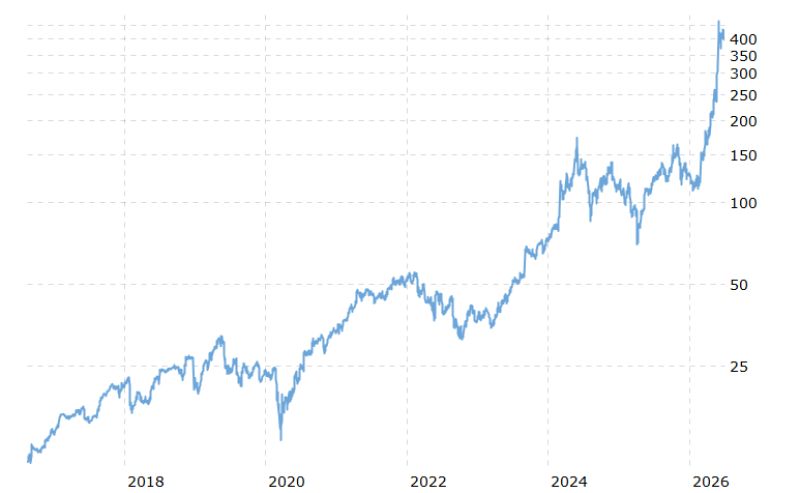
Dell has risen from single-digit prices in 2016 to more than $400 in 2026, a gain of roughly 50x over ten years. The path was far from smooth. Sharp corrections in 2020, 2022, 2024, and 2025 repeatedly interrupted the advance, yet every major pullback eventually gave way to new highs.
The driver has been consistent throughout that period: growing demand for enterprise infrastructure and AI hardware. Viewed against that backdrop, the latest political headline looks less like the beginning of a new chapter than another catalyst accelerating an existing trend.
Why Michael Dell Entered the Headlines
The White House announcement explains why Dell became part of the story.
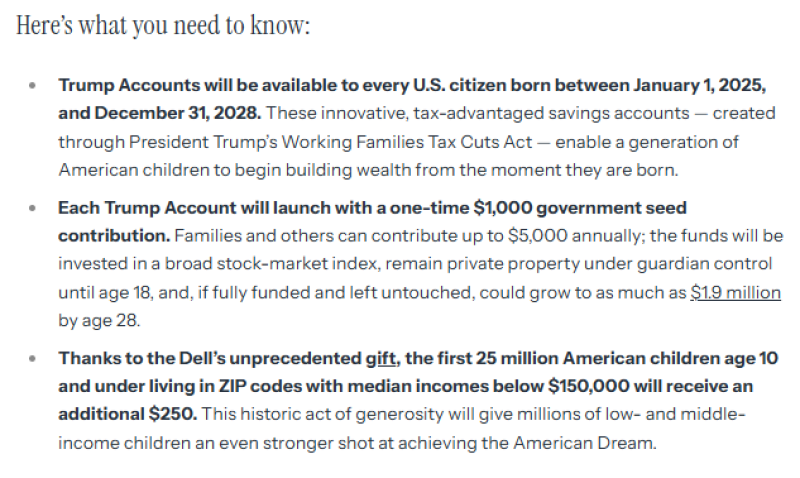
The Trump Accounts program provides every eligible child born between January 1, 2025, and December 31, 2028, with a $1,000 government-funded investment account. Families may contribute up to $5,000 annually, with the money invested in broad U.S. stock market index funds.
The administration also highlighted what it described as an unprecedented contribution from the Dell family, allowing the first 25 million eligible children in qualifying ZIP codes to receive an additional $250. Trump's statement about repaying that contribution became the immediate trigger for the rally. The market responded to the signal, not the mechanics of the program.
Confidence Trades Faster Than Cash Flow
Markets digest information far more quickly than businesses change. Algorithms scan headlines in milliseconds. Institutional investors adjust risk models almost instantly. Momentum traders reinforce the initial move before detailed analysis even begins.
- Dell's business did not improve over the course of an afternoon.
- Its competitive position was unchanged.
- Its earnings outlook remained the same.
Only confidence improved, and the stock reflected that shift almost immediately.
What Happens Next
Whether this rally lasts depends on factors unrelated to political headlines. Investors will ultimately focus on enterprise AI spending, server demand, execution within Dell's Infrastructure Solutions Group, margins, free cash flow, and future guidance. Those variables, not political commentary, will determine where the stock trades over the next several quarters.
The Market's Real Message
The most interesting part of Dell's rally wasn't Trump's statement. It was the speed with which investors changed their assessment of risk. Within hours, the stock plunged from about $427 to $387, then recovered to roughly $424 after a single political comment. At the same time, the decade-long chart shows a business that has already appreciated from under $10 to over $400, driven by years of expanding exposure to enterprise infrastructure and artificial intelligence. One chart captures a change in sentiment.
The other captures a decade of improving fundamentals. Markets often confuse the two in the short term. Over time, they almost always separate them.
 Artem Voloskovets