Peter Smith

Both measures should have pushed prices lower. Instead, futures rose, showing that the market remains focused on tight physical diesel supply.
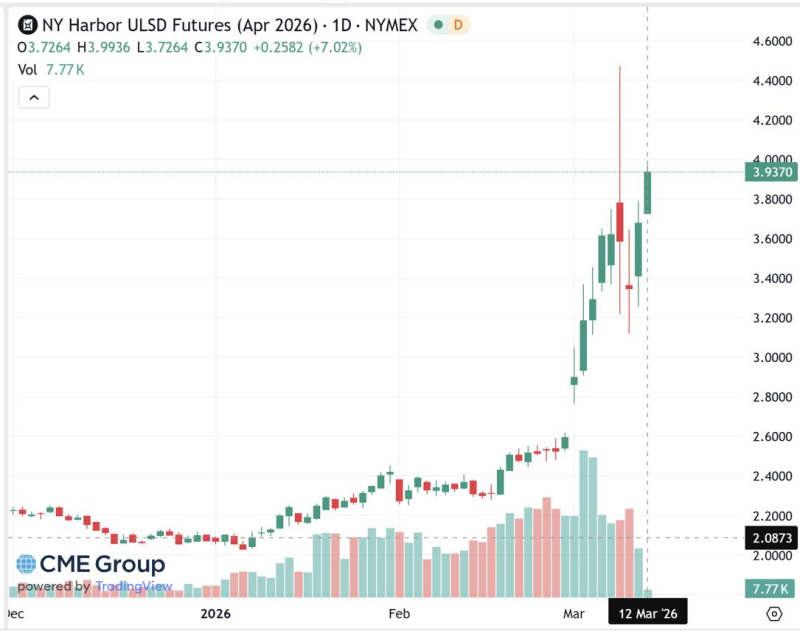
Caption: U.S. ULSD futures remain elevated despite measures aimed at increasing supply.
Russian Supply Is Too Small to Change the Balance
The U.S.-Russia arrangement is expected to release more than 300,000 metric tons of diesel initially, followed by around 500,000 tons and potentially another 1 million tons later.
The initial volume covers only a few days of U.S. demand. The more important issue is delivery. Russian refining disruptions, tanker availability and sanctions-related logistics still limit how quickly fuel can reach the market. Announced supply is not the same as immediately available supply.
Low Inventories Keep Prices High
The U.S. Energy Information Administration reported that East Coast distillate inventories were 32% below their five-year seasonal average in September 2026.
The EIA expects stocks to remain 20% to 30% below normal through the winter.
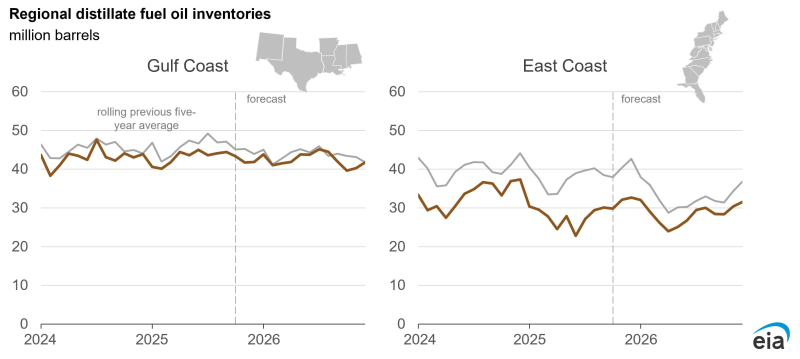
Caption: East Coast distillate inventories remain well below seasonal norms.
The East Coast depends heavily on imports and Gulf Coast shipments, making U.S. prices sensitive to competition from Europe and Asia.
Tax Relief Does Not Create Fuel
Tax relief can lower the cost of an eligible gallon, but it does not increase the number of gallons available. In a tight market, the scarcity premium can remain high even after taxes are reduced. That is why dyed-diesel relief has limited effect on benchmark futures.
Refining Is the Main Bottleneck
Shell reported a refining margin of about $42 per barrel in Q3 2026, up from $24 per barrel in Q2 — a 75% increase.
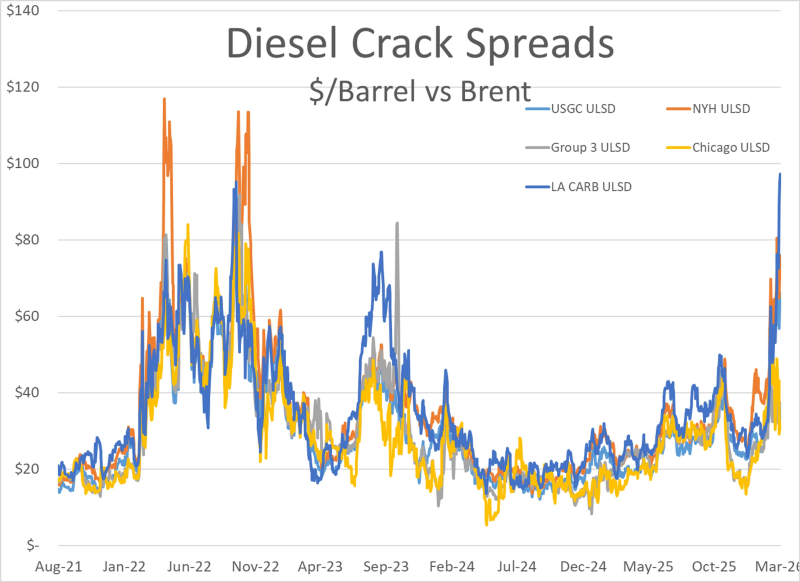
Caption: Refining margins have surged as diesel becomes more valuable relative to crude.
The increase shows that the shortage is concentrated in refined products, not simply crude oil.
Crude Down, Diesel Up
On October 13, Brent crude traded near $105.98 per barrel and WTI near $93.74, while diesel futures rose to $4.8239 per gallon. That divergence points to downstream constraints.
Diesel price = crude cost + refining margin + freight + inventory premium + geopolitical risk + tax
Current policy measures affect only some of those components.
What Has to Change
A sustained decline in diesel prices would likely require:
- Higher distillate inventories.
- Sustained Russian deliveries.
- More refinery throughput.
- Lower crack spreads and freight costs.
- Reduced geopolitical disruption.
The two most important indicators are inventories and crack spreads.
Bottom Line
The rise to $4.8239 per gallon shows that tax relief and limited additional Russian supply have not solved the core problem. East Coast stocks remain far below normal, while refining margins are elevated. Until inventories rebuild and refinery constraints ease, diesel prices are likely to remain high.
 Peter Smith