Marina Lubimova
The KOSPI is approaching 9,000. The KRX 300 is setting new highs. Foreign investors continue to add exposure. None of those developments are unusual on their own. What stands out is that they are happening simultaneously with one of the highest volatility readings of the past year.
The combination suggests investors are not merely responding to stronger earnings or improving economic data. They are reassessing the value of the market itself.
Prices Are Rising Faster Than Confidence
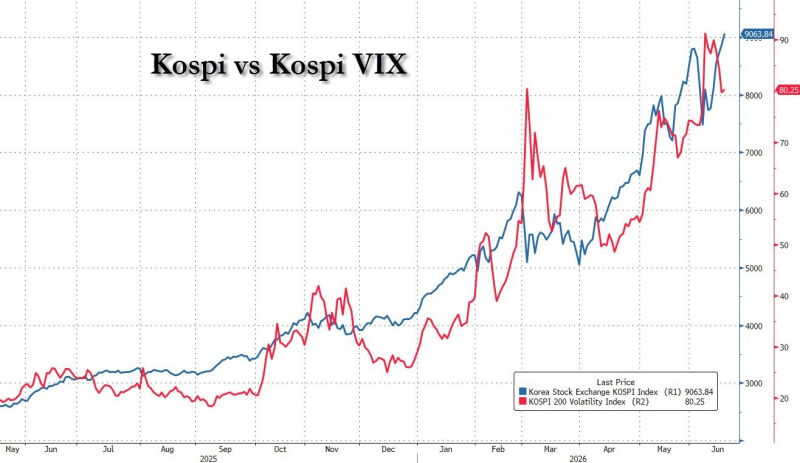
The KOSPI has climbed from roughly 3,800 in mid-2025 to more than 9,000. Over the same period, the KOSPI 200 Volatility Index moved toward 80 instead of declining.
In a conventional rally, volatility falls as conviction grows. Here, prices and volatility have risen together. That usually signals a market searching for a new equilibrium. Investors are buying aggressively, but they have not reached a consensus on what Korean equities are worth.
The result is larger swings, faster repricing, and continued demand for hedging despite record highs.
Valuations Are Doing More Work Than Earnings
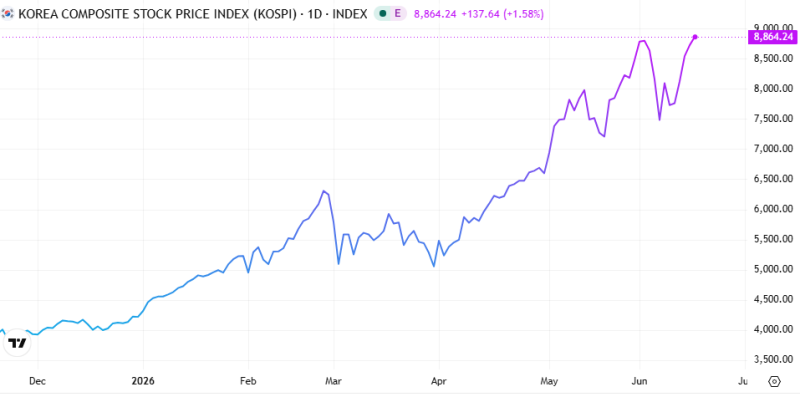
The shape of the move matters. The KOSPI spent much of 2025 advancing gradually from around 4,000 to 6,000. The character of the rally changed in spring 2026, when the index accelerated from roughly 6,500 to nearly 8,900 within weeks.
Earnings rarely change fast enough to explain moves of that magnitude. Valuation multiples do.
Markets rise because profits improve. They surge when investors decide those profits deserve a higher price. Recent price action suggests the second force has become more important than the first.
The question is no longer whether Korean companies are earning more. The question is whether investors believe those earnings deserve a premium.
Foreign Capital Is Taking The Other Side
The latest trading session illustrates the shift. Foreign investors recorded net purchases of approximately KRW 1.3 trillion. Institutions and retail investors were net sellers. That imbalance is often seen when a market begins attracting global capital after a prolonged period of relative neglect.
Domestic investors tend to focus on recent gains and lock in profits. International investors focus on how a market compares with alternatives around the world. The distinction matters because global asset allocators have far larger pools of capital than local traders.
Foreign investors were slightly negative in KOSPI 200 futures while remaining buyers of cash equities, indicating they are willing to own the market while managing short-term risk. That behavior reflects positioning rather than speculation.
The Advance Is Broadening
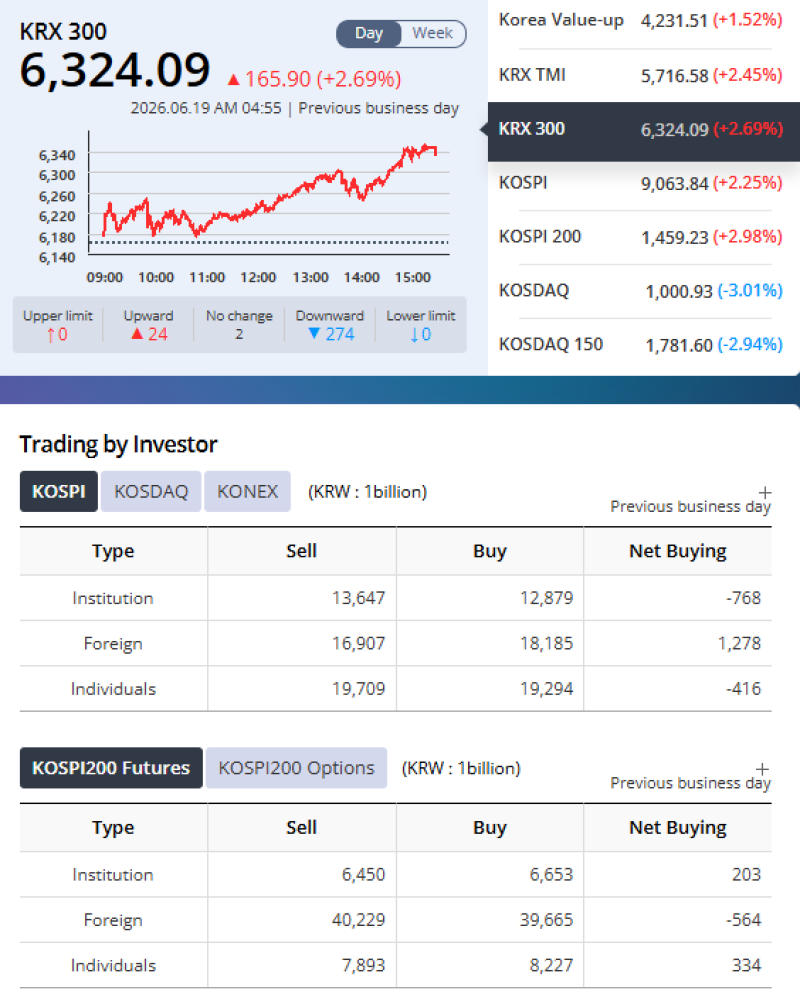
The KRX 300 gained nearly 2.7% in the latest session and reached a new high above 6,324.
That strengthens the case that this move extends beyond a handful of heavyweight stocks.
A narrow rally led exclusively by semiconductor companies would be a sector story. Strength across the broader KRX 300 points to something wider. More industries are participating. More companies are contributing. The market is becoming less dependent on a small group of winners.
Breadth does not guarantee durability, but it usually provides a stronger foundation than concentration.
Volatility Is Measuring Uncertainty, Not Fear
High volatility is often interpreted as a warning sign. In this case, it may be describing something different. Markets become volatile when investors disagree. The larger the disagreement, the larger the price swings.
Current trading suggests investors are debating where Korean equities belong in the global hierarchy of markets. Some see a temporary momentum surge. Others see a market that spent years trading below its potential and is now catching up. As long as that debate continues, volatility is likely to remain elevated.
 Marina Lubimova