Marina Lubimova

The September LME contract traded at a premium of more than $260 per metric ton over October futures, the widest one-month spread since the 2021 copper squeeze. Buyers are paying substantially more for copper available now than for delivery just one month later.
Behind that spread is a rapid drawdown in exchange stocks.
Half of LME Stocks Are Already Spoken For
LME copper inventories have fallen for 42 consecutive days to 204,975 metric tons. Nearly half of that metal has already been earmarked for withdrawal, leaving a much smaller pool available for new buyers.
Four numbers capture the squeeze:
- $260+ per ton — September premium over October
- 204,975 tons — total LME inventory
- Nearly 50% — already earmarked for withdrawal
- 42 days — consecutive decline in stocks
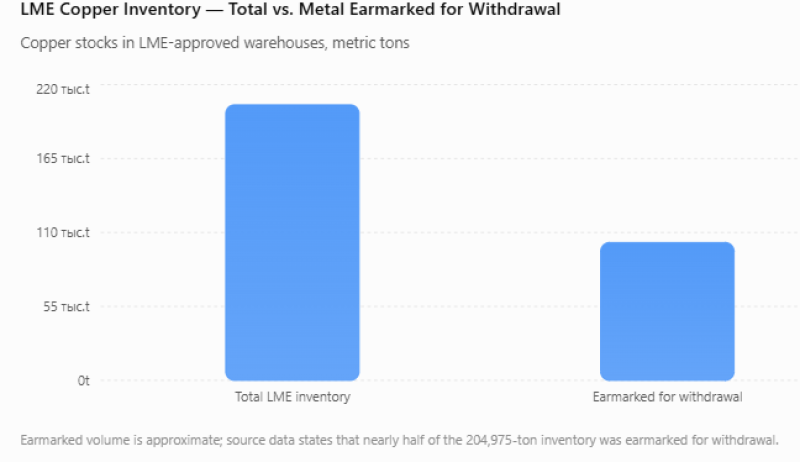
The chart should split the 204,975 tons into roughly 102,500 tons earmarked for withdrawal and 102,500 tons not yet earmarked. The split is approximate because the reported figure is “nearly half,” not an exact tonnage.
The shortage is especially relevant for traders short nearby futures. If those positions require delivery, traders must either obtain physical copper or close them. With fewer tons available, both options become more expensive.

The US and China Are Pulling Metal Away
Copper is moving toward markets where it commands a higher price. US buyers have been building positions amid expectations of possible tariffs on refined copper. The prospect of tariffs creates an incentive to move metal into the country before potential duties change import economics.
China is pulling copper for a different reason. Smelters are cutting production as supplies of copper concentrates tighten. Lower domestic refined output increases the need to secure metal from elsewhere.
The same tons are therefore being pulled in three directions: LME warehouses, the US and China. That competition helps explain why LME stocks have kept falling despite copper already trading near record levels.
An LME Squeeze Is Not a Global Shortage
The inventory data do not mean the world is running out of copper. Metal held outside LME warehouses can return if London prices become attractive enough. Trade flows can shift, and high prices can reduce demand.
The current stress is more specific: copper available for immediate delivery through the LME system is becoming scarce. The $260 spread is the clearest evidence. If supply for September were comfortable, buyers would have little reason to pay such a large premium over October.
For short sellers, that creates the risk of a feedback loop: shrinking inventories make delivery harder, shorts buy back contracts or compete for physical metal, and nearby prices rise further.
The Route to $14,500
The immediate squeeze sits on top of a slower supply problem. Mine supply remains constrained while copper consumption is being supported by grid expansion, renewable energy, electric vehicles and data-center construction. Unlike exchange inventories, new mine capacity cannot appear in weeks or months.
That leaves two separate drivers for higher prices: a shortage of immediately deliverable metal and limited growth in future supply. Analysts see prices potentially moving above $14,500 per ton if the squeeze persists. The next signal will come from inventories and spreads rather than long-term demand forecasts.
If LME stocks stabilize and the September-October premium contracts, physical pressure is easing. If inventories continue falling and backwardation moves beyond $260, the market is getting tighter.
At that point, $14,500 would not depend on EV or data-center demand arriving years from now. The catalyst would already be visible in LME warehouses.
 Marina Lubimova