Peter Smith
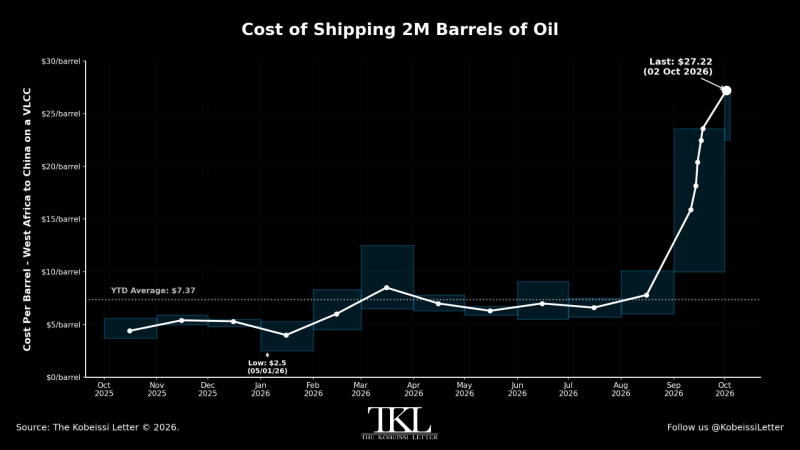
According to The Kobeissi Letter, freight reached $27.22 per barrel on October 2, 2026. For a typical VLCC cargo of about 2 million barrels, that equals roughly $54.4 million per shipment.
From $15 Million to More Than $54 Million
| Metric | Earlier level | Latest |
| Freight cost per barrel | $7.37 YTD average | $27.22 |
| Cost for 2M barrels | $14.74M | $54.44M |
| 2026 low | ~$2.50/barrel | $27.22 |
| Cost at 2026 low | ~$5M | $54.44M |
The latest rate is about 3.7 times the 2026 average and almost 11 times the 2026 low.
Last: $27.22 — The Kobeissi Letter, Oct. 2, 2026
The Spike Happened in September
For most of the past year, West Africa-to-China freight stayed below $10 per barrel. In September, rates moved rapidly from around $10 to more than $27 per barrel, pointing to a sharp tightening in the VLCC tanker market.
A Typical Cargo Is About 2 Million Barrels
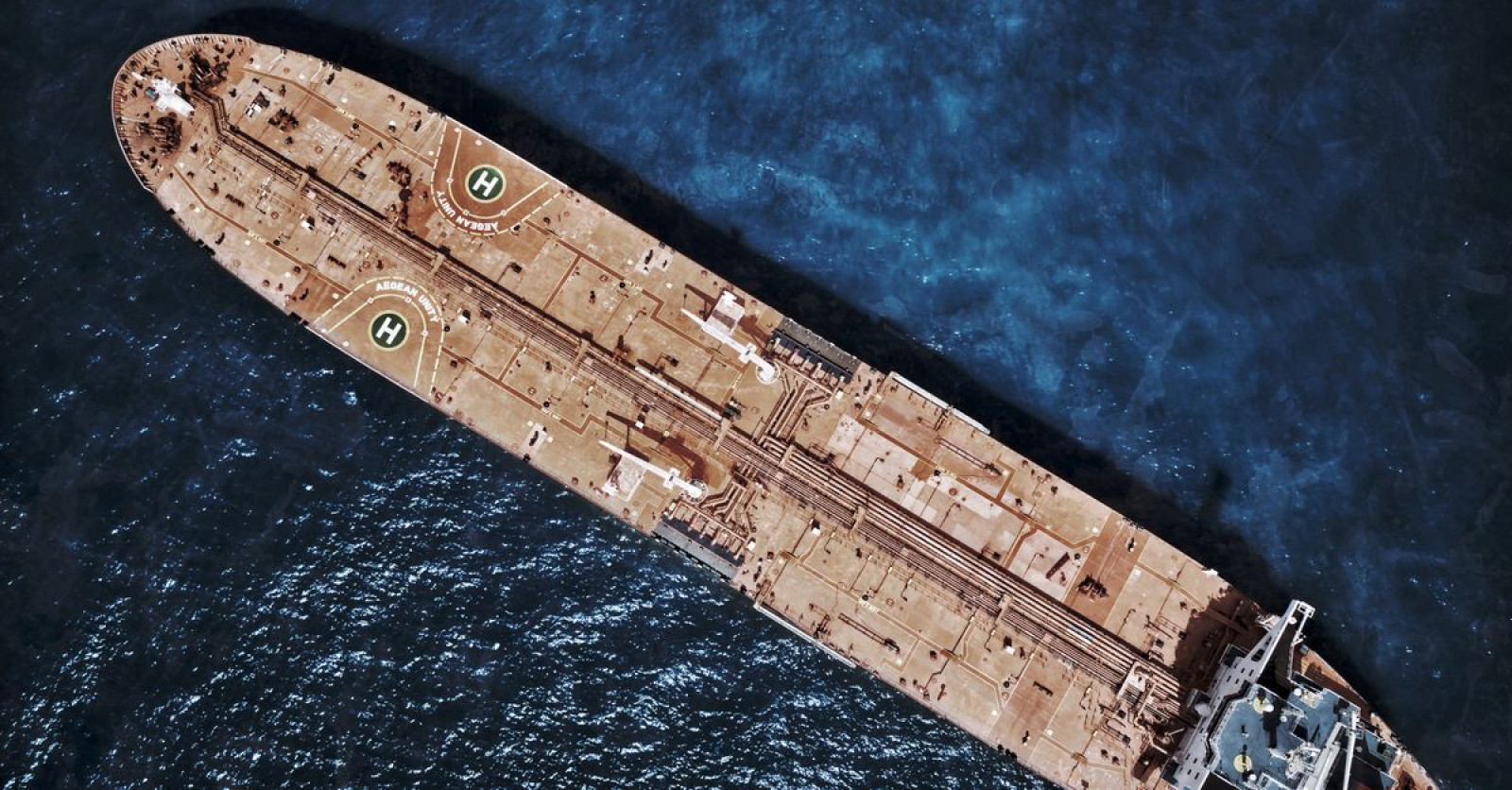
A Very Large Crude Carrier used on this route typically carries approximately:
- 2 million barrels of crude
- 300,000–320,000 DWT
The West Africa-to-China VLCC route is commonly tracked as TD15.
Tanker Availability Has Become the Bottleneck
The main pressure is coming from limited effective tanker supply. Longer voyages, vessel delays, tighter VLCC availability and higher insurance or geopolitical risk costs can all push freight rates higher.
Freight Is No Longer a Minor Cost
At $27.22 per barrel, shipping has become a substantial part of the delivered oil price.
For example:
- Oil price: $100/barrel
- Freight: $27.22/barrel
- Delivered cost before other expenses: about $127.22/barrel
For a 2-million-barrel cargo, freight adds about $54.4 million. Earlier in 2026, the same shipment cost about $14.7 million at the YTD average and roughly $5 million near the yearly low.
Higher Freight Can Reshape Crude Flows
The cost of moving 2 million barrels of crude from West Africa to China has risen from roughly $5–15 million earlier in 2026 to more than $54 million now.
If rates remain elevated, refiners may switch suppliers, reduce purchases of long-haul crude or accept lower margins.
 Peter Smith