Alex Dudov

The unemployment rate edged up from 4.1% to 4.2%, while average hourly earnings increased only 0.1% month over month and 3.0% from a year earlier.
September’s payroll gain was not only much weaker than August’s. The previous two months were also revised down by a combined 60,000 jobs. July was cut from +21,000 to −10,000, while August was revised from +162,000 to +133,000.
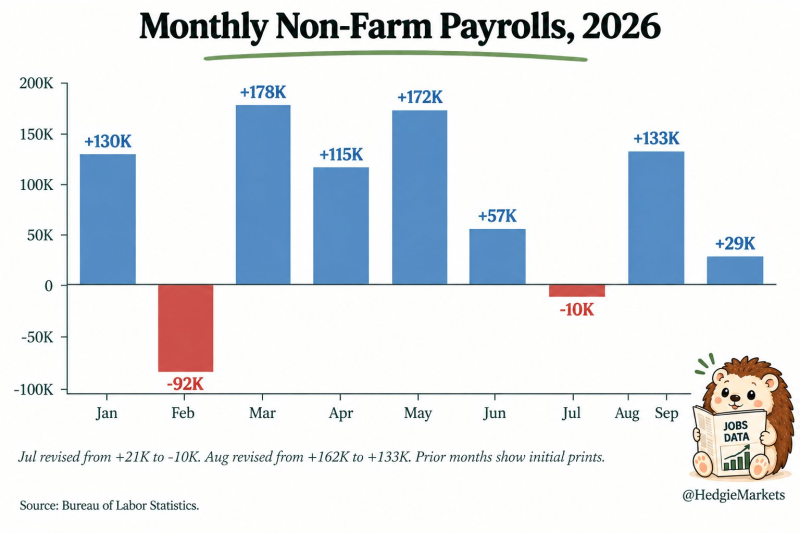
Chart: Monthly U.S. nonfarm payroll changes in 2026. July and August reflect revised figures; earlier months show initial prints
September vs. August
| Metric | August 2026 | September 2026 | Change |
| Nonfarm payrolls | +133K | +29K | −104K |
| Private payrolls | +89K | +46K | −43K |
| Goods-producing jobs | +34K | +18K | −16K |
| Private services | +55K | +28K | −27K |
| Government | +44K | −17K | −61K |
| Unemployment rate | 4.1% | 4.2% | +0.1 pp |
The chart makes the slowdown particularly clear: after a rebound to +133,000 in August, payroll growth fell to only +29,000 in September. July was also revised into negative territory at −10,000, leaving two of the latest three monthly readings exceptionally weak.
The biggest month-to-month swing came from government employment. Government payrolls moved from a 44,000-job gain in August to a 17,000 decline in September, a 61,000-job reversal.
Read more about:

 Alex Dudov