Marina Lubimova
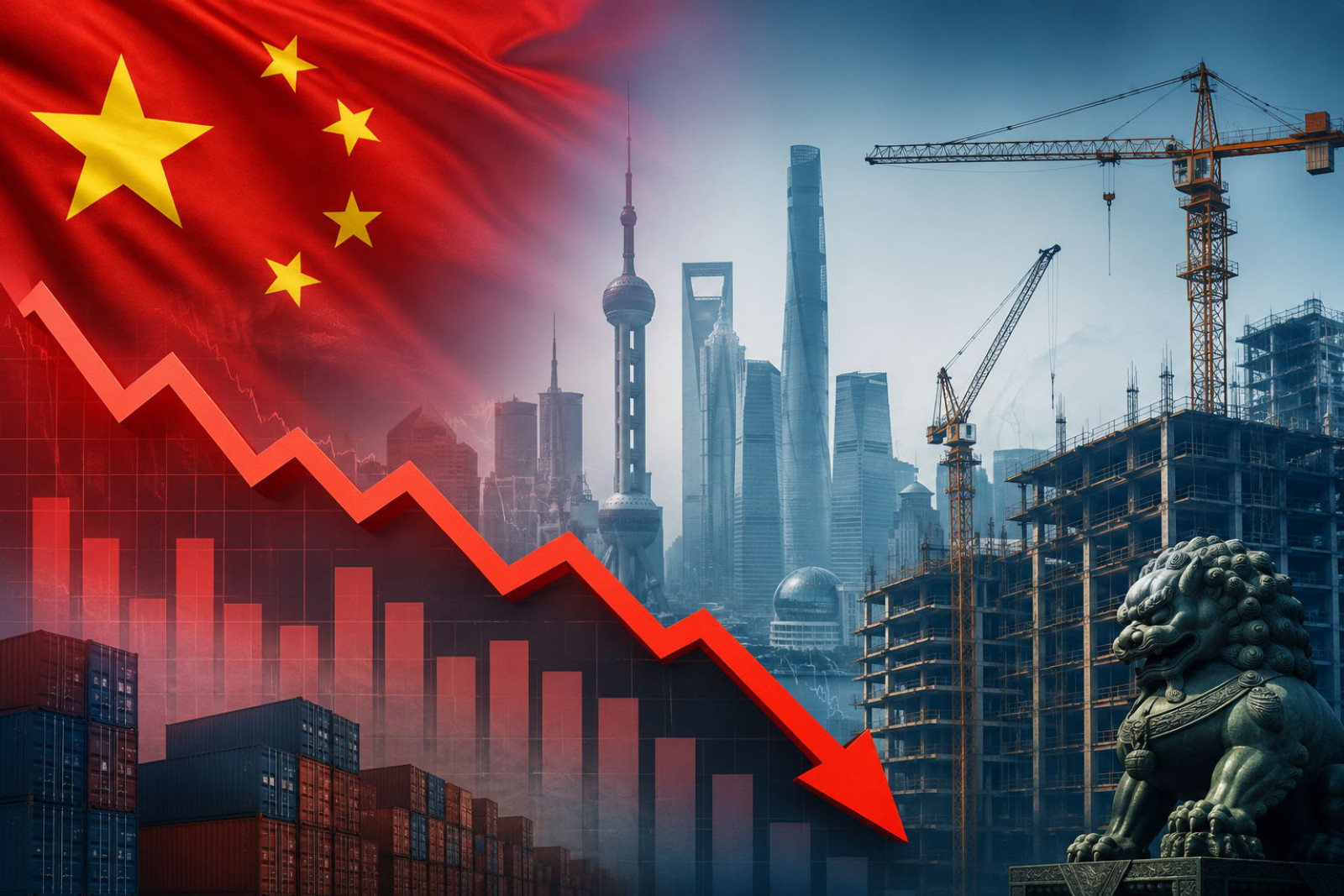
A 0.2 percentage point revision may appear modest, but for an economy approaching $20 trillion, it represents tens of billions of dollars in lost output and reinforces expectations that China will struggle to return to the roughly 5% growth pace targeted by policymakers.
June Data Highlight an Uneven Recovery
The latest economic indicators show that manufacturing remains relatively resilient, while domestic demand continues to soften.
- Industrial production: +6.8% YoY
- Retail sales: +4.8% YoY, down from 6.4% in May
- Fixed-asset investment (January–June): +2.8%
- Property investment: approximately -11% YoY
The gap between supply and demand continues to widen. Factories are still expanding output, but households remain cautious and the housing market has yet to stabilize.
Infrastructure Is No Longer Enough
Infrastructure spending has traditionally been Beijing's fastest way to support growth, but its impact is diminishing.
Investment growth has slowed to the mid-single digits, well below the double-digit rates seen after previous economic slowdowns. At the same time, heavily indebted local governments have less room to finance new transport, utility and construction projects.
As infrastructure contributes less to overall activity, it becomes harder to offset weakness elsewhere in the economy.
Consumption Remains Below Pre-Pandemic Trends
Consumer spending remains one of China's weakest economic indicators. Retail sales expanded 4.8% in June, a noticeable slowdown from the previous month and far below the 8–10% annual growth that was common before the pandemic.
Chinese households continue to save at elevated levels, reflecting concerns over employment, wage growth and declining property values. Household consumption accounts for only about 40% of GDP, compared with roughly 68% in the United States, leaving China significantly more dependent on investment and exports.
Property Continues to Drag on Growth
The real estate sector remains the largest structural challenge facing the Chinese economy.
Property and related industries, including construction, steel, cement, appliances and real estate services, have historically represented an estimated 25–30% of GDP.
Since the market peaked in 2021:
- Property investment has continued posting double-digit annual declines.
- Housing starts have fallen by more than 50% from their peak.
- Home sales remain well below historical averages.
- Several major developers have defaulted or undergone debt restructuring.
Despite targeted government support, Morgan Stanley expects the sector to remain a significant drag on growth through 2026.
Investment Is Shifting Toward Strategic Industries
Rather than introducing broad consumer stimulus, Beijing continues directing capital toward industries viewed as critical for long-term competitiveness.
Morgan Stanley expects policy support to remain concentrated in:
- Artificial intelligence
- Semiconductor manufacturing
- Energy infrastructure
- Power grids
- Electric vehicles
- Data centers
China already spends approximately 2.6% of GDP on research and development, one of the highest levels among major economies, and investment in AI infrastructure continues to accelerate.
Growth Should Improve Later This Year, but Only Marginally
Morgan Stanley still expects economic activity to strengthen modestly during the second half of the year as government investment gains traction.
However, stronger spending on AI, energy infrastructure and advanced manufacturing is unlikely to fully offset weak household consumption and the prolonged downturn in real estate. As a result, the bank now expects China's economy to expand by 4.6% in 2026 instead of the previously projected 4.8%.
Global Implications
China generates roughly 18% of global GDP and remains the world's largest consumer of many industrial commodities. Even a small downgrade in its growth outlook can ripple across global markets.
| Sector | Potential Impact |
| Iron ore | Weaker construction demand |
| Copper | Slower infrastructure and property investment |
| Oil | Softer industrial and transportation demand |
| Luxury goods | Slower consumer spending |
| Industrial equipment | Lower capital investment |
Morgan Stanley's revised forecast suggests that China's economic model is continuing to shift away from property-driven expansion toward technology, manufacturing and energy infrastructure. While that transition could improve productivity over the long term, it is also likely to produce slower headline growth than investors became accustomed to over the past two decades.
 Marina Lubimova