Artem Voloskovets
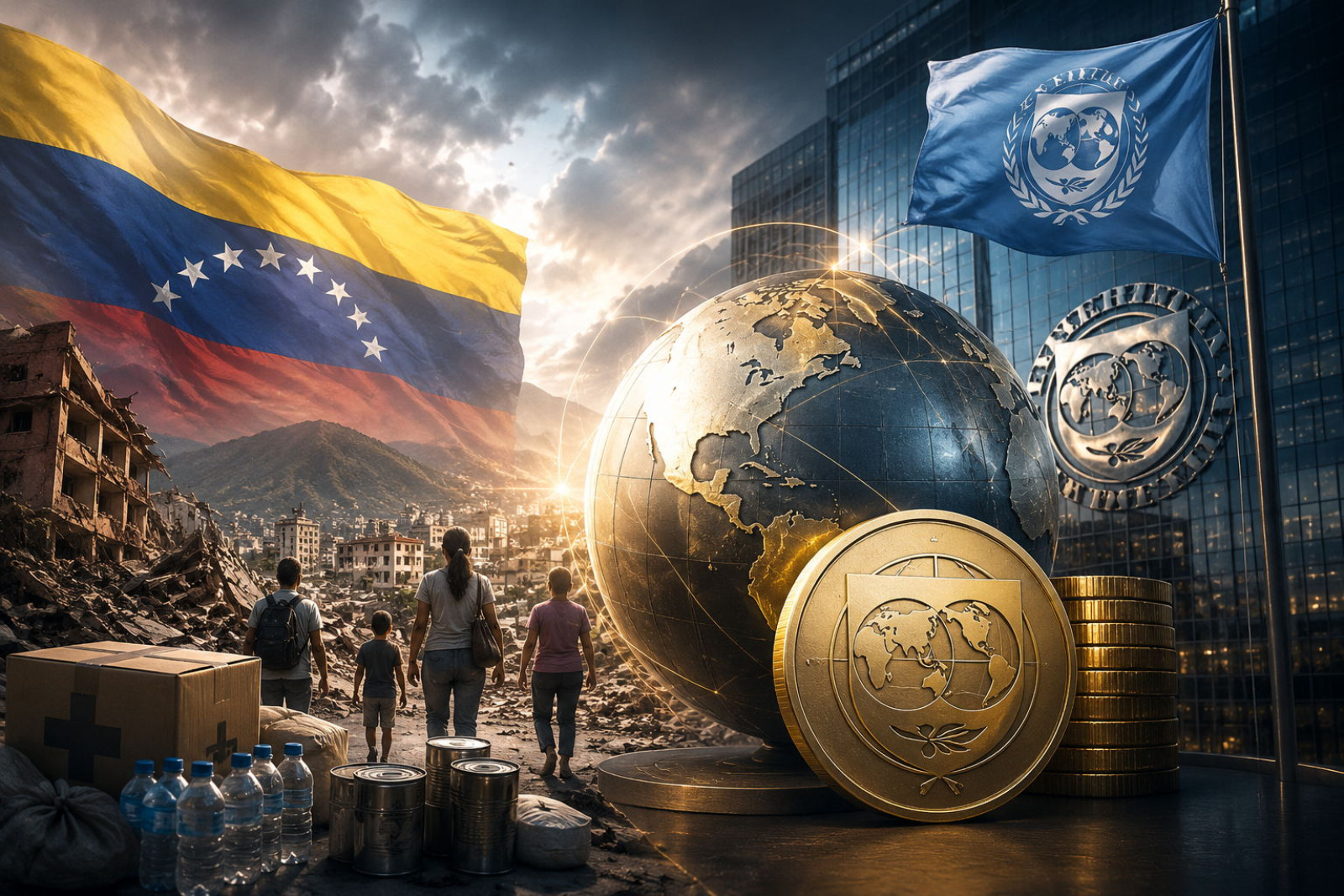
IMF Managing Director Kristalina Georgieva and Venezuela's acting president Delcy Rodríguez discussed using the country's SDR holdings for immediate humanitarian assistance following the June 24 earthquakes. The proposal would use Venezuela's existing IMF reserve assets rather than create a new lending program.
Venezuela Already Needed $606 Million Before the Earthquakes
The earthquakes accelerated an emergency that was already unfolding. Before the disaster, the 2026 Humanitarian Needs and Response Plan estimated that 7.9 million people across Venezuela required humanitarian assistance. Relief agencies planned to support 5.4 million people, but meeting that objective required $606 million in funding.
| Humanitarian Indicator | Value |
| People requiring assistance | 7.9 million |
| People targeted | 5.4 million |
| Total humanitarian funding needed | $606 million |
| Highest-priority population | 900,000 |
| Immediate funding requirement | $184 million |
Those figures were calculated before two earthquakes measuring 7.2 and 7.5 magnitude struck north-central Venezuela, damaging homes, hospitals, roads, and power infrastructure.
Why $350 Million Matters
In macroeconomic terms, $350 million is relatively small. Against Venezuela's humanitarian needs, it is substantial.
The amount equals:
- 58% of the UN's entire humanitarian appeal for 2026;
- nearly twice the funding required for the country's highest-priority emergency response;
- more than the combined funding currently allocated to several major humanitarian sectors.
The comparison illustrates why access to SDRs has become a central issue in the IMF discussions.
Where the Funding Is Needed Most
Current humanitarian financing remains concentrated in a handful of sectors.
| Sector | Funding |
| Food Security | $68.9 million |
| Health | $24.7 million |
| Protection | $23.7 million |
| Water, Sanitation and Hygiene | $15.6 million |
Despite these allocations, significant gaps remain in healthcare, drinking water, education, electricity, and social protection. Vulnerable groups, including children, older adults, Indigenous communities, migrants, and people with disabilities, continue to face the greatest risks, while earthquake damage has increased pressure on already overstretched services.
Using Existing Reserves Instead of New Loans
The current proposal differs from a traditional IMF assistance package. Rather than negotiating a new lending program with economic policy conditions, the discussions focus on mobilizing Venezuela's existing SDR reserves for humanitarian purposes. If approved, the mechanism could provide faster access to liquidity than a conventional financing arrangement.
The discussions also represent one of the first major tests of the IMF's renewed engagement with Venezuela after restoring formal relations earlier this year.
Beyond Venezuela
The significance of the talks extends beyond one country. Climate disasters, humanitarian emergencies, and sovereign financial stress increasingly occur at the same time. That raises a broader question for multilateral institutions: can reserve assets designed to strengthen financial stability also become an effective source of emergency humanitarian financing?
For Venezuela, $350 million will not resolve years of economic decline. But compared with the $606 million humanitarian funding requirement, and especially the $184 million needed for the most urgent response, it could provide one of the fastest available sources of relief when timing matters most.
 Artem Voloskovets