Marina Lubimova

That may be changing. On June 22, the Dubai Gold and Commodities Exchange (DGCX) will launch the Gulf region’s first same-day physically settled gold contract. The product allows eligible participants to trade and complete physical delivery within a single trading session.
The announcement is less important for the contract itself than for what it says about the direction of the gold market. As trading volumes grow and prices rise, settlement efficiency is becoming a competitive advantage.
Why Settlement Has Become a Market Issue
Physical gold trades may be executed electronically, but ownership and delivery do not always change hands immediately.
Many exchange-traded and over-the-counter transactions settle one day or more after execution. During that period, participants must keep capital committed while waiting for the transfer process to be completed.
The delay creates costs that are easy to overlook:
- capital remains unavailable for other transactions;
- exposure to price movements continues after the trade is agreed;
- counterparties remain dependent on successful settlement.
These factors become more important when the value of the underlying asset increases.

Rising Prices Increase the Cost of Delay
Forecasts from J.P. Morgan Commodities Research suggest that gold could remain in a strong long-term uptrend through 2027.
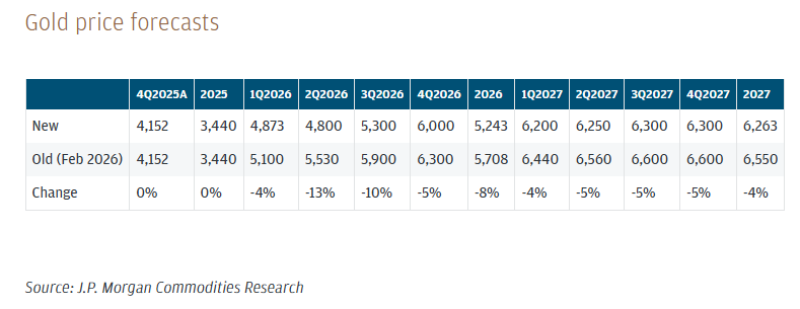
The bank has revised some projections lower compared with earlier estimates, yet the broader picture remains unchanged. Gold is still expected to trade above $6,000 per ounce by late 2027.
Higher prices do not automatically create more risk. They do, however, increase the amount of capital tied up during settlement and make operational efficiency more valuable.
Why Dubai Occupies a Strategic Position
Bullion trading follows a global cycle. European financial centers dominate activity during one part of the day, while Asian markets become the main source of liquidity several hours later.
London → Dubai → Shanghai
Dubai sits between those trading windows. For dealers moving metal between regions, that location reduces friction and shortens response times.
The city has spent years building refining capacity, storage infrastructure, logistics networks, and commodities exchanges. Faster settlement adds another layer to that ecosystem.
What Changes with Same-Day Settlement
The DGCX contract is backed by one-kilogram UAE Good Delivery gold bars and settled in UAE dirhams. The key difference is timing.
Trade → Clearing → Settlement → Delivery
(Typically T+1 or longer)
Trade → Settlement → Delivery
(T+0)
The number of steps is similar. The waiting period is not. Instead of carrying open exposure into the next session, participants can complete the process within the same trading day through an approved vault network.
For institutions handling large volumes of physical metal, shorter settlement cycles improve inventory management and reduce operational complexity.
A Broader Shift in Market Infrastructure
The launch reflects a trend visible across multiple asset classes. Equity markets have shortened settlement cycles. Payment systems increasingly operate in real time. Digital asset platforms have normalized near-instant transfers.
Physical commodities have generally moved more slowly because they involve storage, transport, verification, and delivery. What is changing is the expectation around speed. As technology reduces delays elsewhere in finance, market participants are becoming less willing to accept settlement processes designed for an earlier era.
The Real Objective
The contract itself is unlikely to transform the global gold market overnight. The larger objective is to increase Dubai’s role in the movement of bullion between Europe and Asia.
Historically, major financial centers gained influence by solving practical problems. Some concentrated liquidity. Others provided access to capital or connected regional markets.
Dubai’s approach appears focused on execution efficiency. A trading hub that can match buyers and sellers is valuable. A trading hub that can also complete delivery within hours becomes harder to replace.
 Marina Lubimova