Marina Lubimova
The 30-year Treasury yield fell toward 5.20% after reaching 5.337%, a 19-year high. The reversal followed the U.S. Treasury's decision to increase buybacks of longer-dated securities.
For currencies, the transmission is direct: lower Treasury yields reduce the return premium on dollar assets. Sterling is benefiting because UK rates face pressure in the opposite direction.
The rate gap is moving toward sterling
| Indicator | Previous / peak | Latest |
| GBP/USD | Below $1.36 | $1.3661 |
| Dollar Index | Above 99 | 98.61 |
| U.S. 30Y Treasury | 5.337% | ~5.20% |
| UK CPI | 2.6% | 2.9% |
| BoE Bank Rate | — | 3.75% |
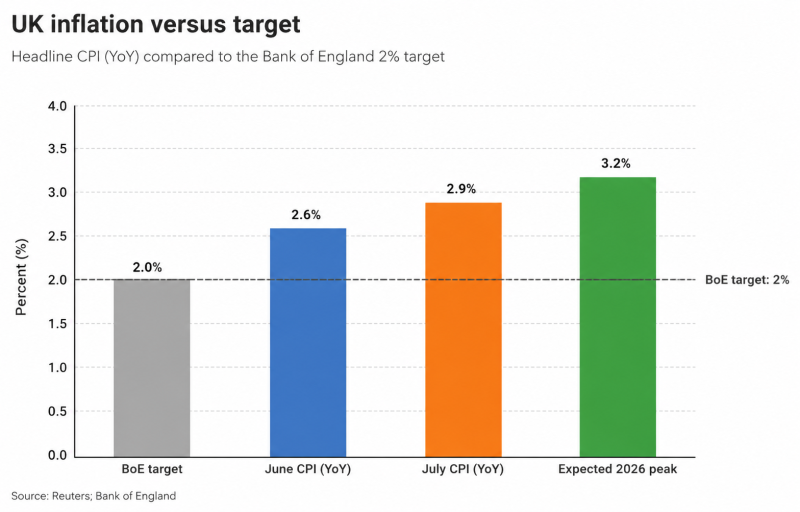
UK inflation accelerated from 2.6% in June to 2.9% in July, against the Bank of England's 2% target. Core inflation was 2.6%, while services inflation eased to 3.4%.
The BoE rate remains 3.75%. Markets see a possibility of another increase, while most economists expect no change through the rest of 2026. Either scenario limits the scope for UK rate cuts. In the U.S., meanwhile, the retreat in long-term yields reduces the dollar's relative yield advantage.
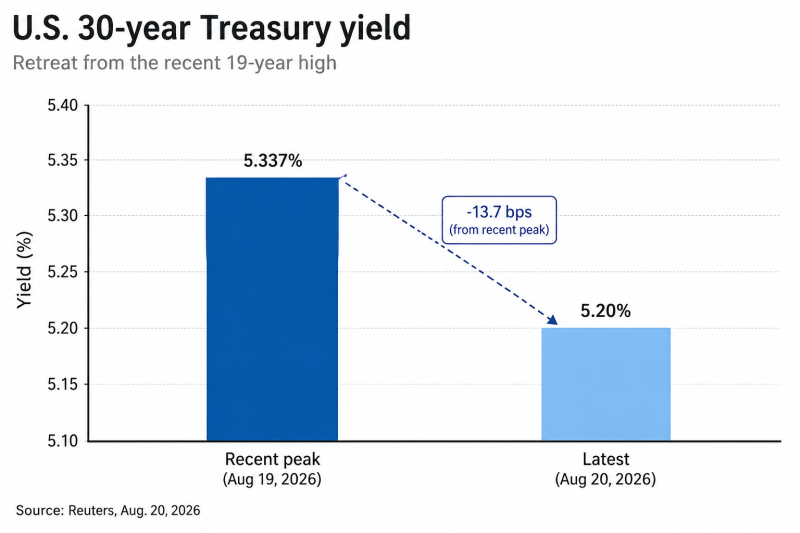
The 14-basis-point decline matters because high Treasury yields have been an important source of dollar demand.
Large U.S. deficits increase Treasury issuance and fiscal risk, but higher yields compensate investors for holding that debt. If long-term yields are contained while borrowing remains high, that compensation falls.
UK inflation keeps the BoE constrained
Sterling does not need a BoE hike to benefit. It needs UK rates to remain restrictive while U.S. yields lose momentum.
That is already visible beyond GBP/USD. The euro moved above $1.16, while the Dollar Index approached a three-month low. The latest sterling move is therefore partly a broad dollar trade rather than a UK-specific rally.
Author’s view
The key level is not GBP/USD at $1.3661. It is the 30-year Treasury yield around 5.2%. The U.S. has relied on high yields to attract capital into a rapidly expanding government bond market. Treasury buybacks can stabilize the long end, but lower yields also reduce the premium foreign investors receive for financing U.S. deficits.
If the 30-year yield remains near 5.2% while UK inflation stays close to 3%, GBP/USD has support above $1.36.
If the Treasury yield moves back above its 5.337% peak while UK inflation cools, the rate differential can swing back toward the dollar.
The larger macro risk is that fiscal pressure stops appearing primarily through higher Treasury yields and starts appearing through a weaker dollar.
 Marina Lubimova