Marina Lubimova

Meta's reported decision to restrict some internal AI usage comes at a time when the company is spending more on AI infrastructure than ever before. Capital expenditures have grown significantly faster than advertising revenue, while investments in data centers, chips, and AI models continue to accelerate.
The development raises a broader question facing the technology sector: as AI becomes more deeply integrated into everyday workflows, how do companies determine which AI workloads create enough value to justify their growing costs?
The Cost of AI Is Starting to Matter
Meta is reportedly limiting employee use of certain AI tools, according to The Information. The timing is notable. The company is simultaneously expanding its AI infrastructure at one of the fastest rates in the technology sector.
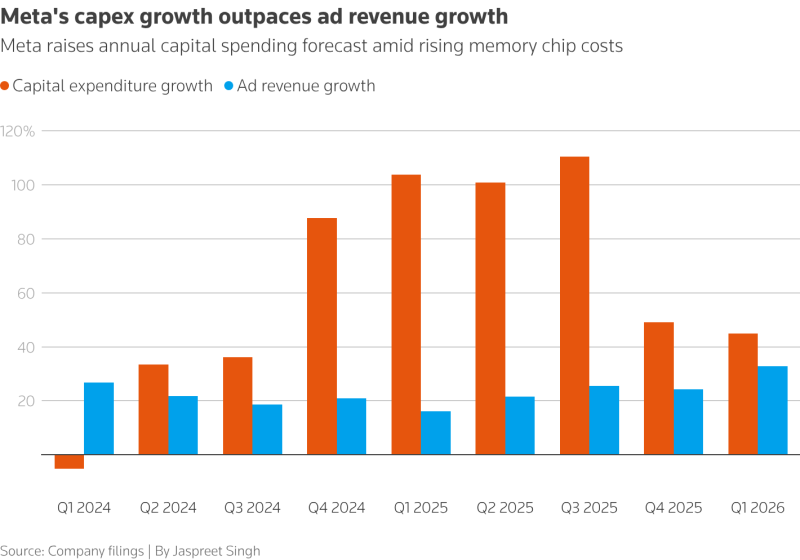
Meta's capital expenditure growth exceeded 100% year-over-year during several quarters of 2025. Advertising revenue growth during the same period remained mostly between 16% and 26%.
| Quarter | Capex Growth | Ad Revenue Growth |
| Q1 2025 | 104% | 16% |
| Q2 2025 | 101% | 21% |
| Q3 2025 | 110% | 26% |
| Q1 2026 | 45% | 33% |
The gap is difficult to ignore. Infrastructure spending is growing substantially faster than the business that finances it.
AI Is Moving From Adoption to Measurement
Over the last two years, technology companies focused on deploying AI tools as widely as possible. Coding assistants were rolled out to engineers. Internal chatbots appeared across departments. Employees were encouraged to integrate AI into everyday workflows.
The next question is less about adoption and more about utilization.
How often are these systems used?
Which tools save measurable time?
Which workloads justify their compute costs?
The Information's report suggests Meta is beginning to ask those questions internally.
Meta Has the Money
The restrictions arrive at a time when Meta's finances remain strong.
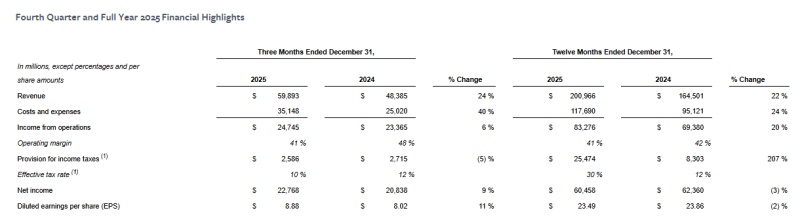
For 2025, the company reported:
- Revenue: $200.97 billion
- Operating income: $83.28 billion
- Net income: $60.46 billion
- Operating margin: 41%
Nothing in the numbers suggests financial pressure. The more interesting point is that Meta now has enough data to compare the cost of AI usage with the value it creates.
Productivity Has Become a Cost Center
Generative AI is often discussed as a productivity tool. Less attention is paid to the infrastructure behind it.
Every AI-generated response requires computing resources. At the scale of a company with tens of thousands of employees, routine use of coding assistants, copilots and internal chatbots can translate into significant hardware and energy costs.
The assumption that more AI usage automatically creates more value becomes harder to defend as usage scales. At that point, measuring efficiency becomes unavoidable.
The Market Is Rewarding Different AI Strategies
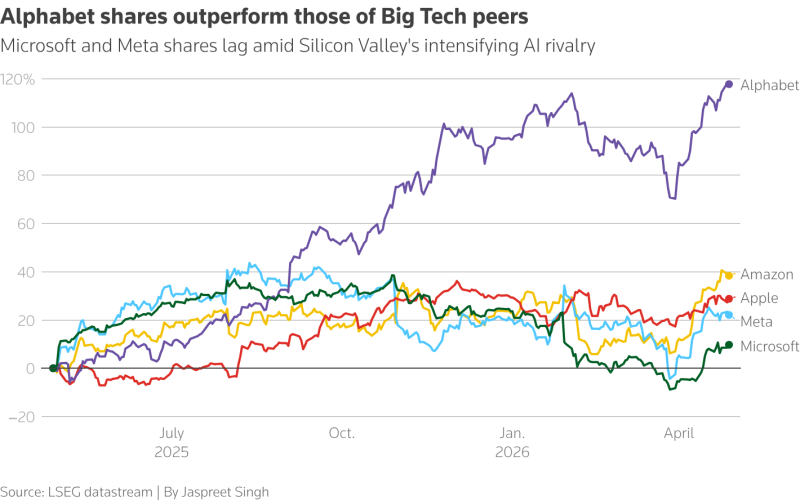
Over the past year, Alphabet shares gained roughly 118%. Meta rose around 22%.
Microsoft gained approximately 10%. The performance gap does not prove one AI strategy is better than another. It does show that investors are increasingly evaluating outcomes rather than announcements. Spending billions on AI infrastructure is no longer unusual. Most large technology companies are doing it. What differs is how quickly those investments translate into products, revenue or competitive advantages.
Scale Does Not Eliminate Cost Discipline
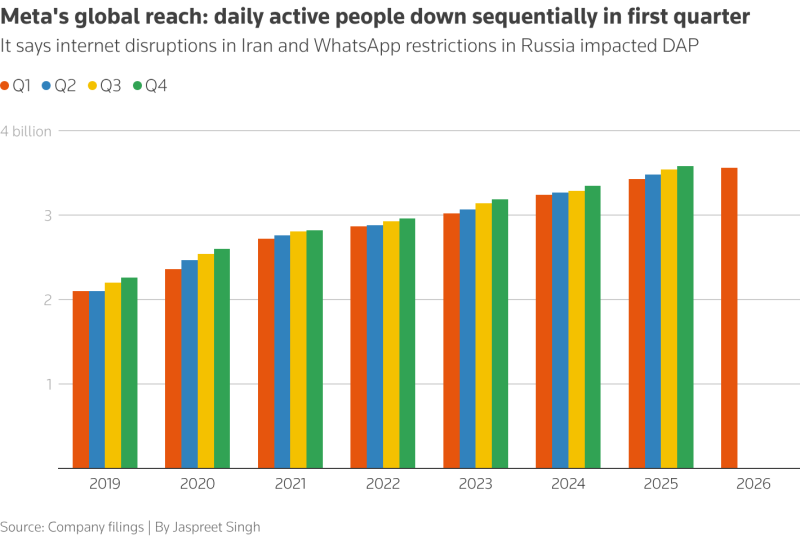
Meta's platforms reach roughly 3.54 billion daily active users. Few companies operate digital services at comparable scale. That reach creates opportunities to deploy AI across social media, messaging, advertising and business tools. It also creates one of the largest AI infrastructure bills in the industry.
The larger the deployment, the more attention shifts toward utilization rates, compute efficiency and resource allocation.
Conclusion
The most interesting part of Meta's reported restrictions is not that the company is limiting access to AI tools. It is that AI usage inside large organizations is becoming measurable. For the last two years, the dominant question was whether companies should adopt AI. The next phase is likely to focus on a different question: which AI workloads are worth paying for.
 Marina Lubimova