Marina Lubimova

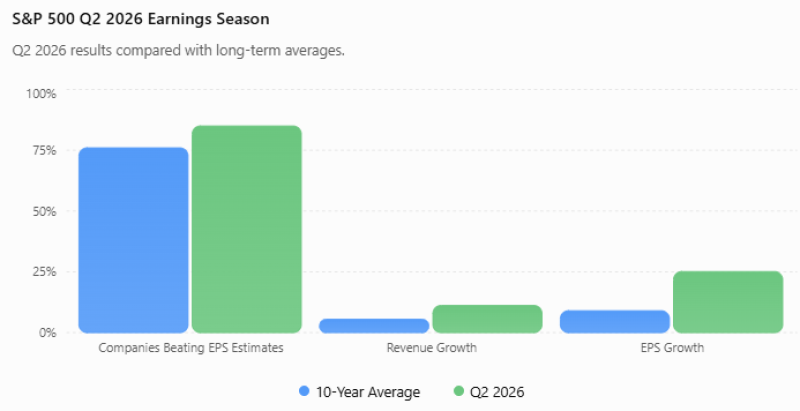
According to Barclays, 85% of S&P 500 companies have beaten earnings estimates, well above the 10-year average of 76%. Roughly 430 companies have already reported. Aggregate revenue increased 11.2% year over year, while earnings per share climbed 25.1%, driven largely by the largest technology companies.
Ordinarily, results like these would push the index higher. Instead, many stocks declined immediately after reporting — even after delivering earnings beats. The problem wasn't earnings. It was expectations.
Earnings Were Strong. Expectations Were Stronger.
An 11.2% increase in revenue is unusually high for an index the size of the S&P 500. Even more notable is 25.1% EPS growth, indicating that profits expanded much faster than sales.
Higher margins, operating leverage and share buybacks all contributed. Yet Barclays found something unusual: companies that beat estimates and companies that missed estimates both generated negative average stock-price reactions.
That pattern appears when investors have already priced in exceptional results before earnings season begins. Once expectations become elevated enough, simply outperforming consensus is no longer enough.
Why Big Tech Matters So Much
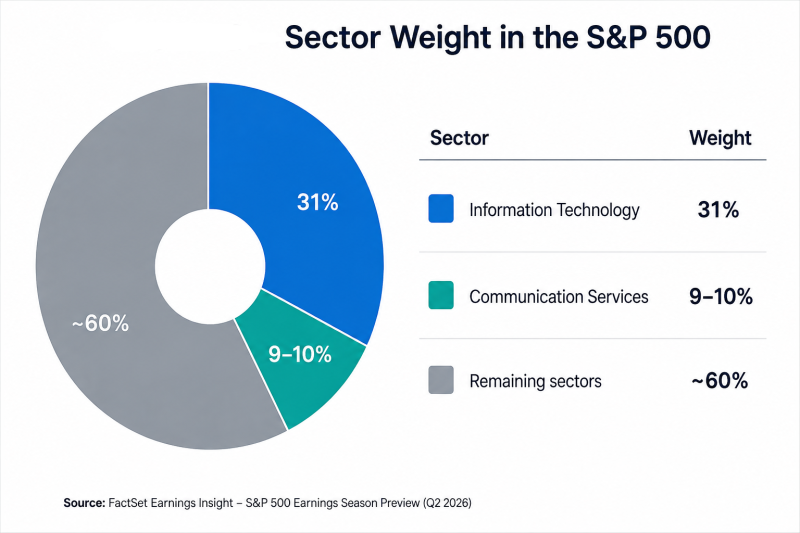
The earnings season was once again dominated by a handful of companies. Information Technology represents roughly 31% of the S&P 500, while Communication Services accounts for another 9–10%. Together, sectors most exposed to AI represent about 40% of the entire index.
Microsoft, Nvidia, Alphabet, Meta, Apple and Amazon continue to grow faster than the broader market, lifting aggregate revenue and earnings even as many cyclical industries slow.
The concentration works both ways. Strong results from a few mega-cap companies can lift index earnings, but they also push expectations for the rest of the market much higher.
Valuations Changed the Rules
The S&P 500 entered earnings season trading at roughly 24–25 times forward earnings, versus a historical average of around 18–19 times. That difference matters. Higher valuations imply investors are already paying today for earnings they expect companies to generate years from now.
When multiples reach these levels, quarterly results stop being the primary catalyst. Guidance, capital allocation, AI spending, and management commentary become more important than the earnings beat itself.
A company reporting record profits can still lose market value if management suggests growth is beginning to normalize.
S&P 500 Forward Valuation
| Period | Forward P/E |
| Historical average | 18–19× |
| Current | 24–25× |
The Focus Has Shifted to Guidance
Quarterly earnings describe the previous three months. Stock prices discount the next several years.
That is why conference calls increasingly move markets more than income statements. Investors are listening for changes in hiring plans, AI investment, capital expenditure, margins, consumer demand and pricing power — not simply whether EPS exceeded consensus by a few cents.
For companies trading near all-time highs, future guidance has become more valuable than reported earnings.
The New Earnings Season Playbook
This quarter produced numbers that would normally define an exceptional earnings season:
- 85% of companies beat EPS estimates.
- Revenue grew 11.2%.
- EPS increased 25.1%.
Those figures weren't enough to produce broad gains because they largely confirmed what investors already believed.
The earnings season illustrates a broader shift in equity markets. Stocks no longer react to whether companies beat expectations — they react to whether expectations were high enough to justify the valuation beforehand.
 Marina Lubimova