Alex Dudov
IBM spent much of the last decade stuck in a familiar pattern: stable business, predictable cash flow, and limited investor enthusiasm. The latest rally suggests that perception is changing. Shares climbed from $216.78 to $254.75 in a matter of days, a gain of roughly 17.5%, pushing the stock back toward record territory.
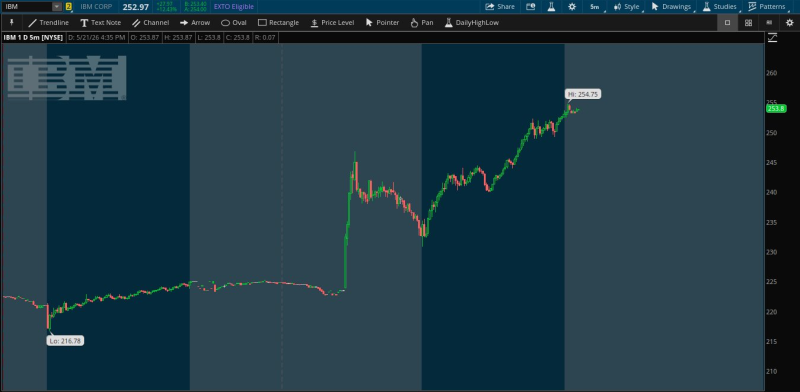
Market data. IBM advanced from approximately $216.78 to $254.75, extending one of the strongest rallies among large-cap technology stocks.
Sharp moves like this rarely happen without a change in expectations. Investors appear increasingly willing to assign a higher valuation multiple to IBM than they were just a few years ago.
The Re-Rating Story
The short-term rally is only part of the picture.
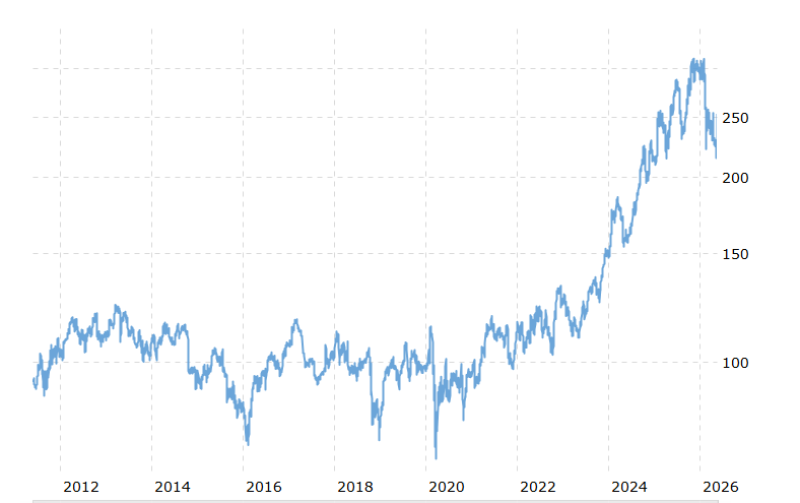
Market data. After spending much of the 2010s trading between roughly $70 and $130, IBM entered a sustained uptrend beginning in 2022 and eventually reached record highs above $275.
IBM traded in a broad range between roughly $70 and $130. The stock lagged many large-cap technology peers and remained associated with legacy infrastructure rather than growth.
That changed after 2022. Shares more than doubled from roughly $130 levels to highs above $275, creating one of the strongest multi-year advances in the company's recent history. Even after a pullback, IBM remains far above where it spent most of the last decade.
Why Investors Are Paying More
The explanation is relatively simple. IBM today generates a larger share of revenue from software, recurring contracts, and long-term enterprise relationships than investors traditionally associate with the company. Those businesses tend to receive higher valuation multiples because revenue is more predictable and customer retention is typically strong.
The result is a stock increasingly viewed as a business capable of growing rather than merely maintaining market position.
Whether the stock can continue higher depends on earnings growth and execution. But the charts suggest the market is no longer pricing IBM as the same company it was five years ago. And valuation changes often last longer than quarterly results.
 Alex Dudov