Marina Lubimova
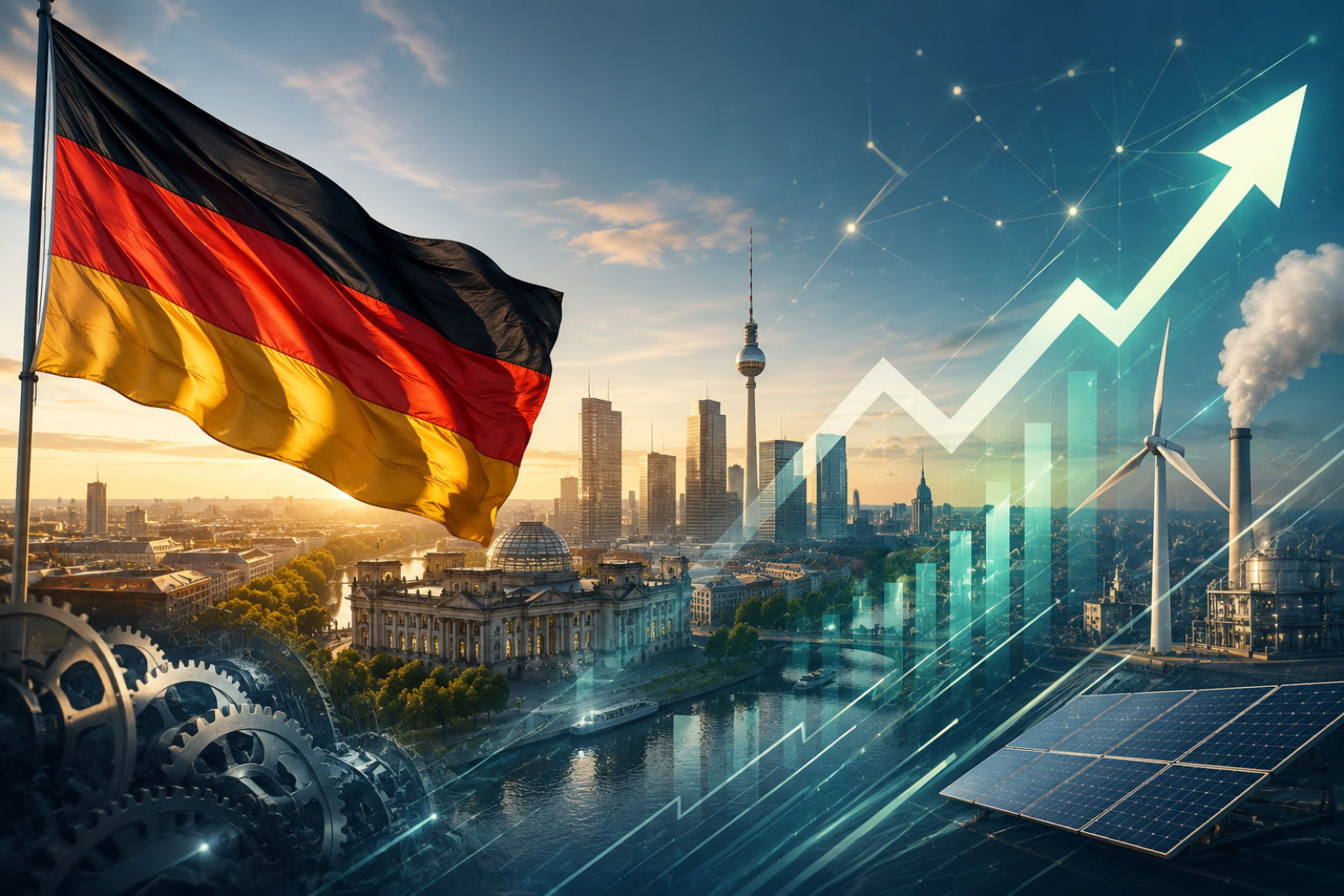
The energy crisis exposed old weaknesses: expensive production, weak industrial demand, slow permitting, underinvestment and a business model too dependent on global manufacturing cycles.
Now the tone of the data is changing. Germany's Spring Economic Projection does not show a boom. It shows something more useful: the early shape of a growth cycle built around investment, productivity and a gradual return of export demand.
Chancellor Friedrich Merz's claim that reforms could lift 2027 GDP growth to at least 1% fits into that picture. The official forecast is already close, at 0.9%. The real question is whether Germany can turn a technical recovery into a durable expansion.
GDP Is Only the Surface
Real GDP is expected to move from contraction to slow growth:
- 2024: -0.5%
- 2025: 0.2%
- 2026: 0.5%
- 2027: 0.9%
This is not dramatic. But after the energy shock, the direction matters. Germany is no longer projected to remain stuck near zero. Growth is weak, but it is becoming sequential.
The Strongest Signal Is Investment
The more important number is not GDP. It is gross fixed capital formation.
- 2024: -0.9%
- 2025: 2.5%
- 2026: 4.7%
- 2027: 6.3%
That shift matters because investment usually turns before headline growth does. Companies do not raise capital spending aggressively unless they expect demand, margins or policy conditions to improve.
This is where Merz's reform package becomes relevant: tax changes, faster approvals, less bureaucracy and infrastructure measures are all aimed at the same problem — Germany's weak investment base.
Industry Is Moving From Repair to Expansion
The machinery and equipment line shows the industrial cycle more clearly than GDP.
- 2024: -5.4%
- 2025: -1.9%
- 2026: 1.1%
- 2027: 4.4%
This is the difference between stabilization and expansion. In 2024 and 2025, companies were still cutting or delaying equipment spending. By 2026 and 2027, the forecast assumes they begin rebuilding capacity. Construction follows the same direction, moving from -3.4% in 2024 to 1.9% in 2027.
Households Are Not the Whole Story, But They Help
Private consumption remains positive, while household income improves.
Disposable income of private households is projected at:
- 2024: 4.0%
- 2025: 3.1%
- 2026: 3.1%
- 2027: 3.5%
This gives the recovery a second support line. Germany is not relying only on factories and exports. Domestic demand remains stable enough to absorb part of the shock from weak external trade.
Still, this is not a consumer-led boom. The stronger story is that household income supports the cycle while investment leads it.
Exports Stop Being a Drag
Exports were one of the clearest signs of Germany's post-energy-crisis weakness.
The forecast now shows that drag fading:
- 2024: -2.1%
- 2025: -0.4%
- 2026: 0.0%
- 2027: 1.3%
A return to positive export growth would not restore Germany's old model overnight. But it removes a major brake from the economy and gives industrial investment a more credible demand backdrop.
Productivity Carries More Weight Than Jobs
Employment is almost flat across the forecast period. That makes productivity more important. GDP per employee is expected to rise from 0.3% in 2025 to 1.0% in 2027. That is the core of the reform story. Germany does not have the demographic profile for a hiring-led boom. Any durable recovery has to come from better capital allocation, faster project execution, higher productivity and stronger business investment.
The Weak Point: Inflation
The recovery still has a constraint.
Consumer price inflation is projected at:
- 2025: 2.2%
- 2026: 2.7%
- 2027: 2.8%
That leaves inflation above the ECB's 2% target and limits how easy financial conditions can become. It also means households may feel less improvement than the headline income data suggest.
 Marina Lubimova