Marina Lubimova
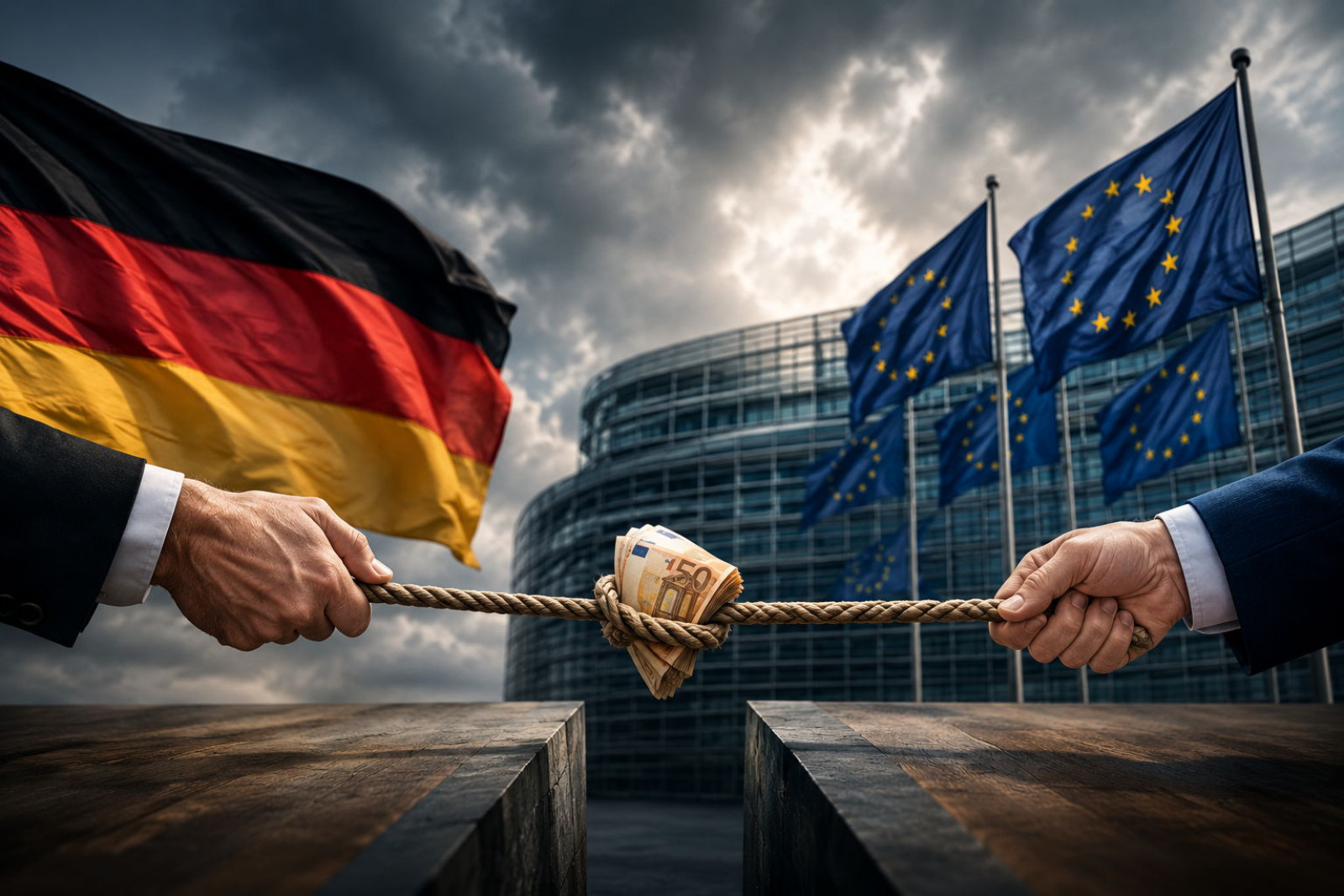
Berlin wants to remove roughly €400 billion from the European Commission's proposed €2 trillion Multiannual Financial Framework (MFF) for 2028–2034. The dispute is bigger than one budget cycle. It exposes a growing divide over how Europe should finance its geopolitical ambitions.
Europe's Budget Is Becoming an Industrial Strategy
The Commission's proposal is its most ambitious financial framework to date. Valued at nearly €2 trillion, or 1.26% of the EU's average Gross National Income between 2028 and 2034, the plan shifts the budget away from its traditional role of redistribution toward long-term strategic investment.
The priorities reflect Europe's changing environment:
- security and defence;
- industrial competitiveness;
- migration;
- energy resilience;
- climate resilience;
- advanced technologies.
The proposal also introduces a more flexible spending structure, simplified funding mechanisms, National and Regional Partnership Plans, and new revenue sources intended to reduce pressure on national governments.
The message from Brussels is clear: Europe intends to invest collectively to strengthen its economic and geopolitical position.
Germany Is Questioning the Financing Model
Germany does not oppose stronger defence or greater industrial competitiveness. Its concern is how those ambitions are funded. According to Berlin's policy paper, there is "no basis for increasing the EU budget relative to Gross National Income." Rather than expanding overall spending, Germany argues that existing resources should be redirected toward new priorities.
That distinction changes the debate. Instead of asking whether Europe should invest more, Germany is asking whether every new objective requires additional common spending.
Europe's List of Priorities Keeps Growing
Over the past five years, Europe's agenda has expanded rapidly. Governments are expected to finance military modernization, support Ukraine, strengthen energy security, accelerate decarbonization, build semiconductor capacity, and improve industrial competitiveness - all while preserving traditional spending on agriculture and regional development.
Each objective is strategically important. Collectively, however, they place increasing pressure on national budgets already facing slower economic growth and higher borrowing costs. Germany's position reflects a broader concern shared by several fiscally conservative member states: strategic priorities are multiplying faster than available resources.
Two Approaches to the Same Objective
The disagreement is less about policy than about fiscal philosophy. Brussels sees common investment as the foundation of Europe's future competitiveness. Larger shared budgets are viewed as necessary to support defence, innovation and industrial capacity. Germany favors tighter prioritization. It argues that Europe's competitiveness depends not only on investment, but also on maintaining fiscal credibility. Both sides largely agree on the destination. They disagree on how much additional spending is required to get there.
A €400 Billion Reduction Would Reshape the Budget
Germany's proposal is substantial.
| Proposal | Amount |
| European Commission proposal | ≈ €2.0 trillion |
| Germany's proposed reduction | ≈ €400 billion |
| Budget after reduction | ≈ €1.6 trillion |
| Share of proposed cut | ≈20% |
A reduction of this scale would force difficult choices. Defence and security spending would likely remain protected, but pressure could increase on agricultural subsidies, cohesion funding, climate programs and industrial investment initiatives. The negotiations are unlikely to focus on whether Europe should spend more. The real debate is which priorities take precedence when financial resources become constrained.
Why It Matters Beyond Brussels
The Multiannual Financial Framework influences investment across much of the European economy. Infrastructure projects, renewable energy, research, advanced manufacturing and regional development all depend, to varying degrees, on long-term EU funding. A smaller budget could slow parts of that investment cycle while increasing reliance on national governments or private capital. The outcome will also signal how Europe intends to compete with the United States and China in strategic industries during the next decade.
A Defining Test for European Fiscal Policy
Germany's €400 billion proposal has become the headline, but the underlying issue is much larger. The European Commission argues that a more uncertain world requires greater collective investment. Germany accepts the strategic objectives but questions whether the financial model can continue expanding indefinitely. The negotiations will determine more than the size of the next EU budget. They will show whether Europe's future is built on larger common spending, or on stricter prioritization within existing fiscal limits.
 Marina Lubimova