Artem Voloskovets

According to the Mortgage Bankers Association (MBA), total mortgage applications fell 2.9% in the week ended July 31. Applications for home purchases declined 3.6%, while refinancing activity dropped 1.9%.
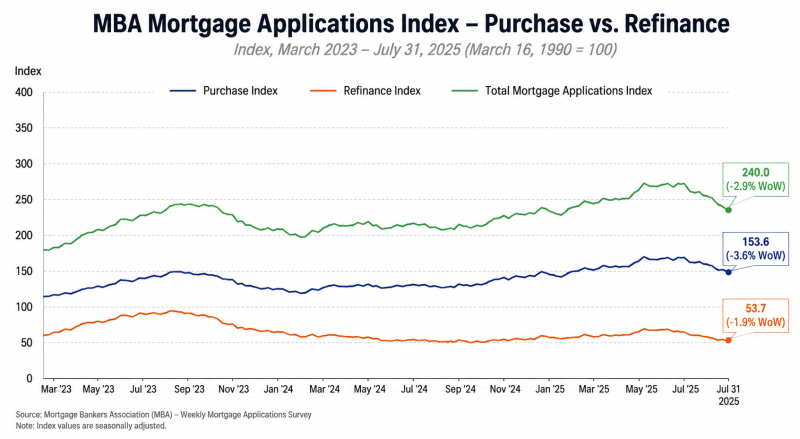
The average contract rate on a 30-year fixed mortgage for conforming loans ($806,500 or less) increased 5 basis points to 6.81%, the highest reading in over a year. Mortgage rates have now erased most of the decline recorded earlier this year as Treasury yields moved higher following the Federal Reserve's latest policy meeting.
Mortgage rates moved higher for a second consecutive week as Treasury yields continued to climb following the Federal Reserve's July meeting. Purchase applications remain constrained by affordability challenges, while refinancing activity continues to be limited as rates move further away from the historically low levels many homeowners secured during the pandemic. said Mike Fratantoni, Senior Vice President and Chief Economist at the Mortgage Bankers Association
Higher borrowing costs continue to reshape affordability. A buyer financing a $500,000 home with a 20% down payment would pay roughly $2,600 per month in principal and interest at today's 6.81% mortgage rate. At 3%, the same mortgage would require payments of about $1,700 per month. The difference approaches $900 each month, or more than $10,000 per year.
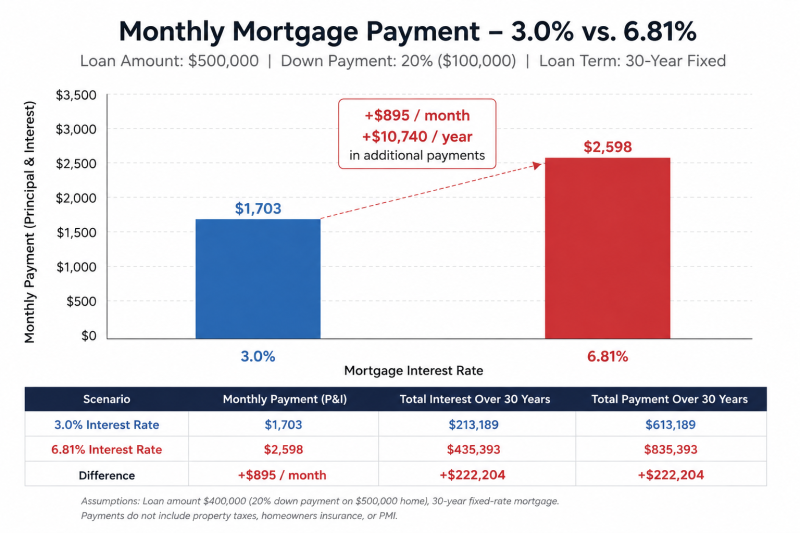
The gap has reinforced the housing market's "lock-in effect."
Millions of homeowners refinanced during 2020 and 2021 at rates between 2.5% and 3.5%. Selling those homes today often means replacing a low-cost mortgage with financing near 7%, substantially increasing monthly payments even if the replacement home is similarly priced.
That incentive has reduced the number of existing homes coming onto the market, limiting supply while transaction volumes continue to weaken.
The sensitivity of buyers to borrowing costs is becoming increasingly clear. Mortgage demand improved when rates briefly moved closer to 6% earlier this year but weakened again as financing costs approached 7%.
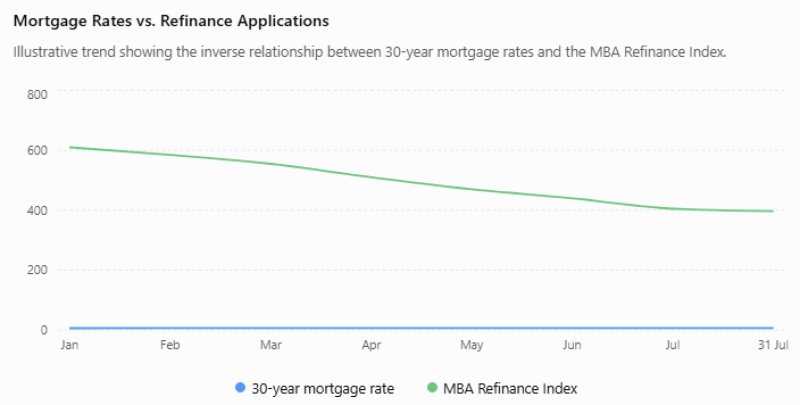
Refinancing remains even weaker. During the pandemic, historically low interest rates fueled record refinancing volumes. Today, nearly every homeowner with a mortgage originated between 2020 and 2021 already holds financing well below current market rates, leaving little economic reason to refinance. For most borrowers, replacing an existing mortgage would increase monthly payments rather than reduce them.
Lower mortgage activity extends beyond banks and lenders. Existing home sales generate demand for renovations, furniture, appliances, moving services and home improvement projects. Fewer transactions reduce spending across those industries, weakening one of the largest components of consumer activity.
Mortgage rates are primarily driven by long-term Treasury yields rather than the Federal Reserve's policy rate. Unless bond yields decline materially, financing costs are likely to remain elevated, limiting any sustained recovery in housing demand.
The latest MBA data points to the same pattern seen over the past two years: affordability remains under pressure, homeowners continue holding on to low-rate mortgages, refinancing has largely disappeared, and higher borrowing costs are keeping housing turnover well below historical averages.
 Artem Voloskovets