Artem Voloskovets
The move reflects a rapid shift in investor positioning as expectations for U.S. monetary policy became more dovish and demand for defensive assets accelerated.
The rally was driven by several macroeconomic factors moving in the same direction. Falling oil prices reduced inflation concerns, Treasury yields retreated, and traders increased bets that the Federal Reserve is approaching the end of its tightening cycle. For gold, which generates no yield, lower interest-rate expectations improve its relative attractiveness compared with bonds and cash.
Oil has become an important part of the story. Only weeks ago, fears of prolonged supply disruptions in the Middle East pushed crude prices higher and reinforced expectations that inflation could remain elevated. As those fears eased and energy prices declined, markets began pricing in a less restrictive Fed. That shift immediately translated into stronger demand for bullion.
Economic data has added to the move. Signs of slower hiring and moderating U.S. growth have increased demand for assets that tend to outperform during periods of economic uncertainty. Historically, gold performs best when investors transition from worrying about inflation to worrying about weaker growth.
Currency markets have provided additional support. A softer U.S. dollar makes gold cheaper for overseas buyers, while declining real Treasury yields improve the metal's competitiveness against fixed-income assets. Large institutional investors often increase precious-metals exposure during these periods because the opportunity cost of holding gold falls.
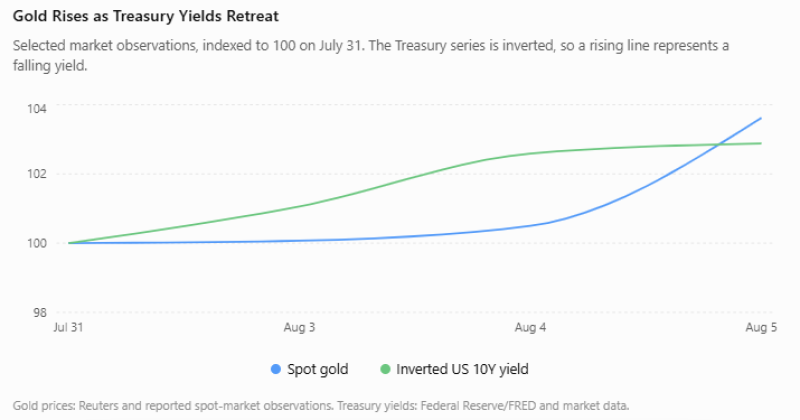
The speed of the latest rally also signals a change in market sentiment. Earlier this summer, investors questioned whether gold could sustain prices above $4,100 as persistent inflation kept expectations for higher rates alive. The break toward $4,200 suggests markets are now placing greater weight on slowing economic activity than on renewed inflation pressure.
The next catalyst will likely come from U.S. labor-market data. Another weak employment report would strengthen expectations for Fed easing and could provide room for additional gains. Stronger-than-expected payrolls, however, would likely push Treasury yields higher and trigger short-term profit-taking after gold's sharp advance.
 Artem Voloskovets