Marina Lubimova
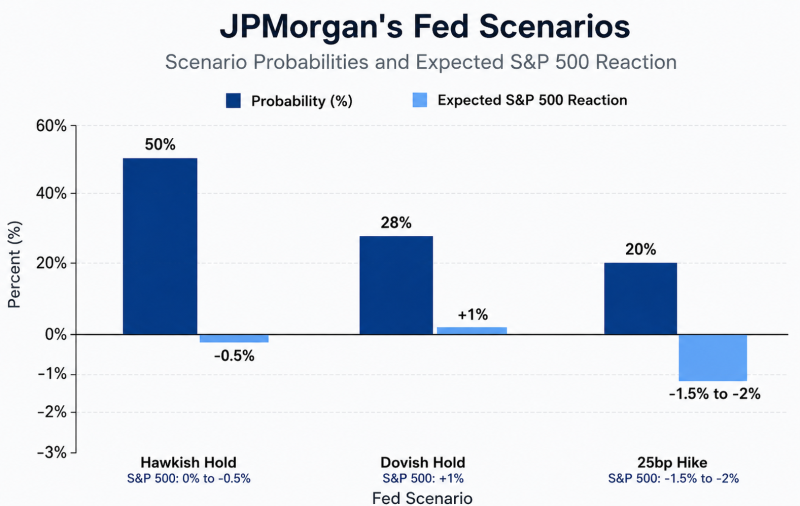
According to JPMorgan's scenario analysis, a hawkish pause is now the most likely outcome, carrying a 50% probability. Under that scenario, the S&P 500 would likely finish the day little changed or slip by about 0.5%. The message is straightforward: inflation risks remain, policy will stay restrictive, and rate cuts are not imminent.
That reaction highlights how much of today's market expectations are already priced in.
The Same Decision Can Produce Three Different Markets
JPMorgan outlines three primary scenarios, each producing a noticeably different market response.
| Fed outcome | Probability | Expected S&P 500 reaction |
| Hawkish hold | 50% | Flat to -0.5% |
| Dovish hold | 28% | Up to +1% |
| 25bp rate hike | 20% | -1.5% to -2.0% |
The striking part isn't the rate decision itself. Two of the three scenarios involve keeping rates unchanged. The difference lies entirely in the Federal Reserve's communication.
Why Investors Care More About the Tone
Financial markets are forward-looking. Investors constantly attempt to estimate where monetary policy will be six to twelve months from now rather than reacting only to today's announcement.
If Chair Jerome Powell suggests inflation is cooling and the economy is gradually moving toward lower interest rates, markets could interpret the statement as the beginning of an easier policy cycle. Even without an immediate rate cut, expectations for future easing tend to support equity valuations.
A hawkish message produces the opposite effect. If policymakers emphasize persistent inflation, resilient labor markets, or the possibility that rates may stay elevated for longer, investors often reassess earnings expectations and discount rates. That typically limits gains even when the Fed leaves borrowing costs unchanged.
Why Technology Stocks Face the Greatest Risk
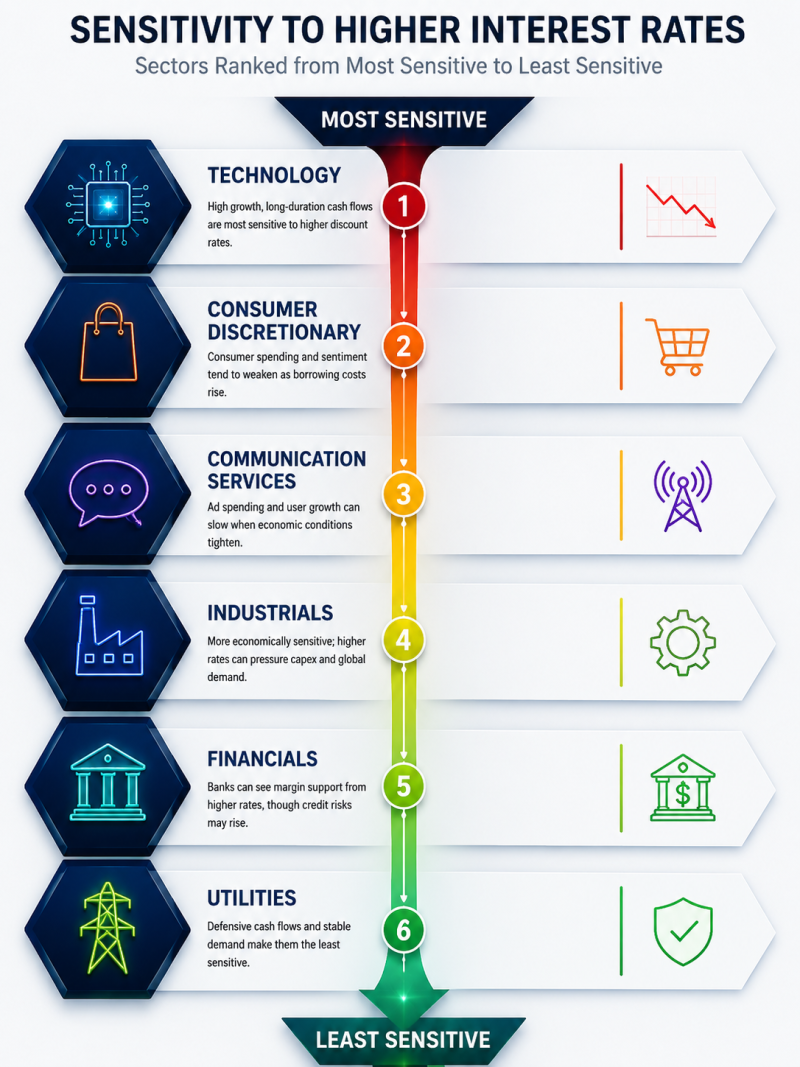
JPMorgan expects the Nasdaq to underperform if the Fed unexpectedly raises rates. The reason is mathematical rather than emotional.
Technology companies derive much of their value from profits expected years into the future. Higher interest rates reduce the present value of those future cash flows, making high-growth businesses especially sensitive to monetary policy.
This relationship has repeatedly appeared during previous tightening cycles, when growth stocks generally experienced larger swings than defensive sectors.
The Market Is Listening for the Next Sentence
Investors often assume the Fed announcement ends once the rate decision is published. In reality, the market's biggest moves frequently occur during Jerome Powell's press conference.
Comments about inflation, employment, consumer demand, financial conditions, or the timing of future policy changes can quickly reshape expectations for the coming quarters.
In other words, the first sentence of the statement may matter less than the answers given during the Q&A session.
What Investors Should Watch
Rather than focusing solely on whether rates remain unchanged, investors will likely pay attention to several key signals:
- whether the Fed still describes inflation as persistent;
- any indication that policy has become sufficiently restrictive;
- comments on labor market strength;
- guidance regarding future rate cuts or additional tightening;
- changes in the Fed's overall assessment of economic risks.
These clues influence bond yields, the U.S. dollar, and equity valuations almost immediately.
The Bottom Line
JPMorgan's analysis suggests that the Federal Reserve's communication strategy may have become just as important as the policy decision itself.
A hawkish pause could leave the S&P 500 little changed. A dovish pause could extend the market rally. An unexpected rate increase would likely generate the sharpest selloff, with technology stocks bearing the brunt of the move.
 Marina Lubimova