Artem Voloskovets

- From Real Estate to Political Media
- 1789 Capital’s Political Investment Thesis
- Businesses Positioned for Policy Change
- A Stake in Both Sides of the Prediction-Market Race
- The Commercial Value of a Presidential Statement
- A Speech, a Teleprompter and a Six-Figure Position
- Selling Access Without Promising Influence
- Portfolio Companies and the Federal Government
- Known Income, Undisclosed Economics
- Why Net-Worth Estimates Vary So Widely
- The Disclosure Gap
- A Portfolio Built Around Alignment
Donald Trump Jr. began his career in a business defined by physical assets: hotels, golf courses, residential towers and licensing agreements carrying the family name.
His newer portfolio looks very different. It spans venture capital, political media, drones, firearms retail, cryptocurrencies, private-company stakes and prediction markets where users trade on elections, government decisions and even the language used in presidential speeches. He has also helped establish an exclusive Washington club connecting wealthy businesspeople with prominent figures in conservative politics.
The common asset is no longer property. It is proximity. Trump Jr. holds no government office. There is no public evidence that he has traded on confidential information or placed bets using advance knowledge of presidential announcements. Yet many of his commercial interests operate in sectors directly shaped by federal policy, regulation, procurement and statements from an administration led by his father.
The central ethical issue is therefore broader than insider trading. It is whether political access, or merely the perception of access, can be converted into equity, advisory fees and private wealth.
From Real Estate to Political Media
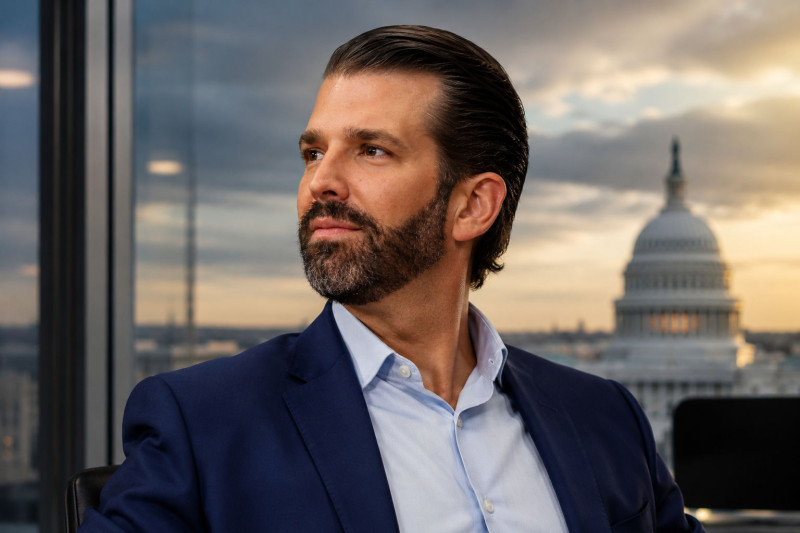
Trump Jr. graduated from the University of Pennsylvania in 2000. The Trump Organization describes his qualification as a bachelor’s degree in finance and real estate from the Wharton School; other biographies list a Bachelor of Science in Economics. He later joined the family business and became an executive vice president responsible for development and acquisitions.
For much of his career, his professional identity remained tied to the Trump Organization. He worked on property development, branding and the management of family assets rather than building an independent record in investment banking, technology or fund management.
Politics changed the commercial value of his profile. Trump Jr. became a campaign surrogate, conservative media personality and direct channel to an audience that viewed mainstream institutions with suspicion. In 2023, Rumble signed him to a multiyear, seven-figure agreement for Triggered with Don Jr.
The podcast established a model he would extend across other ventures: political visibility creates an audience; the audience attracts capital; capital can then be directed into businesses built around the same political identity.
1789 Capital’s Political Investment Thesis
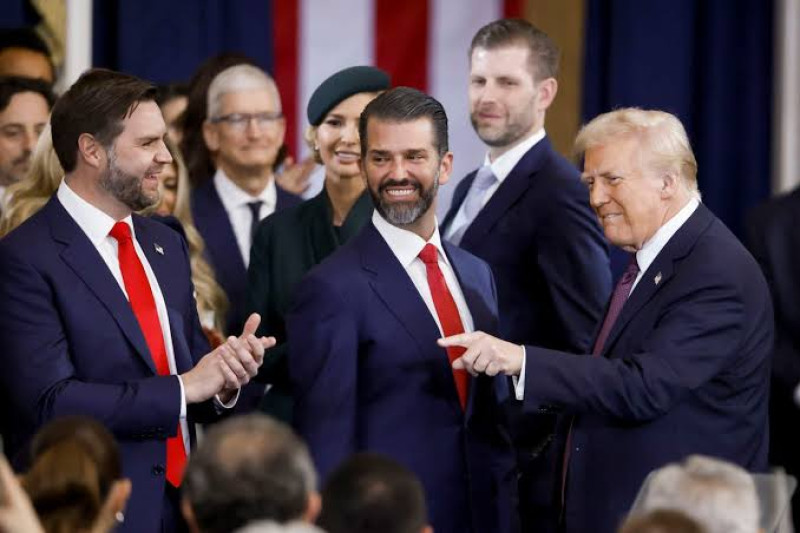
After the 2024 election, Trump Jr. joined 1789 Capital rather than entering the administration.
Reuters initially described the Palm Beach firm as a conservative-focused investment business managing roughly $150 million. Trump Jr.’s role included evaluating investments, attracting capital and identifying businesses aligned with the fund’s political and commercial outlook.
Within a year, Reuters reported that the firm had accumulated more than $1 billion in assets. Its portfolio expanded beyond conservative media into artificial intelligence, defense, biotechnology and private technology companies, including businesses connected to SpaceX, xAI, Neuralink and Polymarket.
Trump Jr. brings several advantages that are difficult to price separately: a large political audience, relationships with conservative donors, access to founders and an intimate understanding of the coalition influencing federal policy.
That also makes his contribution difficult to define. Investors may value his judgment, fundraising ability and knowledge of conservative consumers. They may also value the belief that he understands the direction of the administration better than an ordinary venture capitalist would.
No confidential exchange is necessary for that perception to carry economic value. A founder seeking capital or a limited partner choosing a fund may regard political proximity as a competitive advantage in its own right.
Businesses Positioned for Policy Change
Several companies linked to Trump Jr. operate in sectors sensitive to federal decisions. In November 2024, he joined the advisory board of Unusual Machines, an American drone and drone-components company in which he had already invested. The stock more than doubled during the trading day after the announcement.
At the time, the company acknowledged that it depended heavily on Chinese manufacturing. Trump Jr. promoted its plan to bring drone production back to the United States an argument closely aligned with proposals for tariffs, domestic manufacturing incentives and reduced reliance on China.
The market reaction did not prove that Unusual Machines had been promised government support. It showed that investors assigned immediate value to the association itself.
Trump Jr. also became a director of PSQ Holdings, the company behind PublicSquare, an online marketplace aimed at conservative consumers. He later joined the board of GrabAGun, an online firearms retailer that entered the public market through a business combination.
These companies occupy different industries but share a commercial premise: political alignment can define a customer segment.
The pieces support one another. Political media builds an audience. Consumer platforms sell to it. Venture capital finances businesses designed around it. Board appointments add equity exposure. Changes in regulation or procurement can improve the economics of selected holdings. Political loyalty becomes more than branding. It becomes a distribution channel.
A Stake in Both Sides of the Prediction-Market Race
Trump Jr.’s involvement in prediction markets creates the most direct connection between his business interests and political volatility.
Kalshi appointed him as a strategic adviser in January 2025. The company said his business experience and public influence could help prediction markets reach a broader audience. The Financial Times later reported that he received about $300,000 in Kalshi equity when he joined. The current value of that stake is not publicly known and depends on the valuation of the private company.
He subsequently developed a relationship with one of Kalshi’s principal competitors. In August 2025, Polymarket announced that 1789 Capital had invested in the platform and that Trump Jr. would join its advisory board. The size and terms of the investment were not disclosed.
He was therefore connected to two competing platforms:
- a strategic adviser and reported shareholder in Kalshi;
- an adviser to Polymarket through a company backed by 1789 Capital.
Public announcements did not explain how either company managed the potential overlap in strategy, confidential information or commercial relationships.
Prediction markets allow users to trade contracts tied to future events. Prices move as traders revise the probability of an election result, government appointment, policy decision, economic release or public statement.
The platforms benefit from activity. Unexpected political developments attract new users, produce rapid repricing and increase trading volume.
During the 2024 election, events such as the presidential debate, the attempted assassination of Donald Trump and Joe Biden’s withdrawal generated sharp changes in prediction-market prices and participation. Political uncertainty was not simply something the platforms measured. It was the raw material of their growth.
Trump Jr. does not need to predict every event correctly to benefit from that growth. Equity in the platforms provides exposure to the market for uncertainty itself.
The Commercial Value of a Presidential Statement
Presidential remarks can move stocks, currencies, commodities and cryptocurrencies. Prediction markets allow traders to speculate directly on the decisions and wording behind those moves.
A statement on tariffs may affect importers, domestic manufacturers and foreign currencies. A comment about military action may shift oil prices. Remarks about digital assets can move crypto markets. A change in language about a nominee or policy deadline can immediately reprice event contracts.
The same announcement can therefore generate value at several levels:
- conventional assets move;
- prediction contracts are repriced;
- trading volume rises;
- the platforms receive publicity and new users;
- investors may assign higher valuations to the platforms themselves.
A shareholder can benefit from that chain without placing a single trade. This is why the ethical debate cannot be reduced to whether Trump Jr. personally bets before a speech. The wider issue is whether a close presidential relative should hold equity in businesses whose activity can increase whenever the administration produces uncertainty.
The arrangement creates no automatic proof of wrongdoing. It does create an incentive structure that would receive more scrutiny if the same interests belonged to a senior official.
A Speech, a Teleprompter and a Six-Figure Position
A 2026 investigation illustrated the information risk built into political prediction markets. Reuters reported that Gabriel Perez, a longtime presidential teleprompter operator, was investigated by the Commodity Futures Trading Commission over activity in Kalshi “mention markets.” These contracts allowed traders to predict whether specified words or phrases would appear in presidential speeches.
Kalshi reportedly identified unusual activity, froze the account and notified regulators. The positions represented more than $90,000 in potential profit. Perez was placed on unpaid leave while the investigation continued.
The case did not implicate Trump Jr. It also showed that Kalshi had systems capable of detecting and reporting suspicious activity.
Its significance was structural. In a traditional securities case, material nonpublic information might concern earnings, a merger or a regulatory ruling. In a speech market, the decisive information may already appear on a teleprompter or in a draft accessible to a small group of government employees.
The contract refers to a future event, but the outcome may already be known privately. Prediction markets are often promoted as tools for aggregating dispersed public information. Contracts based on controlled government statements can do the opposite: they create opportunities around information that is concentrated among insiders.
Selling Access Without Promising Influence
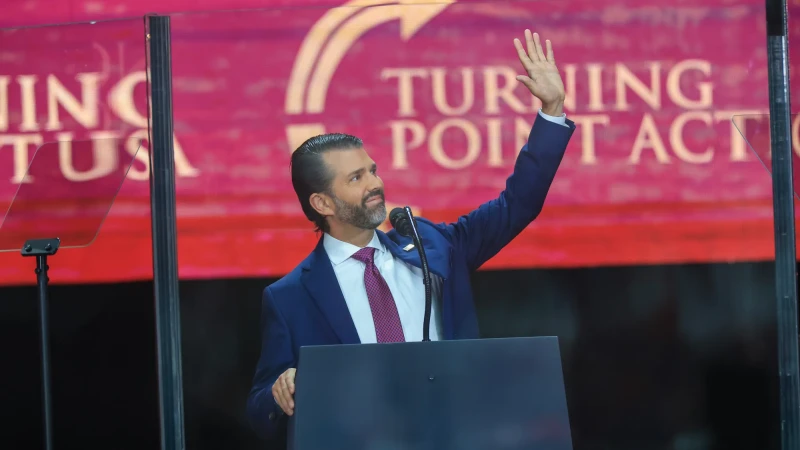
Trump Jr.’s portfolio also includes a more direct form of political proximity. In 2025, he and partners associated with 1789 Capital helped establish Executive Branch, a private Washington club reportedly charging a $500,000 founding-membership fee. Membership involved extensive vetting and attracted wealthy applicants interested in a venue frequented by political figures, investors and technology executives.
A private club can legitimately sell discretion, hospitality and professional networking. It does not need to promise government favors.
The commercial appeal of this club, however, is inseparable from its political environment. Its name, owners and expected membership distinguish it from an ordinary social venue.
The relevant question is not whether a contract guarantees influence. It is what members believe they are buying.
For executives whose companies depend on federal contracts, regulatory decisions or access to policymakers, informal relationships may be worth far more than the membership fee. That makes the club another example of political proximity operating as a premium commercial product.
Portfolio Companies and the Federal Government
The overlap becomes more sensitive when investments depend on federal spending or regulation.
Some 1789 Capital portfolio companies operate in defense, artificial intelligence, manufacturing and other sectors in which government contracts or policy decisions can materially change valuations. Reuters reported that the fund’s rapid expansion prompted ethics specialists to question whether its connection to the president’s son could create actual favoritism or the appearance of it. The firm and the White House denied that portfolio companies received preferential treatment.
Such claims are difficult to assess because legitimate policy and private benefit can occur simultaneously.
A defense company may win a contract because its product is superior. A domestic manufacturer may benefit from tariffs intended to support an entire industry. A regulator may revise a rule because the previous framework was ineffective.
When the president’s son has an economic interest in the companies affected, however, the public has limited means to determine whether each outcome was independent.
The problem is not merely a lack of proof. It is a lack of visibility. Trump Jr. is not required to publish the comprehensive financial disclosures expected of senior federal officials. The public may therefore know that he is connected to a company without knowing the size of his stake, the terms of his compensation or how much a policy decision added to his wealth.
Known Income, Undisclosed Economics
Trump Jr.’s annual income is not public.
His visible sources of compensation include:
- a multiyear, seven-figure Rumble agreement;
- board compensation and equity;
- interests in the Trump Organization;
- partnership economics at 1789 Capital;
- private-company advisory stakes;
- books, speaking engagements and media work.
These sources cannot be combined into a reliable annual figure. The terms of many arrangements remain private, and some compensation may be paid in equity rather than cash.
That distinction matters. A private-company stake may carry a high estimated value but remain impossible to sell. Board equity may appreciate without generating immediate income. Venture-capital carried interest may become valuable only after investments are exited. Crypto assets can rise or fall sharply before they are converted into cash.
Trump Jr.’s finances are therefore easier to describe as a collection of exposures than as a salary.
Why Net-Worth Estimates Vary So Widely
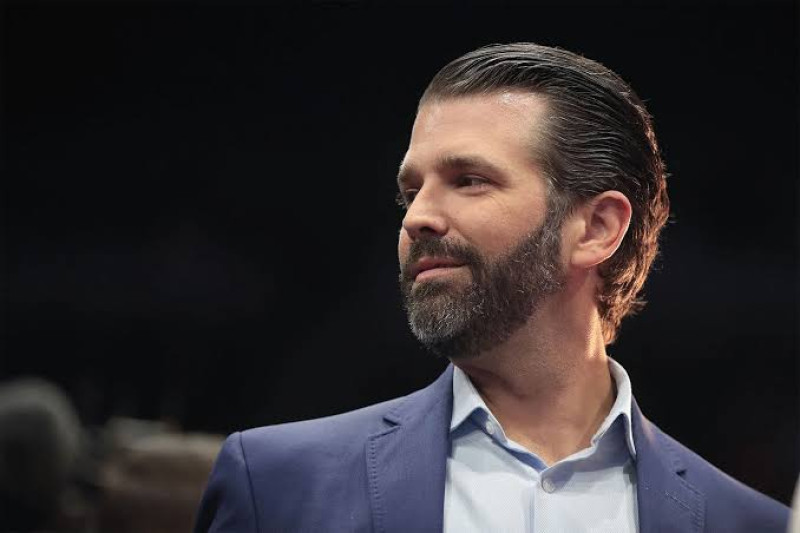
Forbes estimated Trump Jr.’s wealth at approximately $300 million in December 2025, up from roughly $50 million a year earlier. The publication attributed much of the increase to cryptocurrency and a growing portfolio of public and private business interests.
An earlier Forbes estimate had placed his fortune closer to $500 million.
The gap reflects the difficulty of valuing his holdings rather than a simple accounting error. His wealth may include:
- stakes in private companies with changing valuations;
- crypto assets with volatile prices;
- shares in thinly traded public companies;
- advisory equity subject to restrictions;
- interests in a family business with limited disclosure;
- carried interest in investments that have not yet been sold.
A precise figure would imply a level of certainty that the available information does not support. His net worth is better treated as an estimate that can change rapidly with market prices and assumptions about ownership.
It is also unusually dependent on what might be called the Trump premium: the additional value investors assign to companies, tokens or platforms associated with the family’s political relevance.
The Disclosure Gap
Trump Jr. occupies a position that existing ethics rules address poorly. He is a private citizen and may legally invest, advise companies, accept board seats and earn money from his public profile. Adult relatives of a president are not automatically required to suspend their careers.
He is also not an ordinary private investor. His appointment can move a public stock. His name can help a fund attract capital. His relationships may give businesses confidence that they understand the political environment. Companies affected by federal decisions may regard his involvement as commercially useful even when no explicit promise is made.
That produces five unresolved questions.
Should close presidential relatives disclose their investments voluntarily? Without fuller disclosure, the public cannot track how government decisions affect their wealth.
Should they accept equity from regulated businesses? The arrangement allows companies to reward political proximity without hiring a government official.
Can one adviser work with competing prediction platforms? The disclosed relationships do not explain how confidential information and strategic conflicts are managed.
Should contracts be offered on controlled government statements? Such markets may improve forecasting, but they also create direct incentives for leaks and trading by insiders.
When does networking become commercialized access? An exclusive club organized around political proximity may sell influence indirectly even when no member is promised a specific favor.
A Portfolio Built Around Alignment
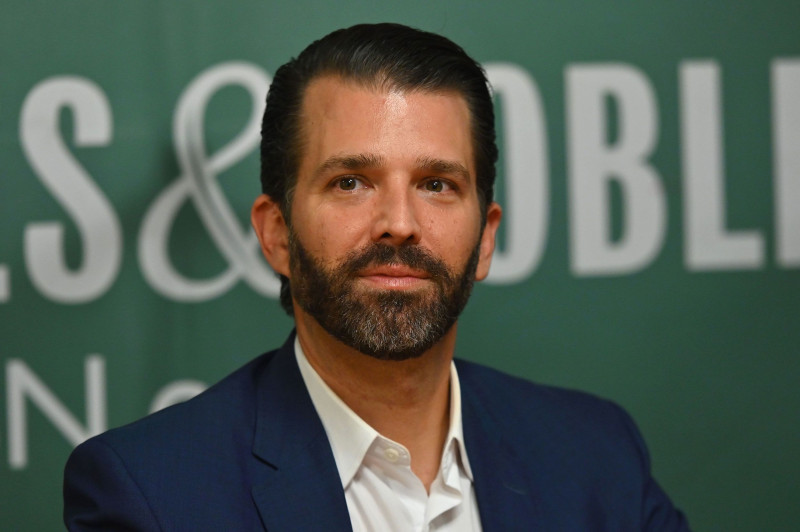
Donald Trump Jr.’s business model changed when his public identity became more valuable than his experience in property development.
He is now a venture capitalist, media host, board member, political brand and adviser to platforms that trade on the news cycle. These roles are not isolated. They form a system.
Media expands his audience. Politically aligned businesses monetize it. Venture capital finances companies serving the same ecosystem. Prediction markets benefit from political uncertainty. Private clubs connect capital with power. Policy-sensitive investments gain value when the regulatory environment moves in their favor.
There is no public evidence that Trump Jr. has personally traded using advance knowledge of his father’s statements. That allegation should not be made without proof.
The documented arrangement is already consequential: he owns, advises and promotes businesses whose value can rise with political attention, federal decisions and the perception that closeness to the presidency has commercial utility.
His most valuable asset may not be a particular company, token or fund position. It may be the market’s belief that he stands close enough to public power for the connection itself to deserve a price.
 Artem Voloskovets