Marina Lubimova
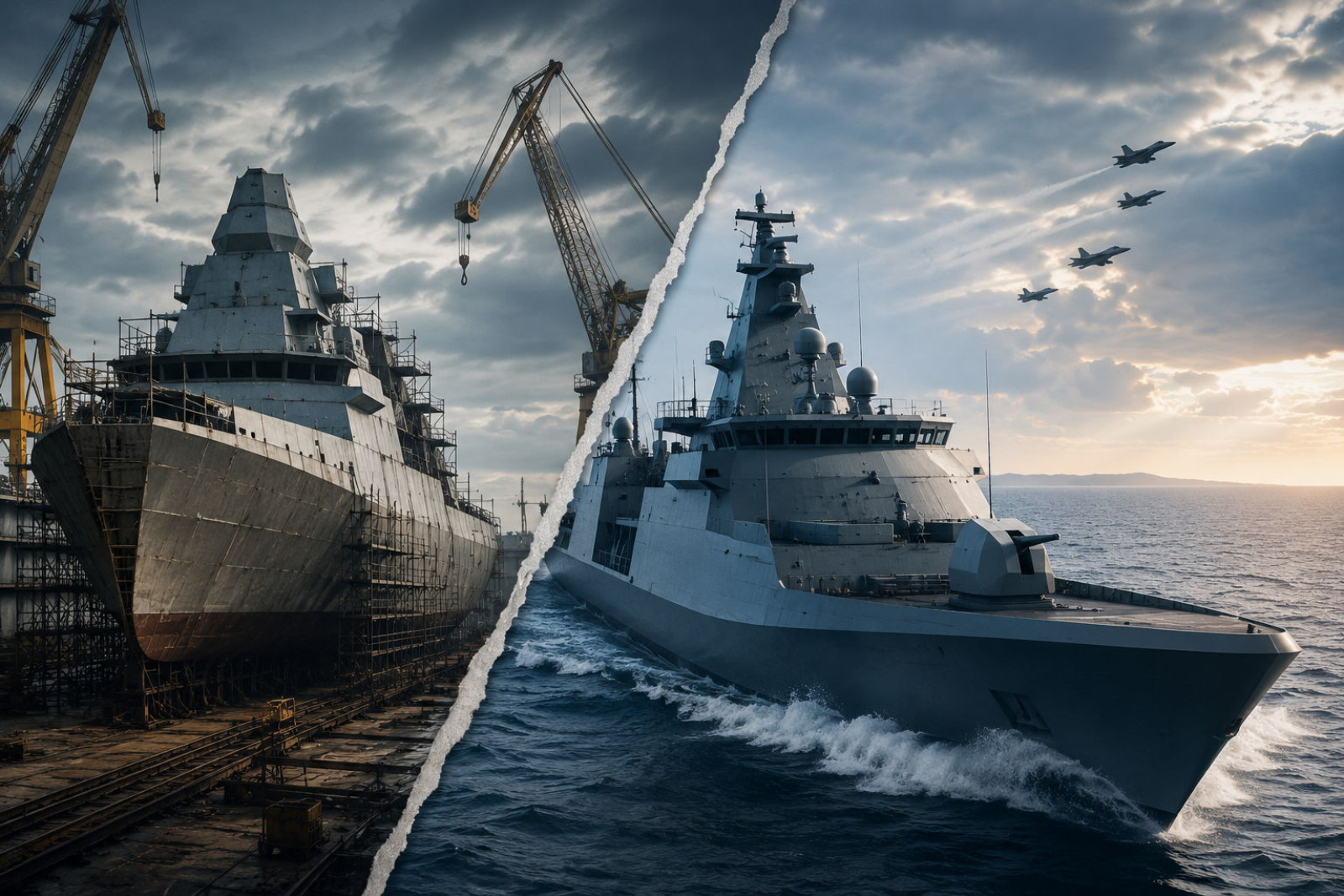
Germany's decision to cancel the €15.2 billion F126 frigate program and replace it with up to eight MEKO A-200 warships is one of those moments when procurement starts saying more than policy speeches. The choice points to a broader shift across Europe: military capability is increasingly being measured by delivery timelines rather than technical ambition.
Concepts Give Way to Platforms
The F126 program represented a familiar procurement model: a large, expensive platform designed around long-term requirements. Berlin chose something else. Instead of continuing with a custom-built project, Germany moved toward the MEKO A-200, a ship that already exists, already sails and can enter service much sooner.
The change is subtle but meaningful. Procurement systems behave differently when governments are planning for distant modernization than when they are trying to expand capability within a fixed window of time.
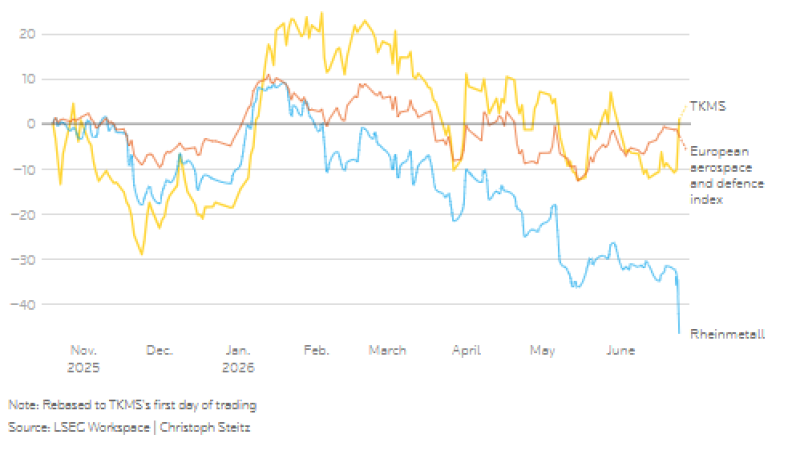
Use supplied chart. The divergence is difficult to ignore. Since January, TKMS has consistently traded above both Rheinmetall and the broader European defense sector. By late June, Rheinmetall had fallen roughly 40 percentage points below its starting level, while TKMS remained positive.
The market is treating shipbuilders and defense manufacturers differently. Production capacity is becoming a story of its own.
The Value of Standard Designs
Periods of military expansion rarely reward complexity. Every design change creates new engineering work. Every new requirement affects cost, certification and production schedules. The MEKO A-200 follows a different logic.
It is not built around a single mission. It is designed to perform across multiple operational environments while relying on a mature industrial base and established manufacturing processes. Use supplied TKMS capability graphic.
The platform combines:
- air warfare;
- surface warfare;
- anti-submarine operations;
- electronic warfare;
- maritime security missions;
- special forces support;
- humanitarian operations.
The emphasis is not on specialization. It is on availability.
The Constraint Is No Longer Funding
Europe has largely solved the budget problem. The challenge now is converting defense spending into operational assets before procurement cycles consume the strategic advantage those budgets were supposed to create.
In that environment, delivery schedules become part of capability planning. A vessel commissioned in four years may prove more useful than a more advanced vessel commissioned in eight. Germany's decision reflects that calculation.
Factories Matter More Than Presentations
Defense procurement ultimately becomes an industrial question:
- Can the supplier manufacture at scale?
- Can components be sourced quickly?
- Can ships be delivered on schedule?
Those questions increasingly determine who wins contracts. The answer is often found on factory floors rather than in product brochures. For companies such as TKMS, that shift plays directly to their strengths.
What Germany's Decision Actually Signals
The cancellation of the F126 program does not mean Europe is lowering its military ambitions. It suggests something more practical. Governments are placing greater value on equipment that can be produced, delivered and deployed within a meaningful timeframe. The debate is moving away from what armed forces might need in fifteen years. It is moving toward what they can put into service before the decade ends. That distinction is becoming one of the defining features of Europe's rearmament cycle.
 Marina Lubimova