Artem Voloskovets

The company expects $37 million to $39 million in non-cash fourth-quarter charges related to the exit. Management nevertheless raised its fiscal 2026 outlook, saying revenue should meet or exceed the upper end of its guidance and adjusted EBITDA should surpass the previous target.
That improved forecast outweighed a 2.5% decline in fourth-quarter comparable restaurant sales.
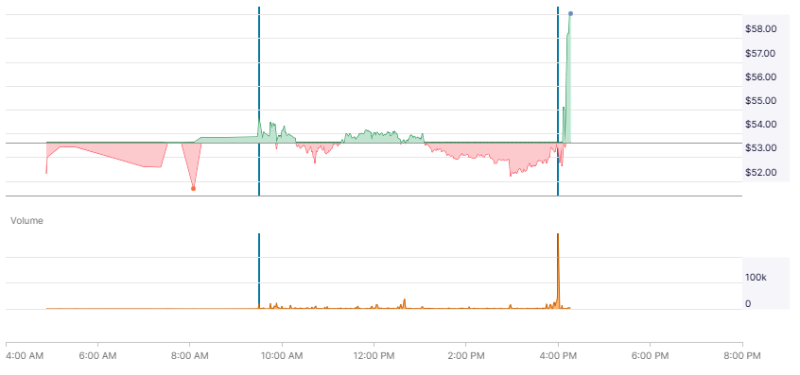
Cracker Barrel shares traded mostly between $52 and $54 before the announcement. The stock then climbed to roughly $58, an increase of about 9–10% from its pre-announcement level. Trading volume rose sharply at the same time, with the largest spike of the session occurring during the price move.
The reaction indicates that investors treated the Maple Street closure as an earnings decision rather than a growth setback. The near-term charges reduce reported profit, but removing the concept is expected to lift adjusted EBITDA from fiscal 2027.
A second brand that failed to justify further investment
Maple Street was intended to give Cracker Barrel exposure to the breakfast and brunch market without relying entirely on its mature namesake chain. The remaining closures show that the concept did not become a sufficiently attractive expansion platform.
Maintaining a separate brand requires its own management, marketing, menus, supply arrangements and real estate spending. Closing the final locations removes those costs and reduces the number of operating priorities competing for capital.
The size of the charge also shows that the exit is more than a routine store optimization program. Cracker Barrel is writing down investments tied to a business it no longer expects to develop.
Better margins are carrying the outlook
The raised forecast is notable because restaurant sales are moving in the opposite direction.
A 2.5% comparable-sales decline suggests that the core chain is still facing pressure from weaker traffic, consumer caution or both. Yet the company expects to outperform its previous EBITDA target, implying that pricing, cost reductions and operational changes are offsetting part of the sales weakness.
The distinction matters. Cracker Barrel is currently improving its earnings outlook without demonstrating a return to same-store sales growth. The Maple Street exit should make that earnings improvement easier to sustain. Beginning in fiscal 2027, the company expects adjusted EBITDA to benefit from no longer supporting the remaining locations.
Capital returns to the Cracker Barrel brand
The closure concentrates management attention and investment on the company’s main restaurant and retail operation.
Funds previously assigned to Maple Street can be redirected toward restaurant renovations, menu changes, labor efficiency and efforts to improve guest traffic. The company will also have a simpler cost structure and fewer underperforming assets.
The stock move shows that investors prefer this narrower strategy. The market accepted a large accounting charge because management paired it with a higher full-year forecast and a specific path to stronger EBITDA.
Sales remain the unresolved part of the story
Closing Maple Street can improve margins, but it cannot replace customer demand at Cracker Barrel restaurants.
Further earnings gains driven mainly by cost controls would become harder to sustain if comparable sales continue to contract. The next phase therefore depends on whether management can stabilize traffic while preserving the savings created by the restructuring.
 Artem Voloskovets