Marina Lubimova
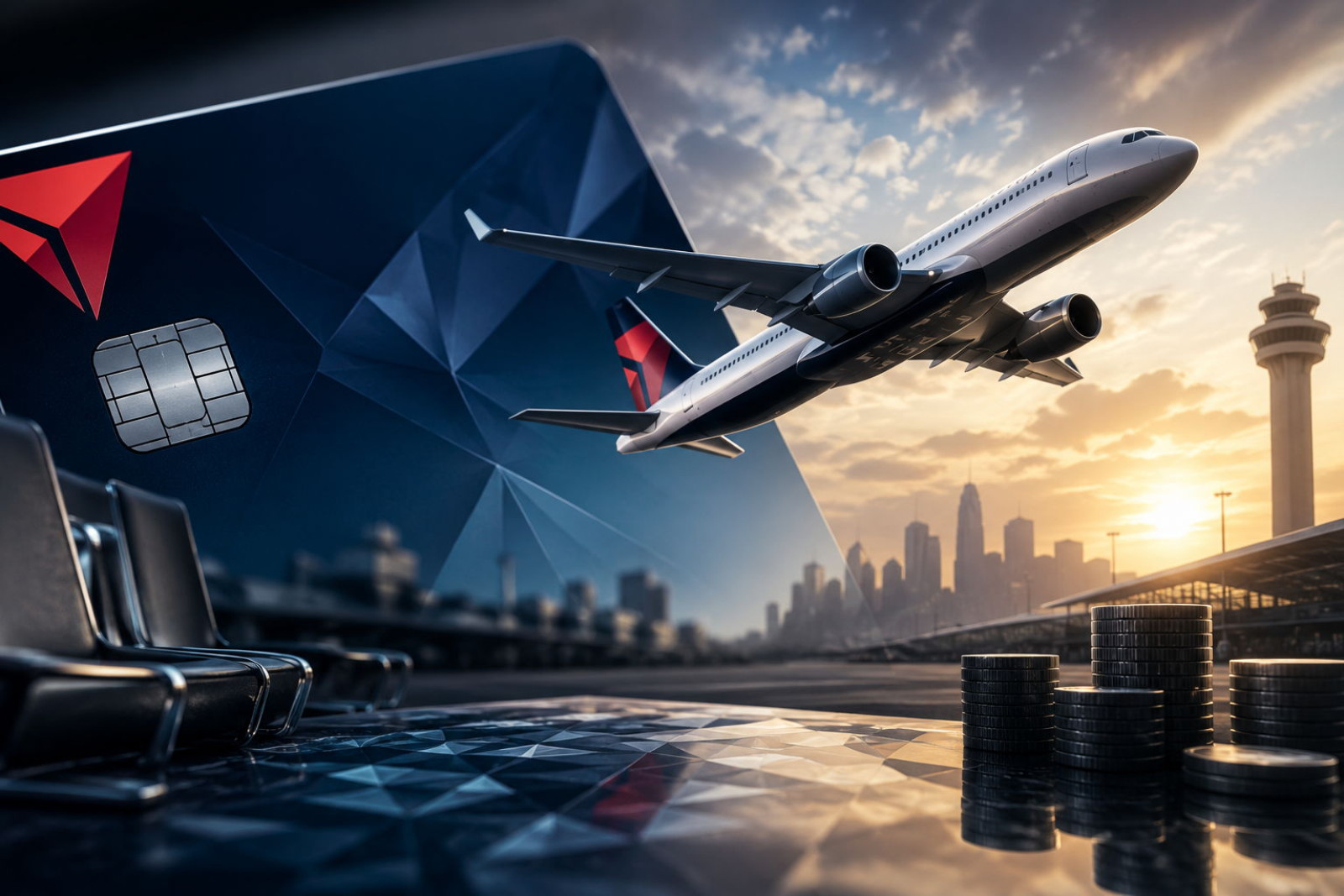
The American Express partnership has evolved into one of Delta's largest commercial relationships, giving the carrier access to a recurring revenue stream that is largely independent of ticket sales.
Revenue That Doesn't Require a Flight
Every purchase made with a Delta SkyMiles American Express card generates revenue for the airline. American Express purchases SkyMiles from Delta and distributes them to cardholders as rewards, effectively converting everyday consumer spending into airline income.
The scale is substantial. Bastian said the partnership is expected to generate $9 billion this year, while annual spending on Delta-branded American Express cards now approaches 1% of U.S. GDP.
Unlike passenger revenue, this business continues generating cash whether customers board a flight or not. Groceries, restaurants, subscriptions and business expenses all contribute to the same ecosystem.
- Revenue — $59.1B
- Pre-Tax Margin — 7.8%
- Adjusted EPS — $10.62
- Free Cash Flow — $2.7B
The Scale Is Difficult to Ignore
Delta generated $59.1 billion in revenue during FY2025 while producing $2.7 billion in free cash flow. Against those figures, a projected $9 billion payment from American Express becomes difficult to overlook. The partnership represents roughly 15% of Delta's annual revenue and exceeds the company's yearly free cash flow by more than three times. Few industrial companies rely on a single commercial relationship that contributes capital on this scale.
Loyalty Has Become a Financial Product
Frequent-flyer programs were once designed to increase repeat bookings. Today, they function as commercial platforms that link airlines, banks, and millions of consumers. Delta sells SkyMiles in bulk to American Express. The bank uses those miles to attract premium cardholders, while Delta receives a predictable stream of high-margin revenue tied to consumer spending rather than airline traffic.
The model reduces exposure to some of aviation's most volatile variables, including fuel prices, seasonal demand, and economic slowdowns. Credit-card spending tends to remain considerably more stable than airline ticket purchases. That stability has become increasingly valuable for carriers looking to diversify earnings.
The Customer Relationship Extends Beyond Travel
The partnership also changes how Delta competes. Benefits including lounge access, priority boarding, free checked baggage and accelerated mileage accumulation encourage customers to keep both flying Delta and using American Express for everyday purchases.
Each transaction reinforces the relationship between the airline and the customer, making loyalty part of a broader financial ecosystem rather than a simple travel rewards program. Instead of competing only for passengers, Delta is increasingly competing for consumer spending.
Scale Brings Dependence
The larger the partnership becomes, the more significant it is to Delta's financial performance. A business generating approximately $9 billion annually inevitably creates concentration risk. Changes in consumer spending, card economics, or loyalty program dynamics would have a much larger financial impact today than they would have a decade ago. Maintaining the value of SkyMiles therefore becomes more than a marketing exercise; it becomes part of Delta's long-term earnings strategy.
An Airline With Two Businesses
Delta still generates most of its revenue from transporting passengers. Yet another business now operates alongside aviation itself. One business flies aircraft around the world. The other monetizes customer relationships through payments, rewards, and financial partnerships. Those two businesses increasingly reinforce one another. Aircraft create demand for SkyMiles, while SkyMiles drive card spending that generates additional revenue regardless of whether customers are traveling.
| Metric | Value |
| American Express Payment (2026E) | $9.0B |
| Free Cash Flow | $2.7B |
| Total Revenue | $59.1B |
Conclusion
The projected $9 billion payment from American Express reflects more than the success of a loyalty program. It illustrates how the economics of the airline industry are shifting.
For Delta, the customer relationship no longer ends when a flight lands. Every purchase made with a co-branded credit card continues generating revenue, turning everyday consumer spending into one of the airline's fastest-growing financial assets.
 Marina Lubimova