Peter Smith

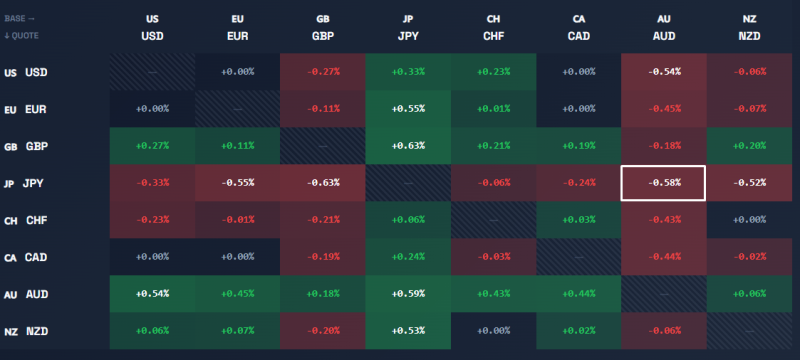
AUD/JPY remains in focus as currency flow data reveals a clear divergence between the Japanese yen and the Australian dollar. The FX heatmap shows JPY strengthening broadly across major currencies, including a -0.58% move in AUD/JPY, highlighting yen outperformance against the Australian dollar.
At the same time, AUD is under pressure across the board, losing -0.54% against USD and -0.45% against EUR, confirming broad-based weakness rather than an isolated move. Importantly, the US dollar remains largely flat, indicating that this is not a USD-driven shift but a cross-currency rotation into JPY.
Equity sell-off triggers demand for safe-haven yen
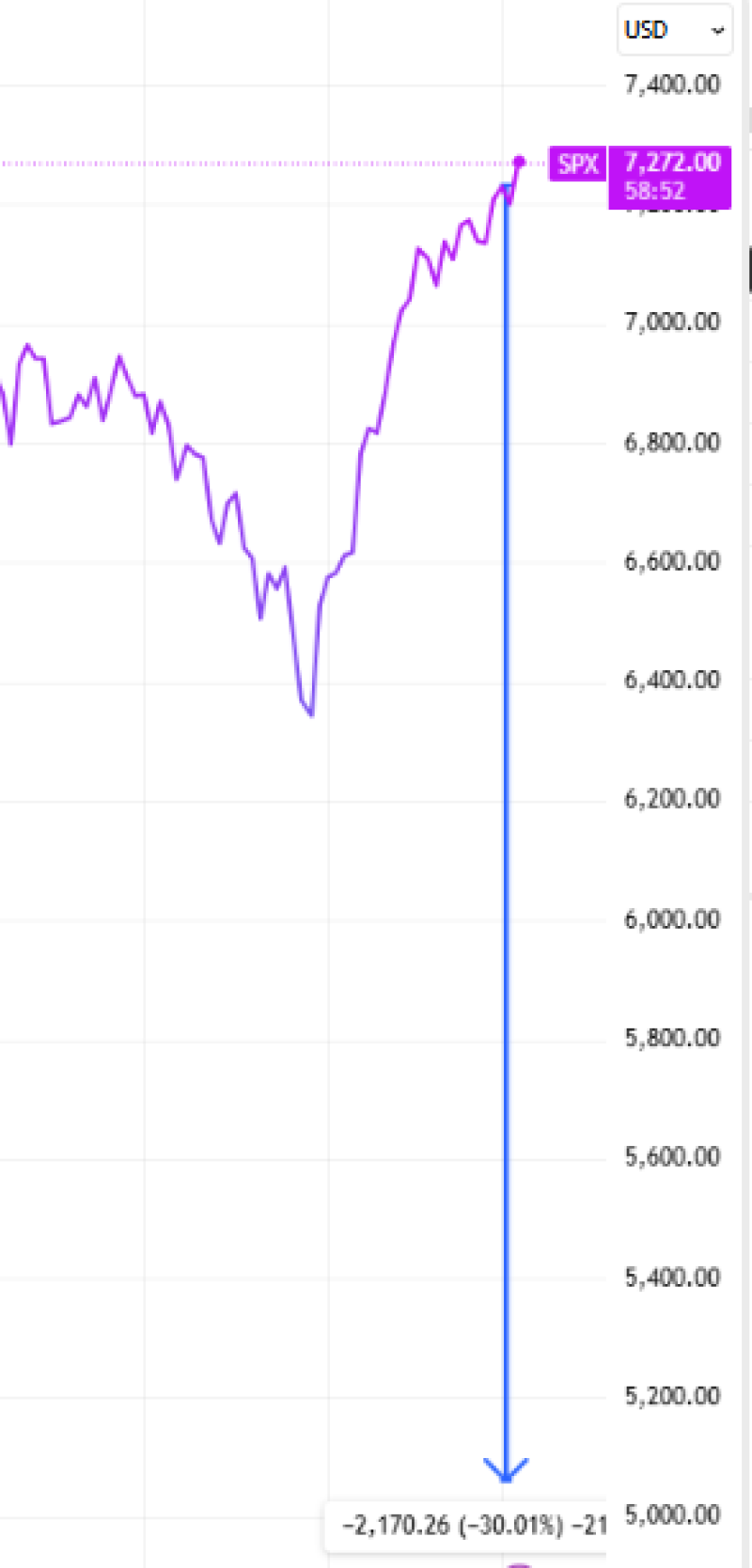
The key catalyst behind the move appears to be a sharp sell-off in equities. The S&P 500 shows a sudden vertical drop of roughly -30%, indicating a strong shock to market sentiment.
Such aggressive downside moves typically trigger risk-off behavior, prompting investors to reduce exposure to risk-sensitive assets and rotate into safe havens. The Japanese yen tends to benefit directly from these flows, especially during rapid market dislocations. The scale and speed of the decline suggest forced positioning or panic-driven selling, which often spills over into FX markets through carry trade unwinds - a dynamic that directly pressures pairs like AUD/JPY.
Commodity momentum slows, limiting support for AUD
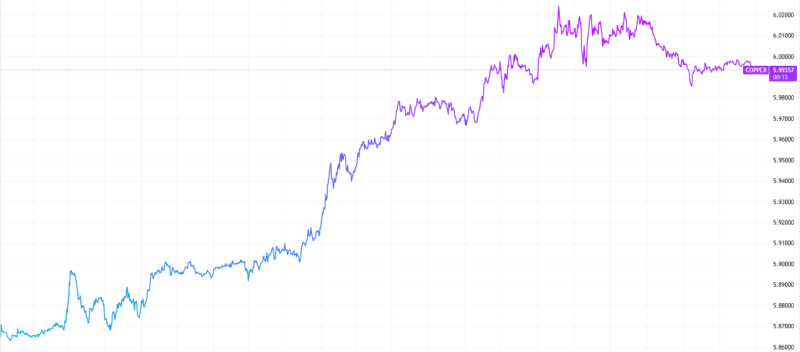
Commodities are not collapsing, but the structure is shifting. Copper, after a strong upward trend, is now showing clear signs of consolidation near recent highs, with momentum fading. This transition from trend to sideways movement is important: it signals that upside momentum in growth-sensitive assets is weakening. For the Australian dollar, which is highly correlated with commodity demand, this reduces one of its key sources of support.
In this context, AUD becomes more vulnerable, especially when combined with rising demand for defensive currencies.

AUD/JPY rebounds after sharp sell-off
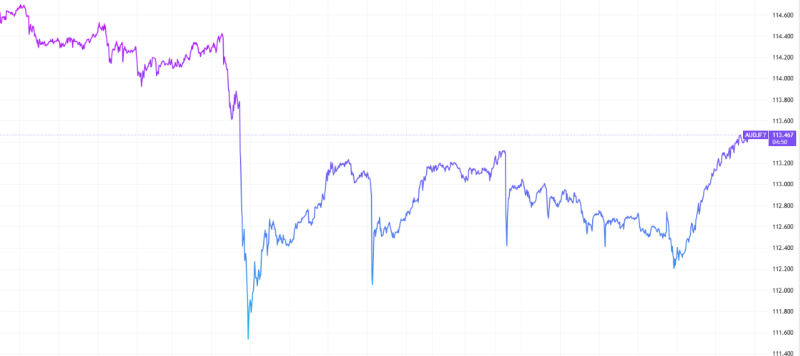
Price action in AUD/JPY reflects the macro shock clearly. The pair experienced a sharp and almost vertical drop, followed by a stabilization phase and a noticeable rebound toward the 113.4 area.
This structure suggests that the initial move was driven by a sudden liquidity or sentiment shock rather than a slow trend transition. The recovery that followed appears corrective, as price stabilizes after the initial sell-off. Despite the rebound, the broader context - yen strength, AUD weakness, and risk-off signals - suggests that the move higher may lack strong fundamental support and could remain vulnerable.
Conclusion
AUD/JPY’s recent price action reflects a clear sequence of data-driven events. A sharp equity market sell-off triggered a surge in demand for the Japanese yen, while commodity momentum began to stall, reducing support for the Australian dollar.
Although the pair is currently rebounding after the initial drop, underlying cross-market signals continue to favor yen strength. As a result, the recovery in AUD/JPY may represent a corrective phase rather than a full reversal, especially if risk sentiment deteriorates again.
 Peter Smith