Marina Lubimova

Brent crude futures settled at $89.22 per barrel, up $1.12, or 1.27%. The key development is not the size of the daily gain, but oil’s return toward $90 after a volatile correction. At this level, crude can again affect inflation expectations, corporate costs and the outlook for interest rates.
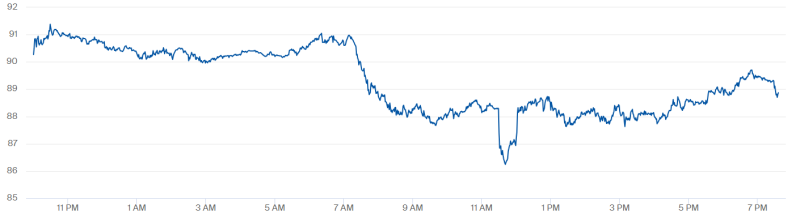
Brent began the session above $90 and briefly climbed past $91. Prices then weakened gradually before falling sharply around midday to roughly $86.3, the session low. The decline was quickly reversed: Brent returned above $88 and later approached $89.6, before easing near the close.
The recovery from the midday low indicates that buyers remained active below $88. A drop of almost $5 from the early-session peak failed to develop into a sustained selloff, leaving the market close to $89 by the end of trading.
The broader chart shows why the current level matters.
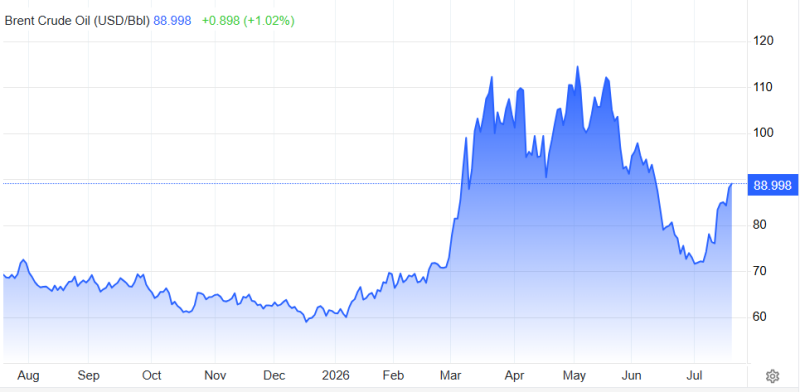
During the second half of 2025, Brent mostly traded between $60 and $70 per barrel. The market began rising in early 2026 and accelerated sharply in March, with prices later moving above $110. That surge was followed by a steep correction, which brought Brent down to about $72 in late June and early July.
The latest rebound has taken crude back to approximately $89, recovering more than half of the decline from the spring peak. Brent remains far below the levels seen above $110, but it is also nearly $17 higher than its recent low.
That increase can affect the economy through fuel, freight and production costs. Airlines, shipping companies, manufacturers and agricultural businesses are among the first to feel higher energy expenses. When those costs persist, some are passed on through higher prices.
For central banks, the duration of the move matters more than a single settlement. A brief rise toward $90 may have little effect on policy. Several weeks of elevated oil prices would make headline inflation harder to reduce and could weaken the case for faster interest-rate cuts.
The consequences would differ across markets. Energy producers would benefit from stronger selling prices, while transport, chemicals and other fuel-intensive industries could face margin pressure. Bond yields and the dollar could also receive support if investors begin to expect a slower pace of monetary easing.
Brent is now close enough to $90 for the level to become a test rather than a reference point. A sustained break above it would strengthen the inflation argument. Failure to hold the rebound would suggest that the market is still trading within the broad correction that followed the spring spike.
 Marina Lubimova