Artem Voloskovets
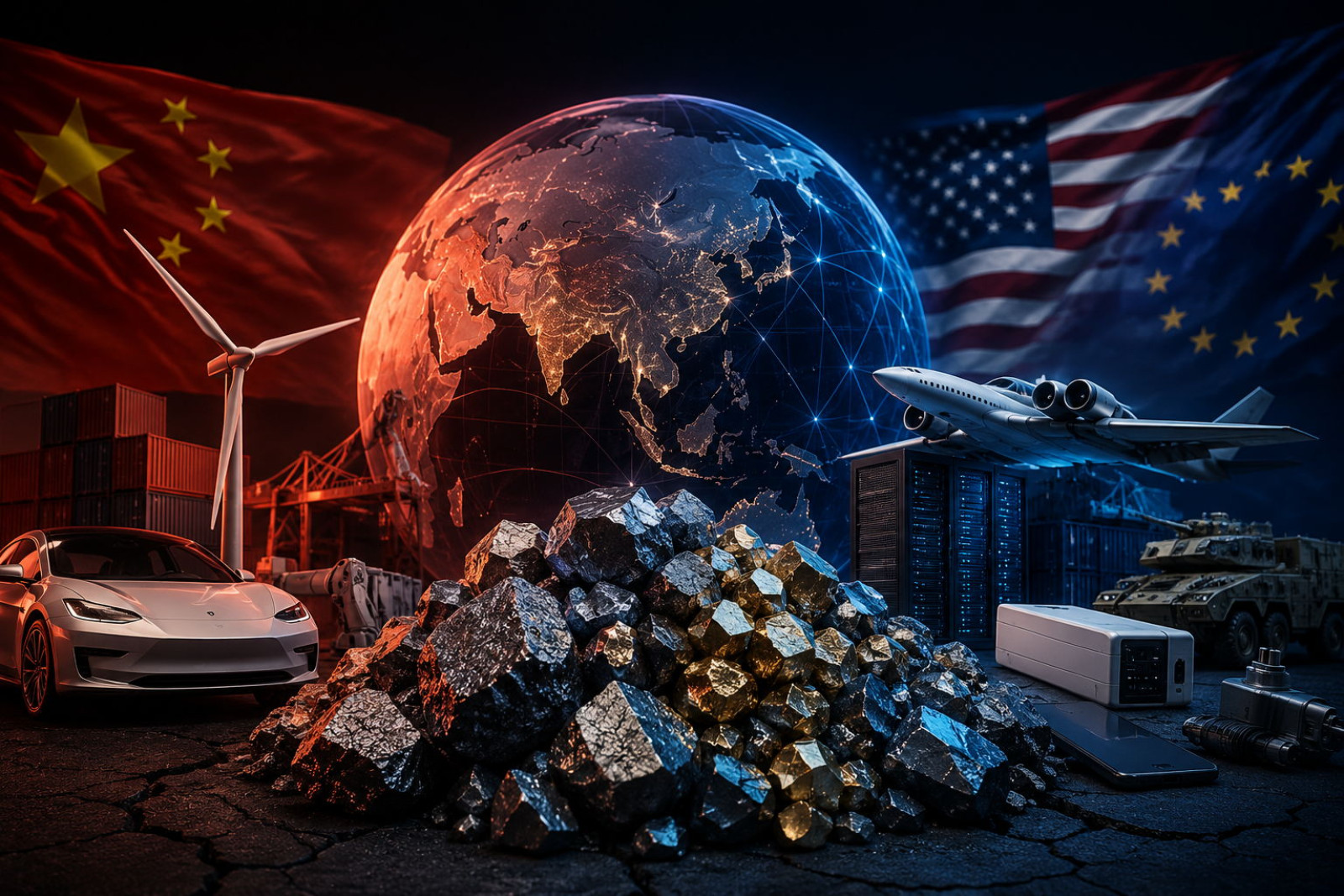
For years, the global technology battle has focused on semiconductors.
But what if the real leverage was never the chips? According to new data from the International Energy Agency, nearly $7 trillion in downstream Western economic value could be exposed to a single Chinese export decision involving rare earth elements.
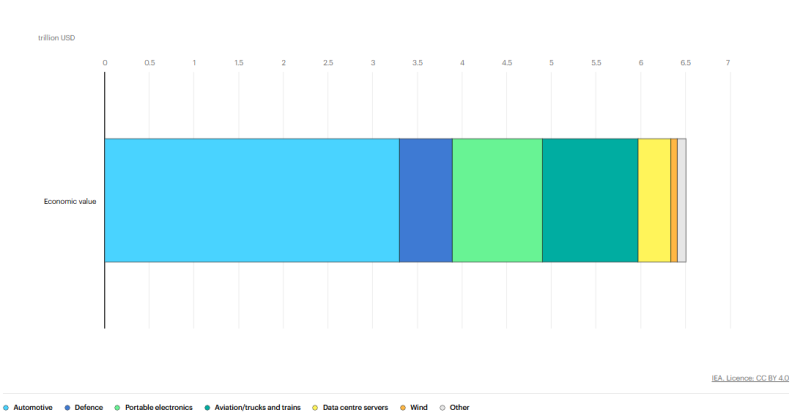
The breakdown is striking. Roughly $3.5 trillion of economic exposure comes from the automotive sector alone. Aviation, trucks, and trains account for another $1 trillion. Portable electronics represent approximately $1 trillion more, while defense systems, data centers, and wind energy infrastructure collectively add another trillion dollars in downstream dependency.
The implication is difficult to ignore: China may control one of the most important industrial choke points in the modern global economy.

Rare earths rarely dominate headlines the way AI chips or semiconductor restrictions do. Yet they remain essential for electric motors, fighter jets, batteries, advanced electronics, wind turbines, robotics, missile systems, and AI infrastructure hardware. Without them, much of the physical economy powering the modern digital world slows down or stops entirely.
So why do semiconductors receive most of the attention? Because chips are visible. Rare earth supply chains are not.
The semiconductor war largely revolves around manufacturing leadership, AI dominance, and export controls involving companies like NVIDIA and Taiwan Semiconductor Manufacturing Company. Rare earths operate differently. They are less glamorous, less discussed, and far more difficult to replace quickly at scale.
That may be exactly what makes them powerful.
If geopolitical tensions escalate further, export restrictions on rare earth materials could create ripple effects far beyond electronics manufacturing. Automotive production could slow, renewable energy deployment could weaken, defense supply chains could tighten, and AI infrastructure expansion could become significantly more expensive.
The most uncomfortable question may therefore be this: has the West spent years focusing on who designs the future while overlooking who controls the raw materials needed to physically build it?
The answer could determine the next phase of the global economic power struggle. Because in the emerging industrial cold war, chips may drive innovation - but rare earths may control the leverage.
 Artem Voloskovets