Marina Lubimova

- Italy’s wage stagnation is becoming structural
- Italy’s industrial base still works - but the system around it does not
- Demographics are turning stagnation into a long-term problem
- Italy’s real problem is institutional speed
- AI may expose the weakness faster
- Italy still has industrial strength - but the window is narrowing
Italy’s economy is no longer just growing slowly. It is barely compounding. Since 2000, Italian real GDP per capita has risen from roughly €26,280 to about €29,390. That is only around 12% growth across twenty-five years. Once housing, energy, and essential living costs are included, much of the population has effectively experienced stagnation rather than rising prosperity. This is not a temporary slowdown. It is the result of weak productivity growth lasting decades.
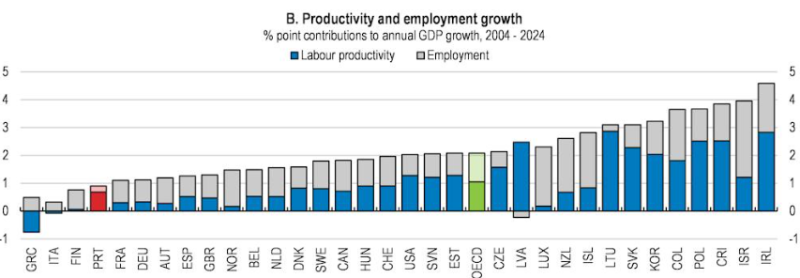
Labour productivity growth in Italy continues lagging much of Europe. Italy still remains one of Europe’s largest industrial economies. It produces globally competitive machinery, industrial equipment, chemicals, luxury goods, and automotive components. The problem is not industrial collapse.
The problem is that the broader economy stopped becoming more efficient. That matters because productivity determines whether wages rise, businesses scale, investment increases, and living standards improve. Without productivity growth, economies stop moving forward.
Italy’s wage stagnation is becoming structural
The OECD says Italian labour productivity growth has lagged the euro-area average since the mid-1990s and largely stagnated after 2010. The wage data reflects that directly. Real wages at the beginning of 2025 were still 7.5% below early-2021 levels - the worst performance among major OECD economies.
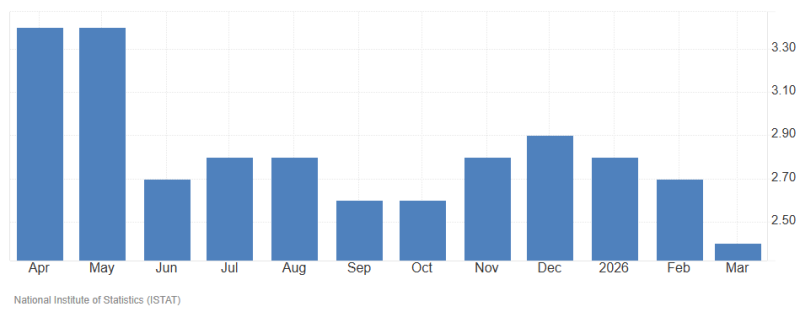
Weak wage growth is reinforcing long-term economic stagnation inside Italy. This is where the productivity crisis becomes visible in everyday life. Weak productivity eventually affects the entire economy. Wage growth weakens, businesses avoid expansion, investment slows, innovation declines, and younger skilled workers increasingly leave the country. At some point, the issue stops being “slow growth” and becomes declining economic mobility.
Italy’s industrial base still works - but the system around it does not
Italy still has world-class manufacturing clusters, but much of the economy remains fragmented. Many firms stay small, undercapitalized, and disconnected from deeper capital markets. That slows technology adoption, automation, AI integration, and long-term investment. For years, ultra-low interest rates masked some of these weaknesses because cheap money reduced pressure on efficiency. That environment is disappearing.
As capital becomes more expensive globally, economies with structurally weak productivity become increasingly vulnerable because growth can no longer rely on debt and liquidity alone.
Demographics are turning stagnation into a long-term problem
Italy’s demographic situation is making the productivity crisis harder to reverse. Low birth rates, aging populations, and brain drain reduce labor dynamism and weaken future growth potential. Younger skilled workers continue leaving for economies with higher wages and stronger innovation ecosystems. Female labour participation also remains below many European peers, limiting workforce expansion further.
That combination creates long-term pressure on:
- workforce growth;
- entrepreneurship;
- domestic demand.
Without stronger productivity growth, demographics become a permanent drag on the economy rather than a temporary challenge.
Italy’s real problem is institutional speed
Much of Italy’s productivity problem comes from structural friction inside the economy itself. Businesses still face slow courts, bureaucratic delays, fragmented regulation, inefficient capital allocation, and weak competition. All of this slows the movement of capital, talent, and innovation through the economy. That is why GDP alone misses the real issue.
An economy can stabilize temporarily through tourism, fiscal support, or exports. Productivity determines whether it becomes structurally more efficient over time. Italy has struggled to improve that efficiency for decades.
AI may expose the weakness faster
There is growing optimism that AI could help weaker economies accelerate productivity. But AI usually amplifies systems that are already efficient. Countries with scalable firms, strong universities, deep capital markets, advanced infrastructure, and productive labor forces are positioned to capture the largest gains first.
Economies with structural bottlenecks often struggle to adapt quickly enough. That creates a risk where AI increases divergence inside Europe rather than reducing it. AI does not automatically solve productivity crises. It can expose them faster.
Italy still has industrial strength - but the window is narrowing
Italy still has major advantages:
- industrial depth;
- engineering expertise;
- manufacturing specialization;
- export capacity;
- resilient private-sector clusters.
But reversing stagnation requires structural reforms capable of improving productivity across the entire economy. Without productivity growth, prosperity eventually stops compounding. That is the real risk Italy is facing now.
 Marina Lubimova