Sergey Diakov

Brent crude and U.S. 10-year Treasury yields are climbing at the same time again - a combination that markets historically struggle to absorb for long.
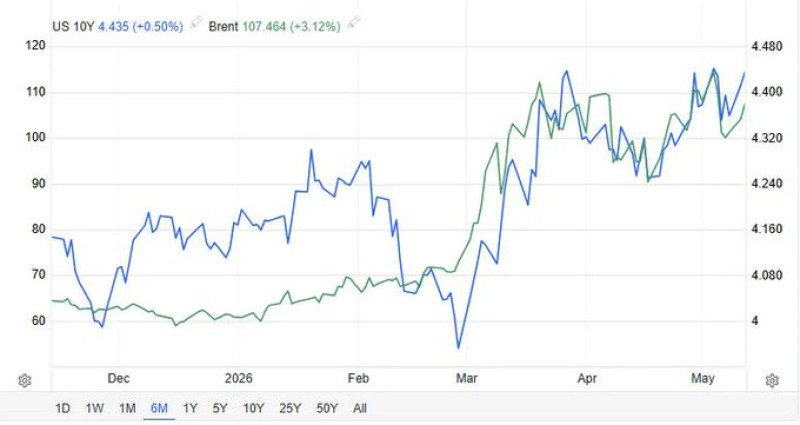
The latest chart shows Brent oil surging above $107 while the U.S. 10-year yield pushes toward 4.45%, marking one of the strongest synchronized moves in energy prices and sovereign borrowing costs in recent months. On the surface, both trends reflect resilient global demand and improving economic expectations. But for investors, the pairing may signal a much more complicated next phase for markets.
Historically, rising oil prices tend to feed directly into inflation expectations. Higher energy costs increase transportation, manufacturing, and consumer expenses across the economy, making it harder for central banks to justify rapid interest-rate cuts. That dynamic appears to be resurfacing now.
The bond market is already reacting.
Treasury yields have climbed steadily as traders reduce expectations for aggressive Federal Reserve easing later this year. If oil continues rising toward the $110–$115 range, inflation fears could intensify again, potentially forcing markets to reprice the entire rate-cut narrative that fueled recent rallies in stocks and crypto assets.
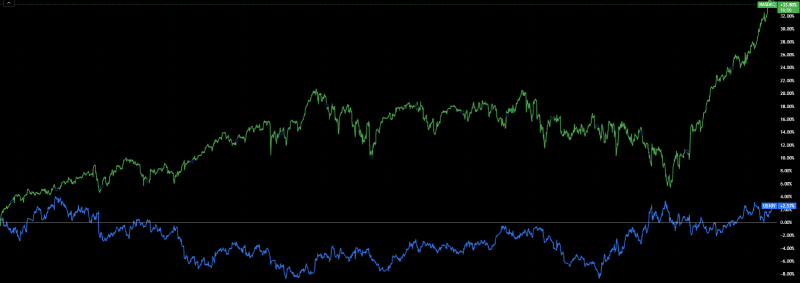
The second chart may reveal the market’s next major stress point.
While Treasury yields continue climbing, the Nasdaq has extended its rally sharply higher, creating a widening gap between equity optimism and tightening financial conditions. Historically, this type of divergence rarely persists indefinitely.
Rising bond yields increase borrowing costs and reduce the present value of future earnings - a dynamic that tends to pressure high-growth technology stocks most aggressively. Yet equities continue pricing in a relatively benign economic outlook and eventual Federal Reserve easing.
That disconnect may become increasingly difficult to sustain if oil prices remain elevated and inflation expectations continue rising.
For now, markets appear to be betting that economic growth can stay resilient without reigniting inflation. But if Treasury yields break decisively above recent highs, investors may begin reassessing whether the current AI-driven tech rally can continue under tighter monetary conditions.
If that repricing begins, volatility could spread quickly beyond technology stocks into crypto, small caps, and other liquidity-sensitive trades that have benefited from expectations of easier monetary policy.
The next move in yields may therefore become more important than the next move in stocks themselves.
 Sergey Diakov