Sergey Diakov
The semiconductor industry is entering a phase unlike anything seen in modern economic history.
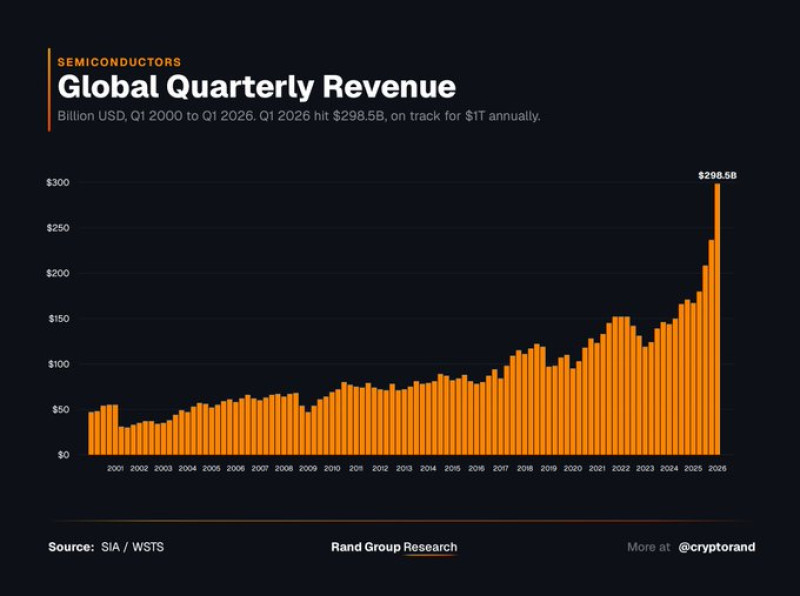
According to the chart, global quarterly semiconductor revenue surged to nearly $300 billion in Q1 2026, putting the industry on pace to generate more than $1 trillion annually for the first time ever. Just two decades ago, quarterly revenue struggled to stay above $50 billion.
The scale of the acceleration is extraordinary. After years of relatively stable cyclical growth, semiconductor revenue has suddenly gone almost vertical - a sign that the AI boom is reshaping global technology spending far faster than previous computing cycles.
So what is driving this massive expansion? The short answer: artificial intelligence.
AI Demand Is Rewriting the Entire Semiconductor Industry
The latest revenue trends across the AI ecosystem show just how aggressive the expansion has become.
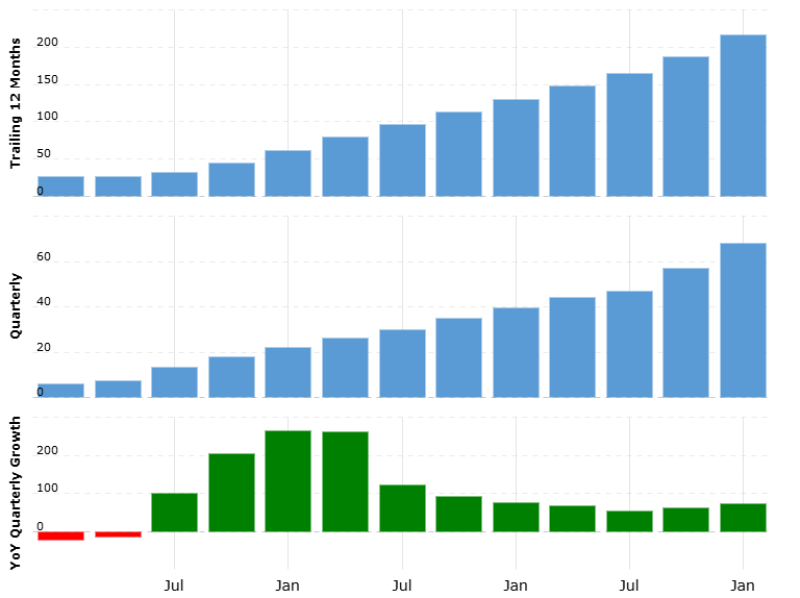
The chart highlights NVIDIA’s explosive revenue growth over recent quarters, with trailing twelve-month revenue, quarterly sales, and year-over-year growth all surging simultaneously. Even more importantly, growth remains exceptionally elevated despite NVIDIA already operating at enormous scale.
That combination is rare in corporate history.
For years, semiconductors were primarily tied to smartphones, PCs, gaming hardware, and consumer electronics. Those segments still matter, but the center of gravity has shifted dramatically toward AI infrastructure.
Today’s largest technology companies are spending enormous amounts on:
- AI data centers
- advanced GPUs
- cloud infrastructure
- networking hardware
- high-bandwidth memory
- AI inference systems
Training modern AI models requires unprecedented computing power, and nearly every layer of that infrastructure depends on semiconductors. The result is a global investment boom that is transforming the industry into one of the most strategically important sectors in the world economy.
Big Tech Is Pouring Billions Into AI Infrastructure
The semiconductor supercycle is not happening in isolation.
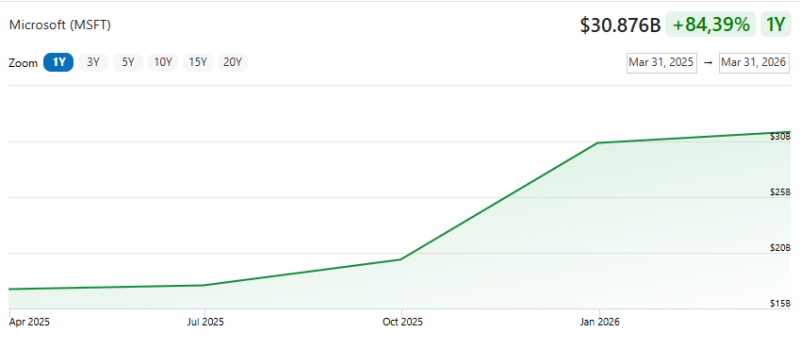
Major hyperscalers are rapidly increasing capital expenditures to expand AI capacity, cloud infrastructure, and next-generation data centers. Microsoft’s capital spending alone has surged dramatically over the past year, reflecting the enormous cost of building and scaling AI systems globally.
That spending matters because hyperscalers effectively finance the entire semiconductor ecosystem.
Every new AI cluster requires:
- GPUs
- advanced memory
- networking chips
- power systems
- cooling infrastructure
- semiconductor manufacturing capacity
In other words, the AI race is creating a feedback loop: higher AI demand drives more infrastructure spending, which then drives even greater semiconductor demand.
Why This Cycle Looks Different From Previous Tech Booms
The semiconductor industry has historically been cyclical. Revenue would surge during strong economic periods and then collapse once inventories became oversupplied. This cycle appears fundamentally different for one important reason: AI infrastructure spending is increasingly viewed as a strategic necessity rather than optional technology investment.
Governments and corporations now treat AI capacity similarly to:
- electricity grids
- internet infrastructure
- cloud computing
- telecommunications networks
That changes corporate behavior dramatically. Instead of slowing investment during uncertainty, many firms are accelerating spending because they fear falling behind competitors in the global AI race.
Why Semiconductors Are Becoming Geopolitical Assets
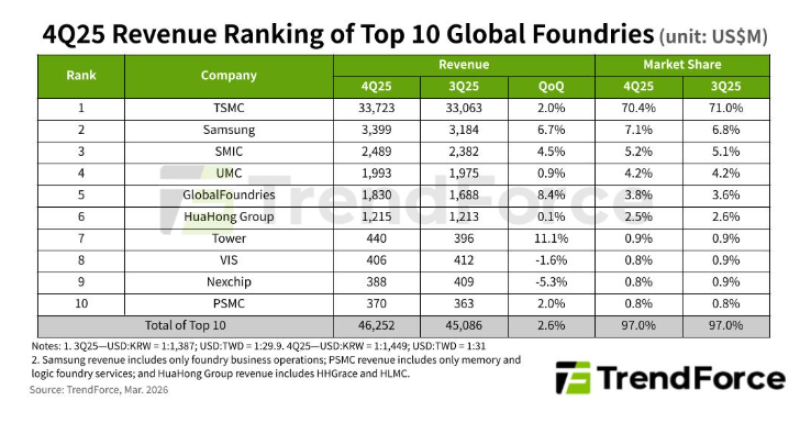
The geopolitical importance of semiconductors is also becoming impossible to ignore. The latest foundry market rankings show TSMC controlling roughly 70% of the global advanced foundry market - a level of concentration that few industries in the modern economy can match.
That dominance creates enormous strategic risks for governments and corporations worldwide.
Advanced semiconductors now power:
- AI systems
- military technologies
- cloud computing
- autonomous systems
- communications infrastructure
As a result, control over semiconductor manufacturing is increasingly viewed as a national security issue rather than simply a business concern. This explains why the United States, China, Europe, Japan, and the Middle East are all investing aggressively into domestic semiconductor ecosystems.
Could the AI Chip Boom Become a Bubble?
That is the question markets are beginning to debate more aggressively. The chart’s near-vertical acceleration resembles previous periods of technological euphoria, including:
- the dot-com boom
- telecom infrastructure expansion
- cryptocurrency mining cycles
Whenever growth accelerates this quickly, investors naturally begin questioning sustainability.
Risks do exist:
- oversupply
- excessive data center construction
- weaker enterprise AI monetization
- geopolitical tensions around Taiwan
- export restrictions between the U.S. and China
However, unlike many speculative cycles of the past, today’s AI infrastructure boom is already producing real revenue at enormous scale. That distinction matters.
What Happens Next?
If current trends continue, semiconductors could become one of the largest industries in the global economy within just a few years. The biggest question is no longer whether AI will increase chip demand.
The real question is whether the world can build enough infrastructure fast enough to support the scale of computing power that governments, corporations, and AI developers now require. And judging by the charts, that race has already accelerated far faster than most investors expected.
 Sergey Diakov