Marina Lubimova
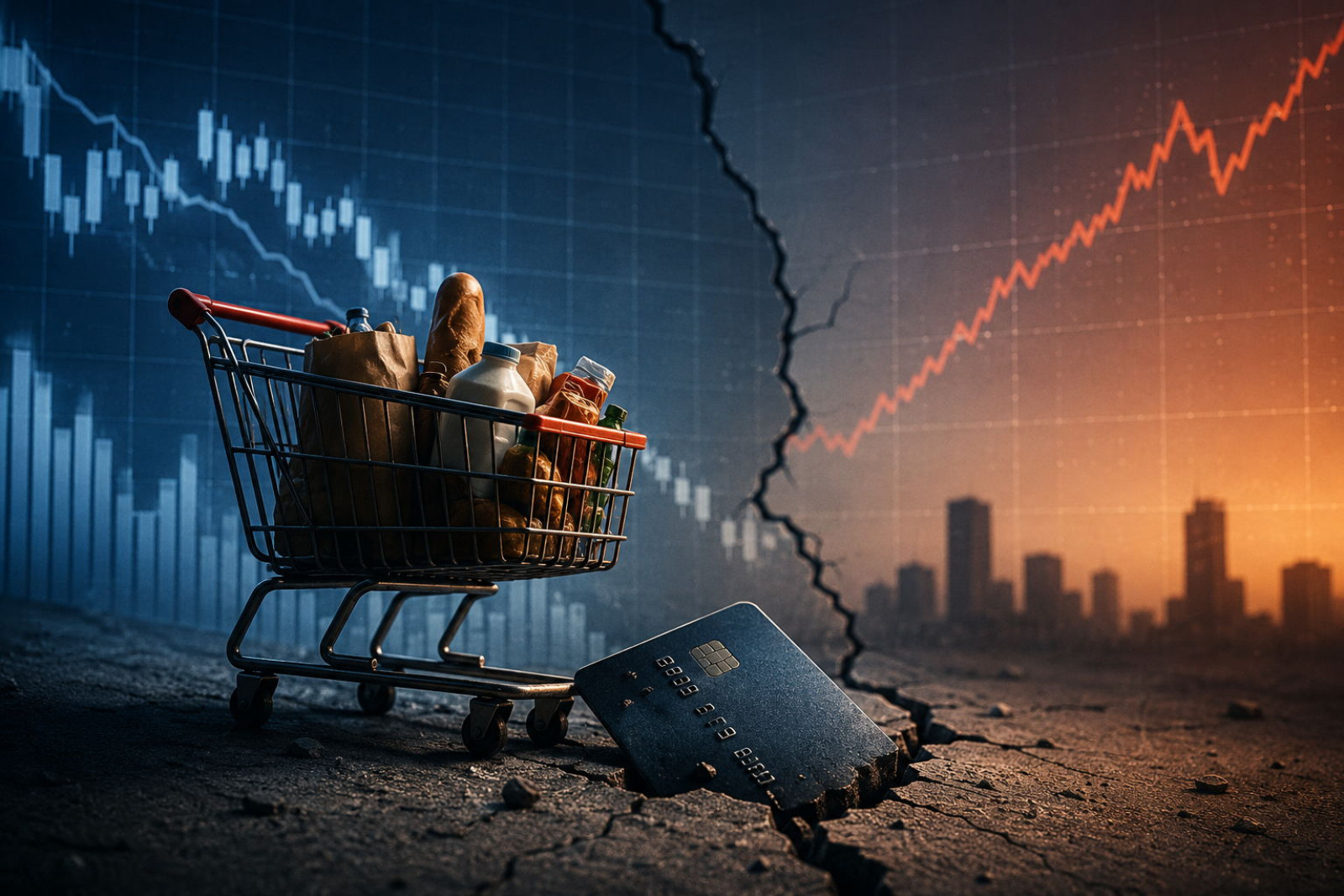
Individuals in the United States are buying goods and services at a high rate, which supports the economy while prices and interest rates remain high. Data indicates that this behavior now relies on hourly pay and loans instead of extra cash or available funds.
To understand why this situation is changing, three charts provide information about economic trends.
Spending Is No Longer Outrunning Wages
For two years observers stated that buyers were active enough to avoid a significant economic decline. The most recent figures show that this situation is evolving.
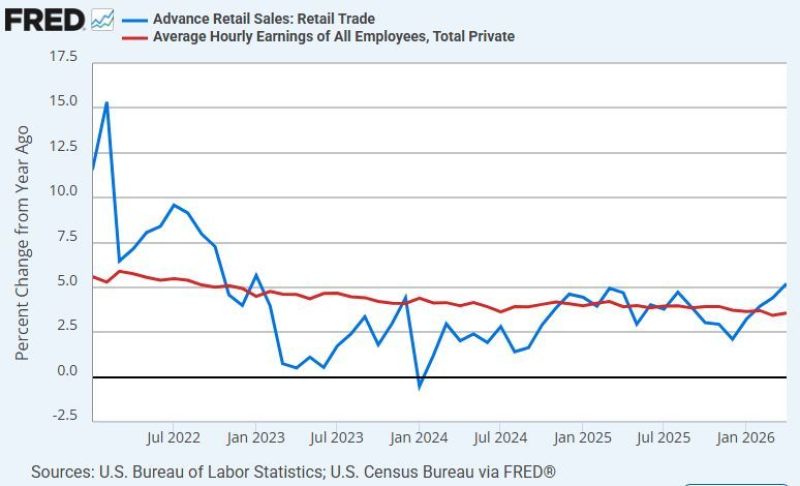
In 2022 the rate at which people bought retail goods was higher than the rate at which their pay increased. Consumers continued to buy items despite high prices and interest rates because they used extra money and inexpensive loans from the pandemic period.
But this difference between spending and pay has disappeared - retail sales are growing more slowly and inconsistently, while the rate of pay increases is also slowing down. People continue to buy goods but they are not increasing their spending levels.
By looking at the next chart, the reason for this importance becomes clear.
Read more: Imported Inflation May Be Quietly Returning
The Pandemic Savings Cushion Is Gone
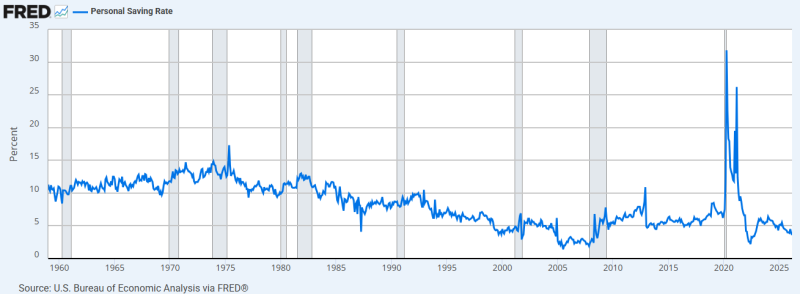
The extra funds that people kept during the pandemic are mostly gone.
After those funds reached high levels during 2020 and 2021, the rate of saving returned to low levels that are common in history. Consumers do not have the same cash reserves that allowed them to buy goods when prices were rising. As this happens the way the economy functions changes.
Spending is now more dependent on what individuals earn and what they borrow rather than on money they saved previously. On the final chart, this change is more visible.
Credit Stress Is Quietly Rising
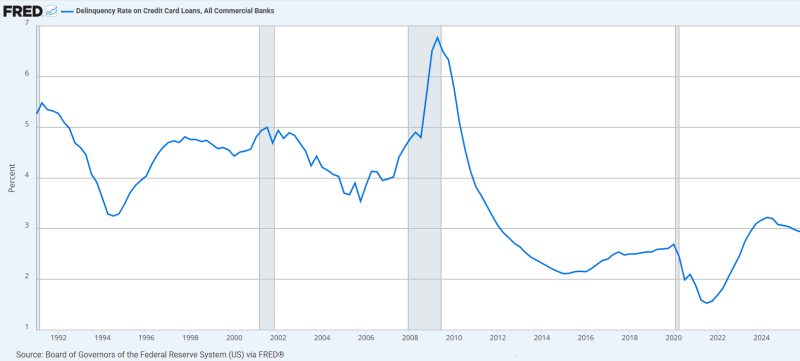
The percentage of credit card accounts that are behind on payments has increased since 2022.
Consumers use more revolving credit because they have fewer savings and their pay is growing more slowly - this does not mean a recession is certain but it shows that people face more financial pressure than the general spending data suggests.
With the three charts, a transition is visible that markets might not fully recognize:
- pay increases are slower,
- cash reserves are empty,
- credit problems are increasing,
- the ability to keep spending is lower.
This is important for more than just the retail sector.
The wider market including companies involved in Artificial Intelligence, relies on the idea that demand for products will stay high. If consumers have limited income, investors might see a difference between future hopes for technology and current economic facts.
And while individuals in the United States are still buying products, the factors that allow them to do so are less stable than they were two years ago.
 Marina Lubimova