Sergey Diakov
Goods prices were rising more slowly - shipping expenses returned to historical averages. Supply chains became steady. As the price increases that followed the pandemic appeared to be under control, central banks focused on the cost of services and the conditions of employment rather than on price changes from foreign sources.
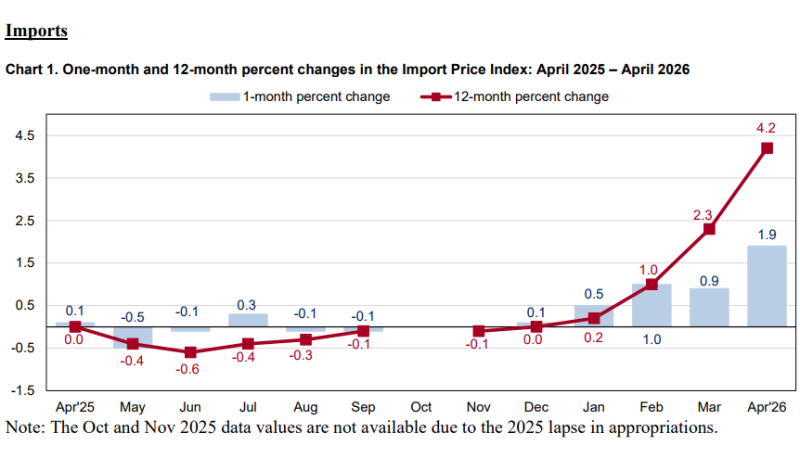
But the most recent data regarding the Import Price Index indicates a different trend.
The current change is not extreme - it is the rate of increase that is notable. For the year ending in April 2026, the change in import prices rose to 4.2% after being below zero late in the previous year. On a monthly basis, prices also began to rise quickly again.
And this data alters the conversation regarding how prices change.
For participants in the market, inflation from imports creates a more difficult environment for policy than inflation that comes from domestic demand. By using interest rates, central banks are able to slow down how much people buy locally. It is much harder for them to control how costs from foreign countries move into the domestic economy.
And the current economic cycle is sensitive because the global economy relies on multiple factors that cause prices to rise at the same time.
In energy markets, the supply is limited by physical constraints. As trade becomes more divided, companies build supply chains that have extra parts rather than those that cost the least. Due to industrial policies, costs are rising in sectors that governments consider important.
At the same time spending on infrastructure for artificial intelligence is creating a high level of demand for energy, semiconductors, hardware for networking, systems for cooling and equipment for industry.
With the factors combined, modern inflation is no longer a simple economic variable. It is becoming a form of pressure on infrastructure.
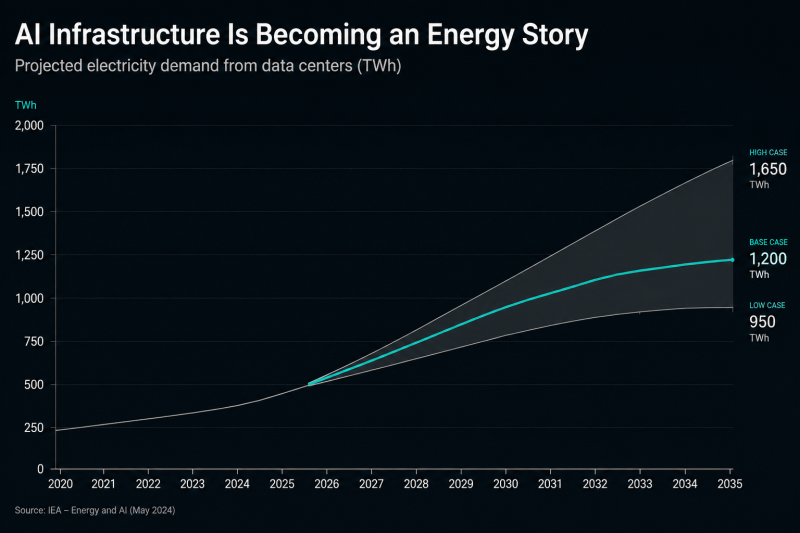
To understand why this chart is important, one must see artificial intelligence as a matter of industry and energy instead of just software. If companies deploy artificial intelligence on a large scale, they require a massive amount of physical equipment - this includes systems to generate power, transformers, cooling units, upgrades to the electrical grid, factories for semiconductors, equipment for networks and materials for construction.
All of those items are part of global supply chains.
And global supply chains are no longer designed primarily to lower costs.
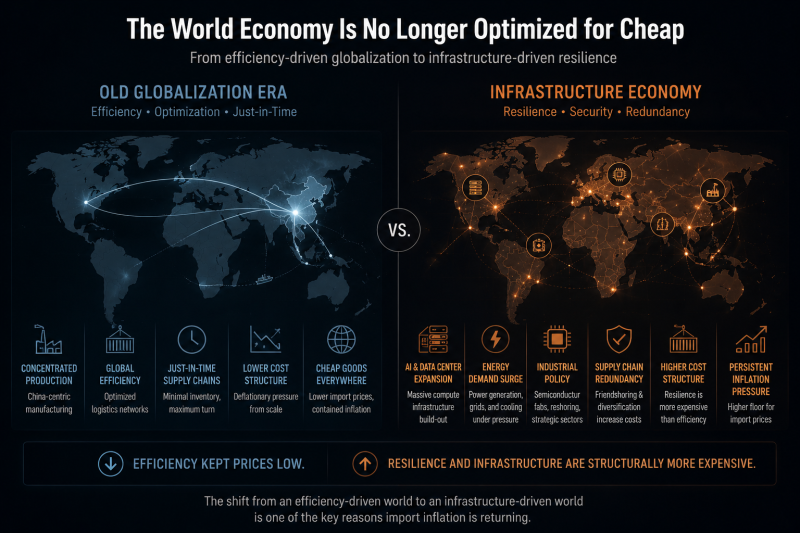
This change is an explanation for why prices are staying high when many economic models predicted they would fall after the period following the pandemic ended.
For many years globalization acted as a way to keep prices low. Supply chains prioritized low expenses, manufacturing happened in regions where labor is cheap and logistics networks focused on making prices smaller.
The new model is different.
By making the things a priority, governments seek:
- extra parts in supply chains;
- moving semiconductor factories back to their own countries;
- the safety of energy supplies;
- industrial policy;
- independence in making strategic goods.
If those priorities are met, the system becomes more resilient. But they also make the cost of the system higher.
To change the global economy, countries are trying to do multiple expensive things at once
- changing how energy is produced;
- building more infrastructure for artificial intelligence;
- moving supply chains because of politics;
- growing the number of local factories.
By design, the changes cause prices to rise over the long term. Due to the recent data on imports, a common assumption for 2026 is now in doubt. Many thought that price increases would slow down enough to allow for large cuts in interest rates.
When the cost of imports rises again, it creates a problem for people who make policy. If they cut rates too soon, they risk making inflation rise again through foreign channels. If they keep rates high for a long time, they risk slowing down industrial work and buying by consumers.
To choose either option is difficult.
In earlier periods, inflation was related to the pandemic and high spending. If the markets are seeing something different now, it is a change in the price of goods that are traded globally that is slower and lasts longer.
This is an important distinction.
When prices rise because of a temporary shock, they eventually return to normal. When the basic cost of doing business rises, the higher prices stay for a long time. On the markets, individuals still talk about inflation as if it were only about the supply of money.
It is a matter of how goods are moved and made. If the price of imports continues to rise, the next part of the economic cycle will be a long period where the global economy adjusts to higher costs.
 Sergey Diakov