Marina Lubimova
Ownership Beats Income
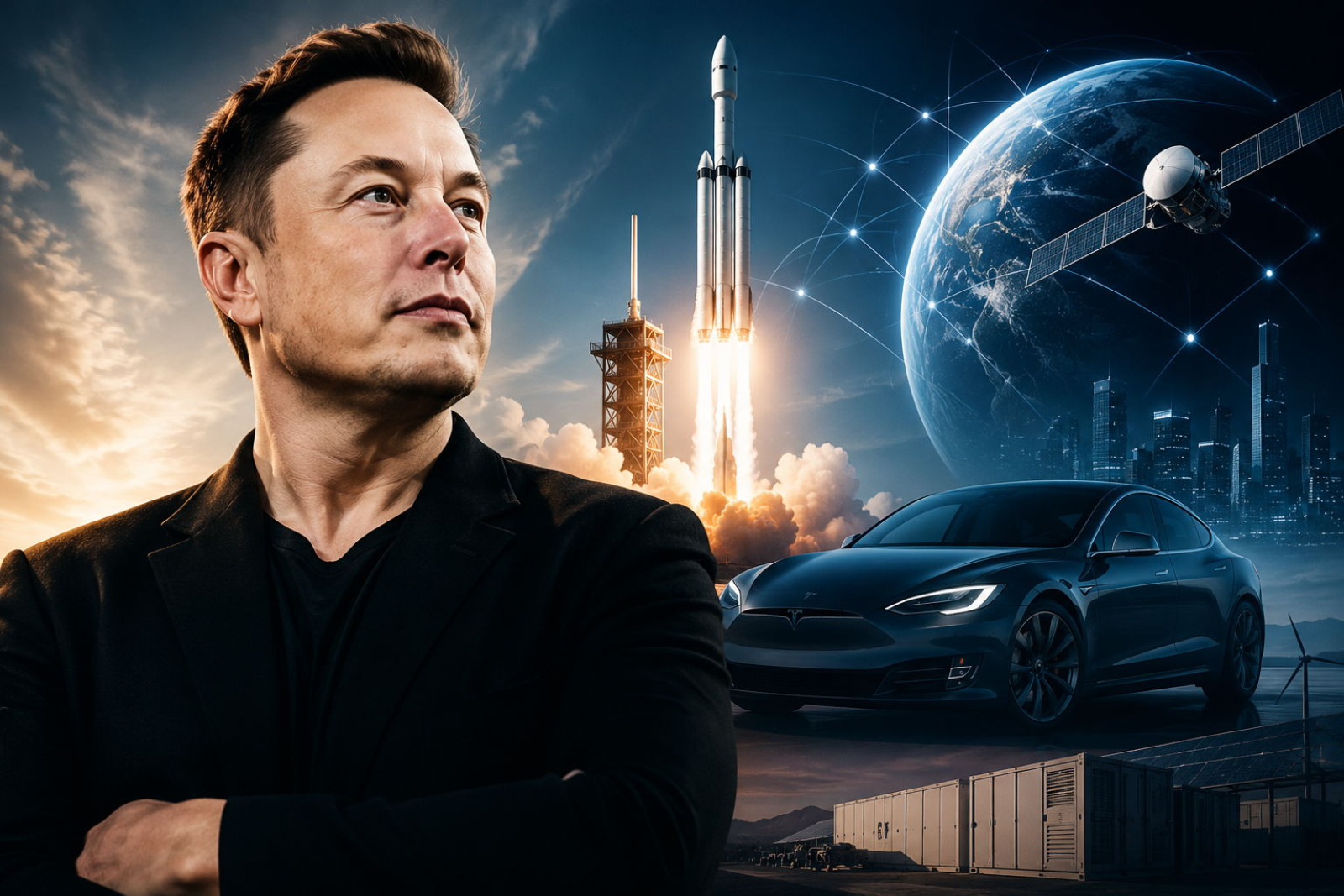
Most of Musk's wealth comes from shares in Tesla and SpaceX. This highlights a key difference between income and wealth. Salaries generate cash flow. Ownership captures the value created by an entire business. As companies grow, shareholders benefit from that growth. The larger and more scalable the business, the greater the potential impact on personal wealth.
Scale Matters More Than Margins
Tesla does not sell luxury products to a small audience. SpaceX does not serve a handful of customers. Both companies operate in markets measured in hundreds of billions of dollars. Electric transportation, energy storage, satellite communications, and space infrastructure affect entire economies. Businesses that target large markets have more room to grow than those focused on narrow segments.
Technology Creates Leverage
Traditional industries often require proportional growth: more customers require more staff, facilities, and resources. Technology changes that equation.
A software update can reach millions of users. A satellite network can serve entire countries. An AI system can perform tasks that previously required thousands of employees. This leverage explains why technology founders dominate modern wealth rankings.
Capital Follows Innovation
Tesla and SpaceX spent years operating without consistent profitability or widespread support. What attracted capital was not current performance but the possibility of changing entire industries. Investors, governments, and institutions tend to direct resources toward businesses that offer a clear vision of the future.

Building Ecosystems Creates Staying Power
Neither Tesla nor SpaceX relies on a single product. Tesla combines vehicles, batteries, charging infrastructure, energy storage, and software. SpaceX combines launch services, satellite internet, spacecraft development, and government contracts. Companies with multiple revenue streams are often more resilient than businesses dependent on one product or market.
The Real Lesson
The path to significant wealth has changed. In previous generations, fortunes were often built through manufacturing, real estate, or resource ownership. Today, the largest gains increasingly come from controlling scalable platforms, technologies, and networks.
Musk's fortune is an extreme example, but it reflects a larger shift in how value is created in the modern economy.
Conclusion
The $1.2 trillion figure makes headlines. The structure behind it is what matters. Ownership, scale, technology, and ecosystem building have become the main drivers of wealth creation. Elon Musk's net worth is less a story about one individual and more a snapshot of where economic value is concentrating in the twenty-first century.
 Marina Lubimova