Artem Voloskovets
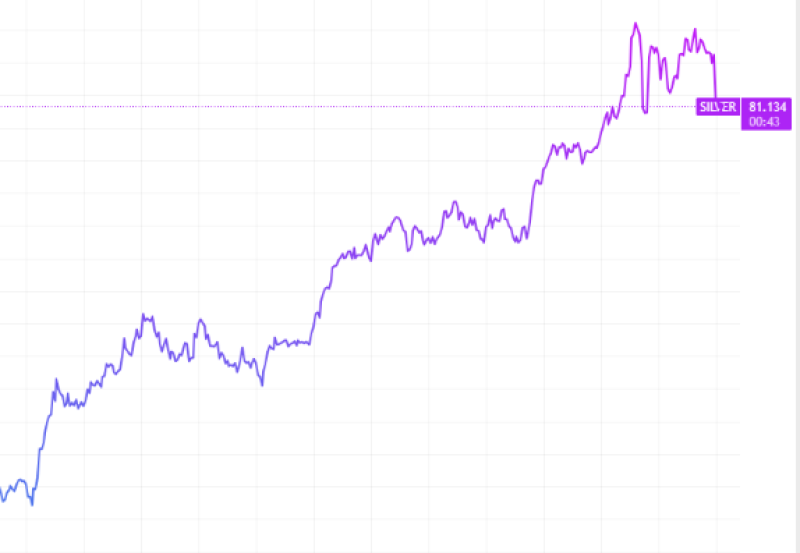
Silver prices pushed above the $81 level after another strong breakout, extending one of the clearest momentum trends across global commodity markets.
But the bigger signal may not be silver itself.
Historically, silver tends to outperform during periods when markets begin pricing:
- expanding liquidity,
- weaker fiat purchasing power,
- persistent inflation,
- and accelerating industrial demand.
That makes the current rally especially important.
Unlike gold, silver sits between two worlds:
- monetary asset,
- industrial metal.
It benefits not only from safe-haven demand but also from growth tied to solar energy, electrification, AI infrastructure, semiconductors, and industrial manufacturing. That dual-demand structure often makes silver more volatile and more sensitive to macro regime changes than gold.
The chart structure reinforces that idea. Silver is not experiencing a single speculative spike. The rally has developed through multiple accumulation phases with shallow pullbacks and repeated breakouts into higher ranges.
That type of price action usually reflects sustained institutional participation rather than short-term retail speculation. Another important detail is relative performance.
Silver is now outperforming many major commodities and several equity sectors despite elevated global volatility. Hard assets rarely show this kind of strength unless markets begin repositioning for broader macro shifts.
In previous cycles, strong silver breakouts often appeared before inflation expectations and liquidity expansion became fully visible in economic data. The latest move may suggest markets are again positioning ahead of that possibility.
As long as silver continues holding above recent breakout levels, the market may continue treating the metal less like a commodity - and more like a liquidity asset.
 Artem Voloskovets