Marina Lubimova

Alphabet’s plan to raise at least €9 billion through a bond sale in Europe may seem counterintuitive at first. The company is one of the most cash-rich in the world, so the immediate question is simple: why borrow at all? Alphabet’s financials provide the first part of the answer.
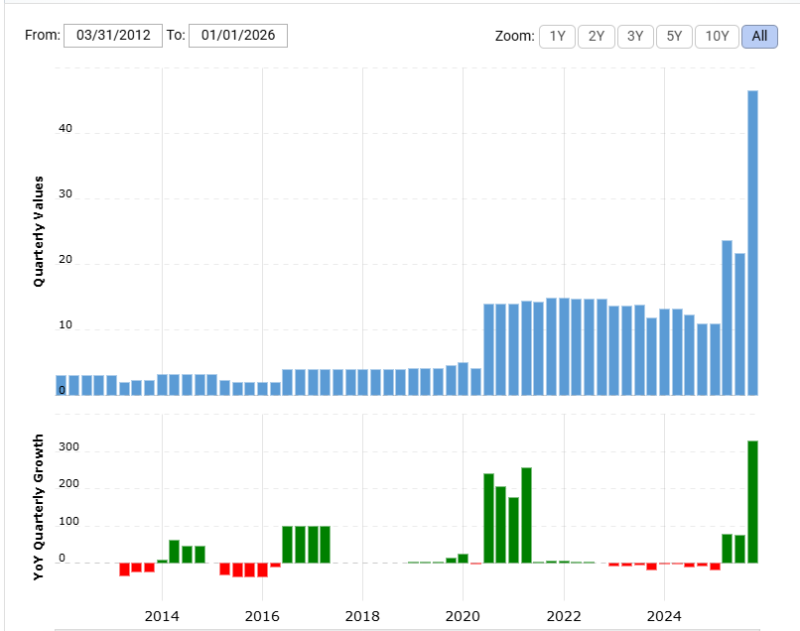
The chart shows how dramatically Alphabet’s cash generation has scaled over time. In the early 2010s, quarterly figures were in the low single-digit billions. By the early 2020s, they moved into the $13–15 billion range, and more recently, they have surged above $20 billion, with the latest spikes approaching $40–45 billion in a single quarter, as reflected in Alphabet’s financial data.
That trajectory is critical. It shows that Alphabet is generating more cash than ever before, meaning the bond sale is not driven by necessity. Instead, the company is choosing to raise external capital while maintaining its internal liquidity.
Borrowing, in this context, is not a sign of weakness. It is a way to preserve flexibility, avoid drawing down cash reserves, and optimize how capital is used over time.
Why Investors Are Willing to Lend
The second part of the explanation comes from the market itself.
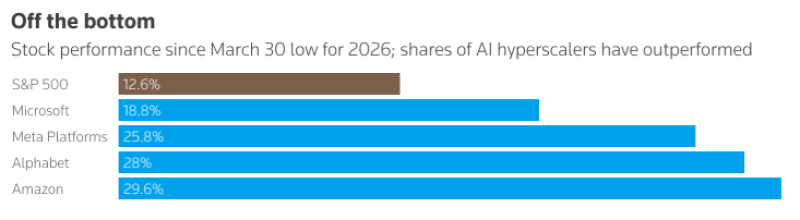
Since the March 2026 market lows, Alphabet shares have risen by around 28%, significantly outperforming the S&P 500’s ~12.6% gain over the same period. Other major tech companies show similar strength, with Amazon up nearly 29.6%, Meta around 25.8%, and Microsoft close to 18.8%, according to recent market performance data.
This outperformance reflects strong investor confidence. When equity markets reward a company, it reinforces its position as a high-quality borrower. For institutional investors, bonds issued by companies like Alphabet offer a combination of stability and yield, making them highly attractive.
That demand is what enables large-scale deals like a €9 billion bond issuance.
Why Europe Matters
The choice of Europe as the issuance venue adds another layer to the strategy. By issuing euro-denominated bonds, Alphabet gains access to a broader and more diversified investor base. European debt markets often provide different pricing dynamics compared to the U.S., and large issuers use this to optimize funding conditions. Currency diversification also plays a role, allowing companies to balance exposure and financing across global markets.

Why Now?
Timing is rarely accidental in large bond deals. Companies with strong credit profiles tend to issue debt when market conditions are favorable and investor demand is high. This allows them to secure capital on better terms rather than waiting for funding to become necessary. In this case, strong stock performance and stable financials create the ideal window for issuance.
 Marina Lubimova