Marina Lubimova

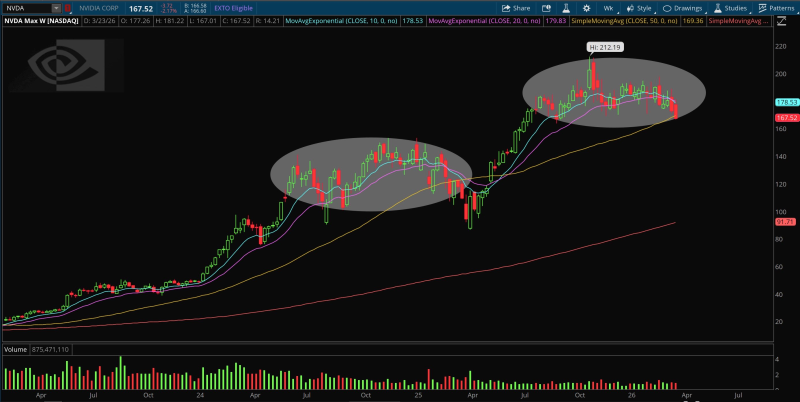
The current move in NVDA stock reflects a structure similar to April 2025, when the stock experienced a sharp correction before eventually bottoming. As Za noted, market fears at that time included concerns about a bull market peak, breakdown from consolidation, and weakening momentum across key moving averages - yet the decline did not mark a permanent top.
A NVDA Structure That Has Appeared Before
The weekly chart shows NVDA forming a rounded consolidation after a strong upward move. This type of structure was also visible in April 2025, when similar sentiment dominated market narratives. At that time, the stock broke below short-term moving averages, faced concerns around a potential long-term top, and entered a multi-month corrective phase.
The current setup echoes April 2025 in structure and sentiment - but the previous cycle demonstrated that a sharp correction does not automatically confirm a long-term top.
The current setup echoes that environment, with price now trading below recent highs and showing signs of short-term weakness.
Comparing the Magnitude of NVDA's Pullback
One key difference lies in the scale of the decline so far. In April 2025, NVDA dropped approximately 42% before finding a bottom. The current pullback is significantly smaller at around 22% from the recent peak.
If a similar 42% correction were to unfold again, it would imply a move toward approximately $122 - a level that would represent a notably lower valuation relative to fundamentals. That scenario remains possible but is not yet confirmed by the current structure.
Not Necessarily a Final NVDA Top
Despite the similarity in structure, the previous cycle demonstrated that a sharp correction does not automatically confirm a long-term top. It can represent a temporary phase of volatility within a broader trend rather than the beginning of a sustained breakdown.
Short- to medium-term downside and continued volatility remain plausible based on the current setup. However, the comparison to April 2025 cuts both ways - the same pattern that raised top concerns last time ultimately resolved higher, suggesting that even a deeper pullback from current levels would not necessarily signal the end of Nvidia's longer-term trend.
 Marina Lubimova