Peter Smith
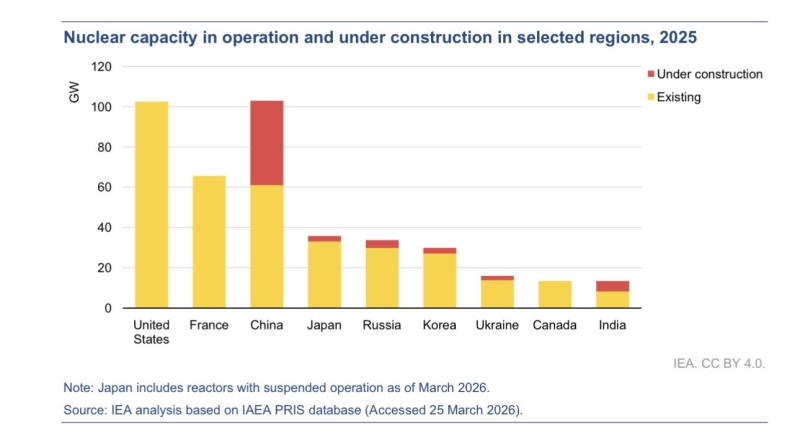
In 2025 the global energy system arrived at multiple specific points of achievement, as the IEA Global Energy Review 2026 & DA Sails report. For nuclear power, the total generation is 2 858 TWh, which is the highest amount to date. By now 78 GW of nuclear capacity is being built across the world, which is the largest collection of active projects in three decades.
Renewables Surge While Nuclear Rebounds
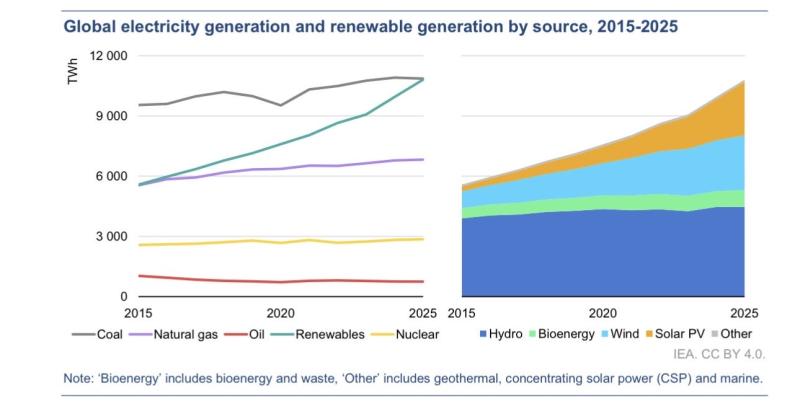
As solar PV technology expands, it provided an additional 600 TWh, which is the largest single year increase in history. Because of this growth, low emissions sources are responsible for approximately 60 % of the increase in demand. With a 40 % rise from the previous year, battery storage reached 108 GW and is the technology in the power sector that grows most quickly.
- NUCLEAR hit all-time high generation in 2025. 2,858 TWh, up 1.2% YoY
- Solar PV added 600 TWh. Largest single-year generation increase ever recorded
But emissions are still at a high level even with this progress. When global CO₂ was measured, it was at a record 38.4 Gt, although the rate of growth is slower at 0.4%. For the first time since 2019, if the COVID period is excluded, the generation of power from coal is lower. In the EU, the combined share of solar and wind power is 30 %, which is a larger portion than fossil fuels.
Why Energy Prices Are Still Rising?
To understand energy prices, it is necessary to see that costs for consumers are still high. It is true that prices are a reflection of more than just generation. There are also requirements for grid improvements, storage, backup capacity and the costs of financing. In many markets prices are determined by gas because it is more expensive and used during times when demand is at its peak, according to the energy market outlook.
And while clean energy is less expensive to produce, the entire system is more complicated and has higher costs while the transition occurs. On the current trajectory, the transition is rapid but not uniform. If renewables grow and nuclear power is used more, fossil fuels are less common but the financial responsibility is still held by consumers.
 Peter Smith