Marina Lubimova
The move is being linked to everything from Middle East tensions to Federal Reserve policy. Yet major currency trends rarely emerge from a single catalyst. More often, they appear when several forces begin reinforcing each other. The current rally is a textbook example.
Rate Expectations Move First
Currencies respond less to today's interest rates than to expectations about tomorrow's. That shift is visible in Fed pricing. Markets currently see a 63.7% probability that the Federal Reserve keeps rates in the 3.50%-3.75% range at the July meeting, while a 36.3% probability is assigned to a move toward 3.75%-4.00%.
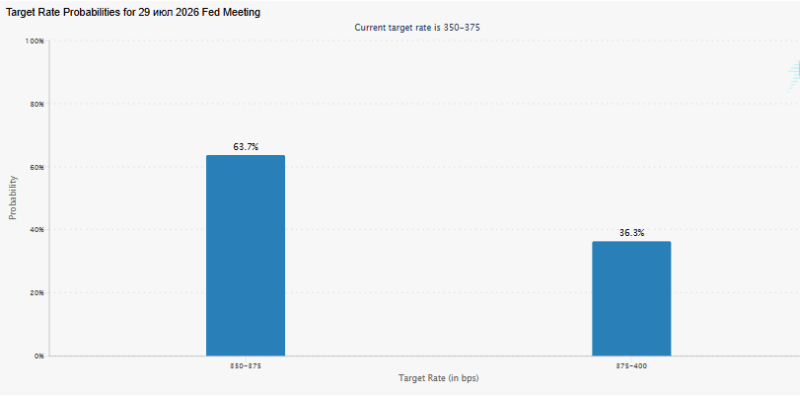
Market-implied probabilities for the July Federal Reserve meeting. The significance is straightforward: investors are no longer focused on rate cuts. They are debating whether policy may need to become even tighter. That change alone is enough to support the dollar.
Treasury Markets Are Echoing The Same Message
The bond market is reaching a similar conclusion. As expectations for higher rates strengthen, Treasury yields tend to rise as well. Higher yields increase the relative appeal of U.S. assets, particularly when many other developed economies are growing more slowly and maintaining lower interest rates.
This is where the current dollar rally differs from a typical risk-off move. The greenback is not merely benefiting from caution - it is benefiting from return.
Uncertainty Adds Another Layer Of Demand
The second force behind the rally comes from geopolitics. Ongoing uncertainty surrounding U.S.-Iran negotiations and broader Middle East developments has increased demand for defensive assets. In global markets, the dollar remains one of the primary destinations when investors seek liquidity and stability.
That creates an unusual combination. The dollar is attracting capital from investors looking for safety and from those responding to higher yields. Both flows are moving in the same direction.
The Story Is Also About Other Currencies
A stronger dollar usually means weaker alternatives. The euro recently fell to around $1.1414, its lowest level since March. Concerns about European growth and persistent inflation continue to complicate the outlook for policymakers, leaving the single currency without a clear catalyst.
The Japanese yen remains under pressure as well, trading near levels that have repeatedly triggered discussion about potential intervention from Japanese authorities. The dollar's rise therefore reflects both domestic strength and external weakness. The euro has steadily lost ground as U.S. growth and rate expectations outpaced those in Europe.
The Break Above 101 Matters
Market narratives eventually need confirmation from price action. The Dollar Index reached approximately 101.24 during Tuesday trading, the strongest reading since May 2025. More importantly, the move pushed the index through the 101 level, a threshold that traders had been watching for months.
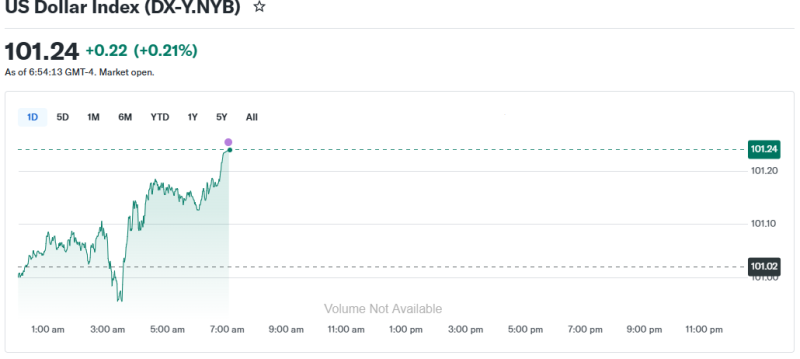
The Dollar Index climbs to its highest level in more than a year. The breakout does not explain the rally, but it confirms that the forces supporting the dollar are strong enough to overcome previous resistance.
What Happens Next
The current trend rests on three pillars:
- Expectations that U.S. rates will remain elevated.
- Treasury yields that continue to offer attractive returns.
- Geopolitical uncertainty that supports demand for safe assets.
As long as those conditions persist, the dollar is likely to remain well supported. The risk is that one of those pillars weakens. Softer economic data, easing geopolitical tensions, or a shift in Federal Reserve expectations could reduce the momentum behind the rally.
 Marina Lubimova