Artem Voloskovets

Rather than signaling a change in monetary policy, the transactions point to routine balance-sheet management, with new data showing that Treasury bills accounted for most of the weekly increase in the Fed's securities portfolio.
Treasury Bill Yields Have Found a Floor
The interest-rate backdrop helps explain why short-term securities remain an efficient tool for liquidity management.
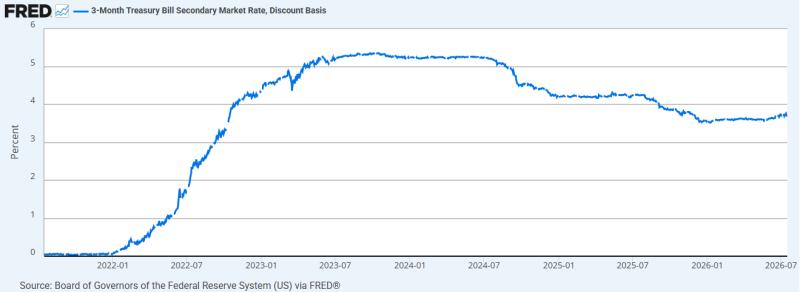
The 3-month Treasury bill rate, which climbed above 5.2% during the Fed's tightening cycle in 2023, has eased steadily over the past year. According to FRED data, yields declined to roughly 3.5% at the beginning of 2026 before edging back to approximately 3.6–3.7% in July.
That pattern suggests markets have largely adjusted to expectations of lower policy rates while short-dated Treasuries continue to provide relatively attractive yields with minimal duration risk.
Weekly Balance Sheet Changes Favor Bills
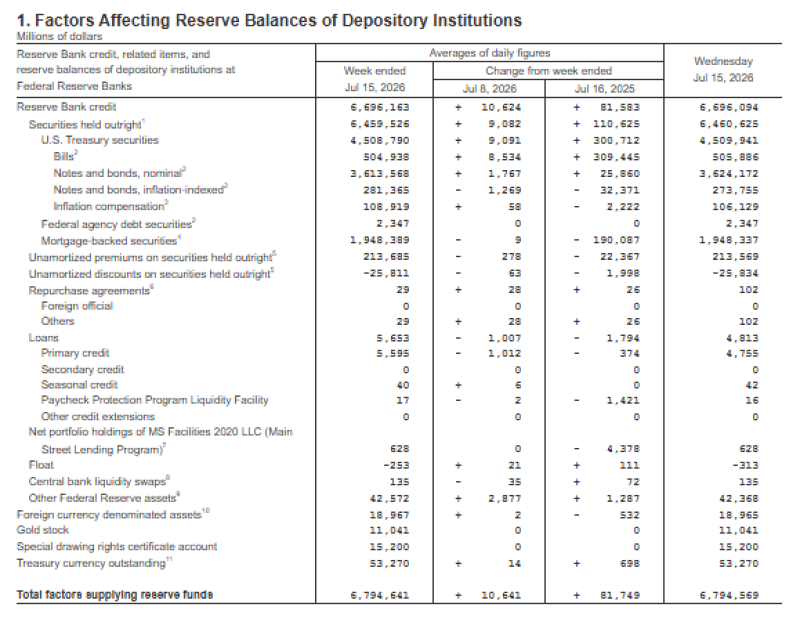
The Fed's weekly H.4.1 report shows that the balance-sheet changes mirror the latest Treasury bill operations. For the week ending July 15, Reserve Bank Credit increased by about $10.6 billion, while total Treasury securities holdings rose roughly $9.1 billion.
Most of that increase came from Treasury bills, which expanded by approximately $8.5 billion. At the same time, holdings of Treasury notes fell by about $1.8 billion, and inflation-indexed securities declined modestly.
The figures indicate that the central bank added liquidity primarily through the shortest segment of the Treasury market rather than extending the maturity profile of its portfolio.
Shorter Maturities Continue to Dominate
The Fed's bids also reflect that preference. Demand reached $5.6 billion for 3-month bills versus $4.8 billion for 6-month securities, leaving a modest $800 million gap in favor of the shorter maturity.
Although the difference is not large enough to imply a policy signal, it is consistent with a portfolio strategy centered on flexibility. Securities that mature within three months return cash more quickly, allowing reinvestment decisions to be adjusted as market conditions evolve.
Taken together, the auction data and the H.4.1 report suggest the latest Treasury bill purchases are part of an ongoing effort to maintain liquidity while keeping the average maturity of the Fed's holdings relatively short.
A Technical Adjustment, Not a Policy Message
The combined $10.4 billion in Treasury bill bids represents only a small portion of the overall U.S. government debt market. Their significance lies less in their size than in where they fit within the Fed's balance-sheet strategy.
With short-term yields stabilizing near 3.6% and weekly data showing that Treasury bills accounted for nearly all of the increase in government securities holdings, the latest operations point to continued emphasis on liquidity management rather than a shift in the outlook for interest rates.
 Artem Voloskovets