Alex Dudov

The U.S. Treasury is preparing to auction $125 billion in new government debt next week, placing renewed focus on investor demand, bond yields, and broader financial market liquidity at a time when markets remain highly sensitive to interest rate expectations and fiscal deficits.
According to the Treasury’s latest schedule:
- $58 billion in 3-year notes will be auctioned on May 11;
- $42 billion in 10-year notes will be auctioned on May 12;
- $25 billion in 30-year bonds will be auctioned on May 13.
Together, the offerings represent one of the market’s most closely watched supply events this month, particularly as investors continue debating the future path of Federal Reserve policy and long-term U.S. borrowing costs.
Why the Auctions Matter
Treasury auctions are more than routine government financing operations. They function as real-time stress tests for global demand for U.S. debt.
Strong auction demand typically helps stabilize Treasury yields and reassures markets that investors remain comfortable financing America’s expanding fiscal deficits. Weak demand, however, can trigger higher yields, tighter financial conditions, and increased volatility across equities, currencies, and credit markets.
The upcoming auctions arrive during a period when Treasury markets have become increasingly sensitive to supply dynamics.
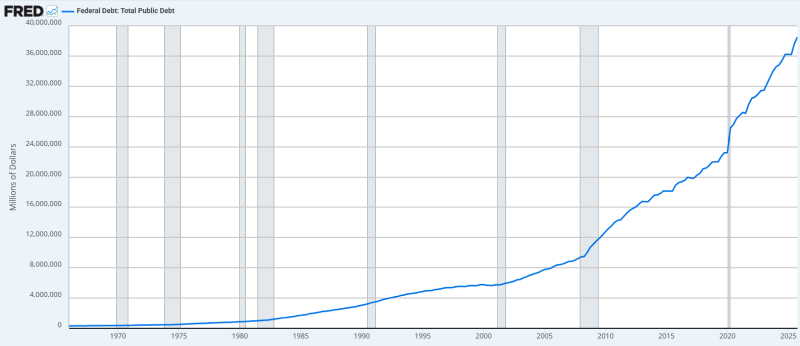
The U.S. government continues issuing large amounts of debt to finance elevated fiscal spending, while the Federal Reserve is simultaneously maintaining tighter monetary conditions and reducing portions of its balance sheet through quantitative tightening. That combination has forced private investors to absorb a larger share of Treasury issuance than in previous years.
The federal debt trajectory shown in the chart highlights why Treasury supply events are drawing increased market attention. Total public debt has continued climbing sharply over the past decade, intensifying focus on long-term borrowing costs and investor demand for government securities.
The 10-Year Yield Remains the Key Focus
Among the three offerings, the $42 billion 10-year note auction may attract the greatest market attention.
The 10-year Treasury yield serves as a global benchmark influencing:
- mortgage rates;
- corporate borrowing costs;
- equity valuations;
- commercial real estate financing;
- international capital flows.
As a result, even modest shifts in auction demand can ripple through nearly every major asset class.
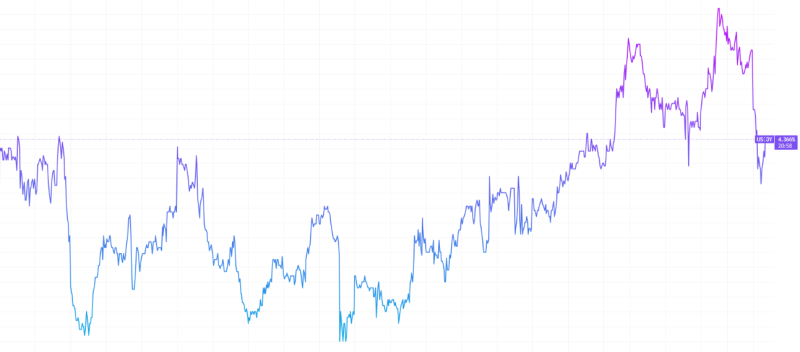
The recent rise and volatility in Treasury yields reflect how sensitive markets remain to inflation expectations, Federal Reserve policy, and growing government borrowing needs. Higher yields have already tightened financial conditions across housing, credit, and equity markets over the past year.
If investor appetite for the 10-year note remains strong, yields could stabilize or move lower, easing pressure on growth stocks and interest-rate-sensitive sectors. Weak demand, however, could reinforce concerns that markets may require structurally higher yields to absorb growing government debt issuance.
Long-Term Bonds Could Reveal Investor Confidence
The $25 billion 30-year bond auction may provide additional insight into how investors view long-term inflation and fiscal sustainability risks. Long-duration Treasuries have faced increased volatility over the past two years as markets reassessed the outlook for:
- inflation persistence;
- long-run interest rates;
- federal deficits;
- future Treasury supply growth.
Strong demand for the 30-year bond would suggest that institutional investors, pension funds, and foreign buyers remain comfortable locking in long-term yields despite fiscal uncertainty. A weaker result could reignite concerns about the long end of the Treasury curve and pressure yields higher.
Markets Are Watching the Yield Curve Closely
Another major focus will be the shape of the Treasury yield curve, which investors closely monitor for signals about growth expectations, recession risks, and future Federal Reserve policy.
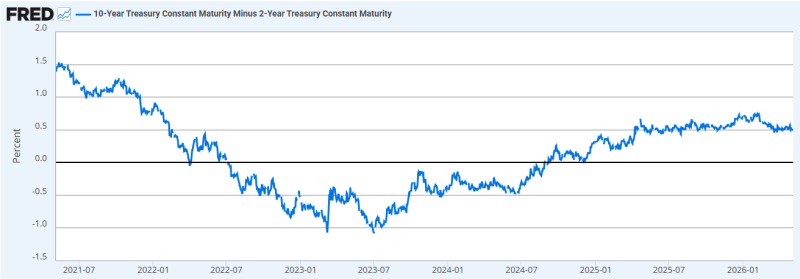
The spread between 10-year and 2-year Treasury yields has recovered from deeply inverted levels seen during previous tightening phases, suggesting markets are increasingly pricing in a higher-growth, higher-rate environment rather than an immediate recession scenario.
At the same time, money market funds, pension managers, sovereign wealth funds, and large institutional investors continue searching for relatively safe yield opportunities amid ongoing macroeconomic uncertainty.
The Auctions Could Shape Broader Market Sentiment
The timing of the auctions is especially important because markets remain caught between two competing narratives:
- expectations for eventual Fed rate cuts;
- concerns that stronger economic growth and persistent deficits could keep yields elevated for longer.
That tension has created heightened sensitivity around Treasury supply events.
If demand remains solid across the 3-year, 10-year, and 30-year auctions, markets may interpret the results as a sign that global liquidity conditions remain relatively stable despite rising debt issuance. If demand disappoints, however, Treasury yields could move sharply higher - potentially pressuring equities, credit markets, and risk assets globally.
 Alex Dudov