Sergey Diakov

Oil markets are sending a mixed but telling signal as the Brent futures curve stays in backwardation, even as its shape softens compared to a month ago. Daniel Lacalle highlighted that the structure reflects short-term tightness alongside a broader loss of strength across both the front and back of the curve.
Brent Crude Curve Still Points to Near-Term Pressure
The chart shows a clear backwardated structure, where front-month contracts trade above longer-dated ones. This configuration typically signals immediate supply tightness, with market participants paying a premium for near-term delivery.
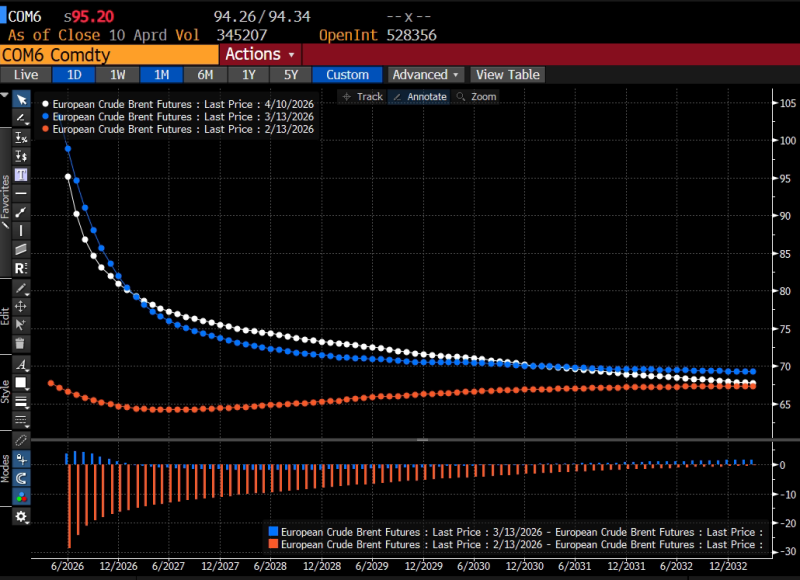
Visually, the curve slopes downward from higher front-end prices toward lower levels further out on the timeline. This indicates that current conditions are tighter than what the market expects in the future.
The structure reflects short-term tightness alongside a broader loss of strength across both the front and back of the curve.
At the same time, the backwardation itself is not new - the key development lies in how the curve has shifted.
A Noticeable Loss of Strength Across Brent Maturities
Compared to prior snapshots, both the front end and the back end of the curve have declined. This is a critical detail: the change is not isolated to one part of the curve but affects the entire structure.
The front has lost part of its premium, while the longer-dated contracts have also edged lower. This broad-based softening suggests that the strength previously embedded in the curve has weakened.
The recent rise in oil prices appears tied to temporary factors rather than a structural shift.
That shift supports the idea that the market is adjusting rather than reinforcing a strong bullish structure. Similar themes appear in Oil's real ceiling may sit near $385-$560 when adjusted for money supply, where structural limits continue to shape expectations beyond short-term price moves.
What Brent Oil's Curve Structure Implies About Recent Moves
The combination of persistent backwardation and declining prices across maturities points to a market driven more by short-term dynamics than long-term conviction.
The curve still shows tightness, but the reduced slope indicates that the intensity of that signal is fading. Supply dynamics also play a central role, as explored in WTI oil inventories jump 6.9M barrels to highest level since June 2024, where inventory builds are reshaping market expectations across the broader energy complex.
 Sergey Diakov