Peter Smith

As conflict in Iran continues, energy prices rise besides Goldman Sachs Research expects that those costs will burden the manufacturing sector in Europe.
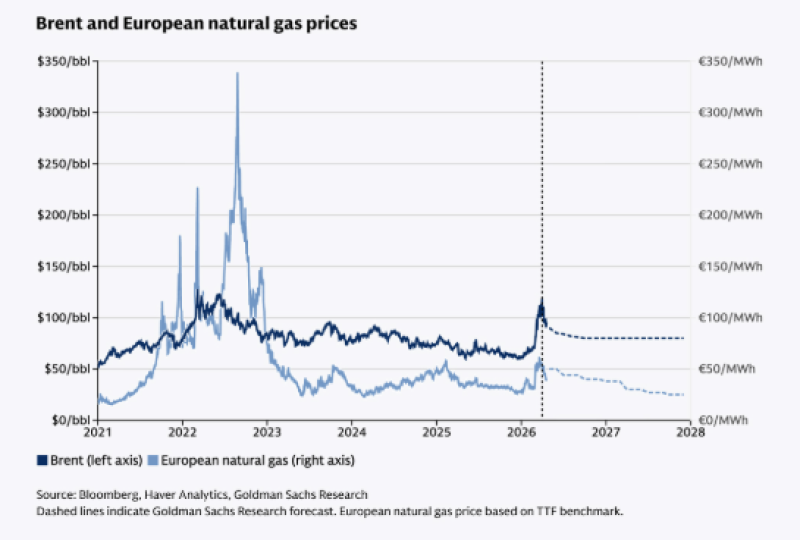
There is pressure on energy intensive industries across the region because Brent crude or European natural gas are more expensive, which makes input materials cost more. If the recent price increases are significant, Goldman Sachs anticipates that they are not as large as the energy crisis of 2022 - 2023.
In that earlier period, Russia stopped sending large amounts of gas to Europe after the war in Ukraine began. When the gas stopped flowing through pipelines, gas prices reached record levels and this caused electricity to become much more expensive. For industries like chemicals, metals and manufacturing, the high costs were harmful. To be heavily dependent on Russian energy was the situation in Europe and this made the event sudden and unbalanced in its effects.
By contrast the current situation involves oil and affects the whole world. Because high prices are present in many regions, they are not only in Europe. And this means that manufacturers in Europe are at less of a disadvantage compared to others, even though their costs are higher.
But high prices for energy are still a difficulty for businesses. When costs are higher, they can lower profits, cause factories to produce less and make it harder for the sector to recover while demand is low.
On the whole Goldman Sachs expects that the results are negative but limited. To change this energy prices would need to increase further or stay high for a longer time than analysts expect.
 Peter Smith