Artem Voloskovets
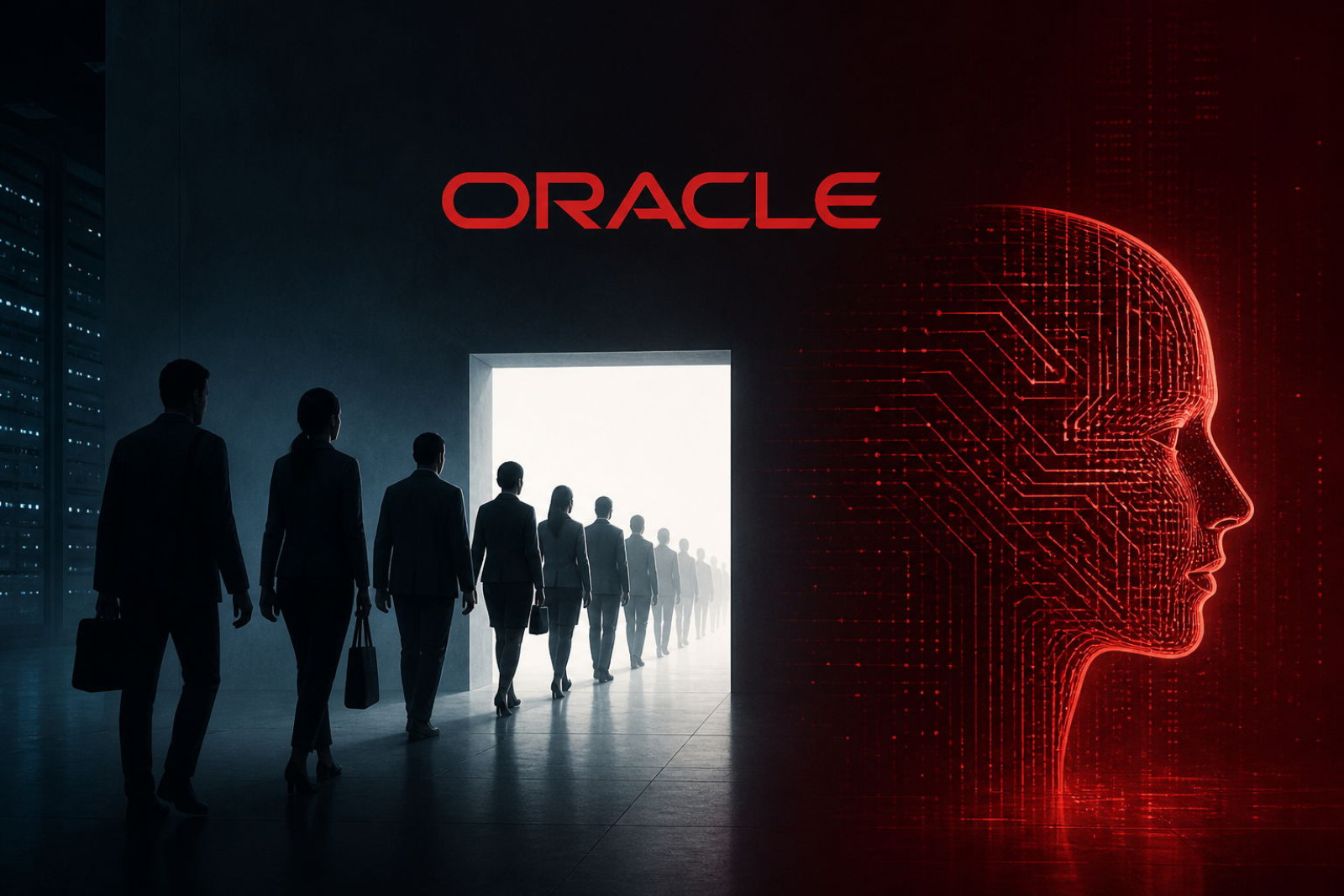
In the race to adopt artificial intelligence, most companies still present AI as a productivity tool. But what is unfolding inside Oracle suggests a more radical shift. The company is not just integrating AI into workflows - it is restructuring around it, even as it continues to invest heavily in cloud infrastructure and data centers that support large-scale AI deployment.
AI is no longer a tool - it is the workforce
The reported layoffs at Oracle point to a structural transition. AI is becoming the primary execution layer, while human roles are reduced around it. This aligns with Oracle’s broader push into enterprise AI, where automation is embedded directly into cloud services, databases, and business applications.
For years, companies used AI to improve efficiency. Now the logic is shifting toward replacement. Instead of optimizing human work, businesses are redesigning processes so that fewer humans are needed at all.

This changes how organizations scale. Growth is no longer tied to hiring, but to how effectively human expertise can be converted into machine-driven systems running on AI infrastructure.
Employees are becoming training data
According to TIME, many affected employees were directly involved in training AI systems. This highlights a critical and often overlooked mechanism behind modern AI adoption.
Employees are not only performing tasks - they are generating the data and decision logic that AI systems learn from. Once that knowledge is captured, structured, and deployed, the need for the human role diminishes.
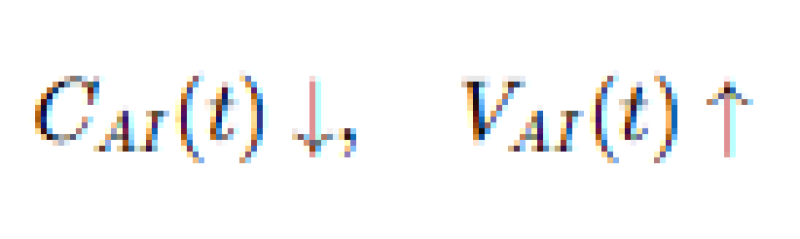
This dynamic is reinforced by economics. AI systems become cheaper to run over time while increasing in performance, especially when deployed at scale across enterprise environments like those Oracle is building. Unlike human labor, which scales linearly, AI creates compounding returns.
Insight
What Oracle is doing is not simply reducing headcount - it is redefining how work exists inside a company.
A job becomes a temporary phase: contribute knowledge, train the system, and then become redundant. This is fundamentally different from previous automation waves, where machines replaced repetitive tasks. Here, AI is capturing and replicating expertise itself.
At the same time, Oracle’s continued investment in AI infrastructure suggests this is not a short-term adjustment but a long-term strategy. The company is building the capacity to scale AI across its entire product ecosystem, from cloud computing to enterprise applications.
The implication is clear. In the AI economy, the most valuable employees may also be the most replaceable - because they are the ones best positioned to teach machines how to do their work. The question is no longer whether AI will replace jobs. The question is how many people are already training it to do exactly that.
 Artem Voloskovets