Marina Lubimova

- Oil Is Trading on Expectations, Not Supply
- Markets Are Betting on De-Escalation, Not Resolution
- Inflation Risk Has Been Repriced
- Bond Markets Adjusted Accordingly
- The Fed Still Faces an Uncomfortable Decision
- The Dollar Lost Its Safe-Haven Premium
- Not Every Economy Responds the Same Way
- The Market Has Priced Less Risk, Not More Certainty
The immediate reaction reflected more than relief over reduced military tensions. Markets began removing the geopolitical premium that had spread through commodities, bonds and currencies during the previous two weeks.
Oil Is Trading on Expectations, Not Supply
Brent crude fell 6.5% to around $90.45 per barrel, while West Texas Intermediate declined 6.73% to $83.30, with both benchmarks reaching their lowest levels since July 20 after Brent briefly traded above $100.
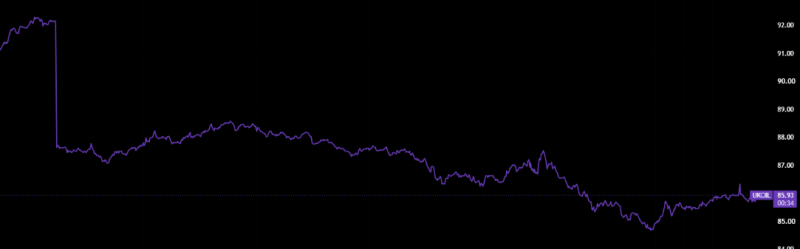
The decline occurred without any meaningful improvement in physical supply. Shipping data still showed fewer than ten commodity vessels passing through the Strait of Hormuz each day. Oil flows remained roughly 15% below pre-war levels, compared with a normal transit volume of about 20 million barrels per day of crude, condensate and refined products.
In other words, the market repriced the probability of future disruption rather than the current balance between supply and demand. That difference matters. Futures traders respond to changing expectations long before physical oil markets return to normal.
Markets Are Betting on De-Escalation, Not Resolution
The military pause reduced the likelihood of an immediate escalation but did little to resolve the conflict itself. There is no signed ceasefire, no verification mechanism and no political framework outlining what comes next. The only observable change is that both sides appear to have suspended attacks.
That has been enough for financial markets. PVM analyst John Evans noted that investors appear eager to interpret any pause as constructive, despite continued uncertainty surrounding regional security and energy exports.
The oil market tells the same story. Prices have fallen, while shipping activity remains heavily disrupted.
Inflation Risk Has Been Repriced
The reversal in crude immediately affected inflation expectations. Oil feeds directly into transportation, manufacturing, logistics and consumer energy costs. When Brent climbed above $100, investors began pricing the possibility that central banks would need to keep monetary policy tighter for longer.
The retreat toward $90 eased that concern. It does not eliminate inflation risks, but it reduces the chance that energy alone will force another round of policy tightening.
Bond Markets Adjusted Accordingly
The yield on the 10-year U.S. Treasury moved lower as investors reassessed both inflation risks and the likely path of interest rates.
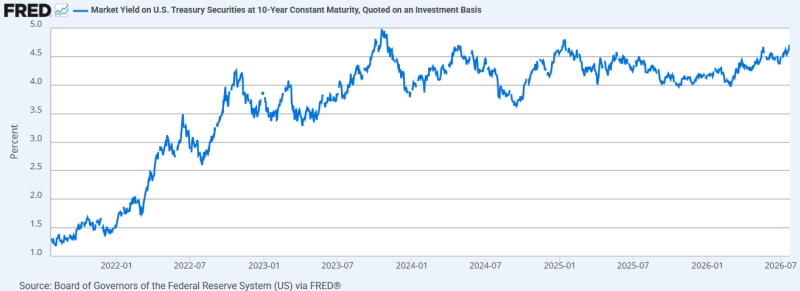
The longer-term picture is important. Even after the latest decline, the 10-year yield remains close to 4.6%, near the upper end of its range since 2022. Financial conditions therefore remain restrictive, and markets are far from pricing an aggressive easing cycle.
Instead, investors have removed part of the additional premium created by the recent surge in oil prices.

The Fed Still Faces an Uncomfortable Decision
The oil rally had already begun influencing expectations for Federal Reserve policy. Fed funds futures were pricing roughly a one-in-three probability of a 25-basis-point rate increase, compared with about 16% only a week earlier.
The latest decline in oil weakens the argument for further tightening but does not eliminate it. The Fed must determine whether the energy shock represents temporary geopolitical volatility or the beginning of another inflation cycle. That distinction will likely shape both its policy statement and Chair Jerome Powell's guidance.
The same uncertainty applies to the Bank of England, where policymakers continue balancing slowing economic activity against persistent inflation risks.
The Dollar Lost Its Safe-Haven Premium
The U.S. dollar also retreated as investors reduced demand for defensive assets. During periods of geopolitical stress, the dollar benefits from both safe-haven inflows and expectations of higher U.S. interest rates. The Iran pause weakened both drivers simultaneously.
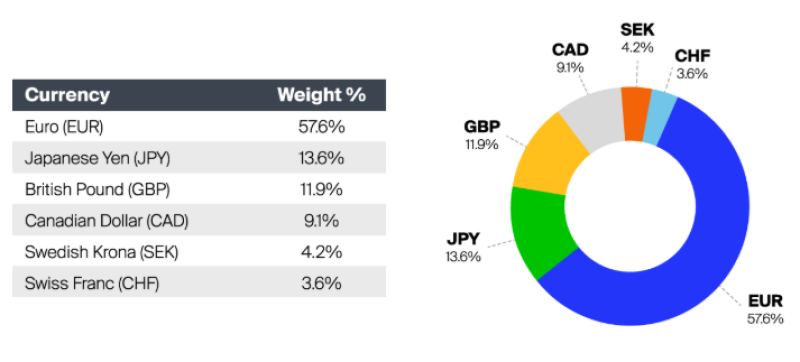
The structure of the Dollar Index helps explain why movements in Europe also matter. More than half of DXY consists of the euro (57.6%), followed by the Japanese yen (13.6%) and the British pound (11.9%).
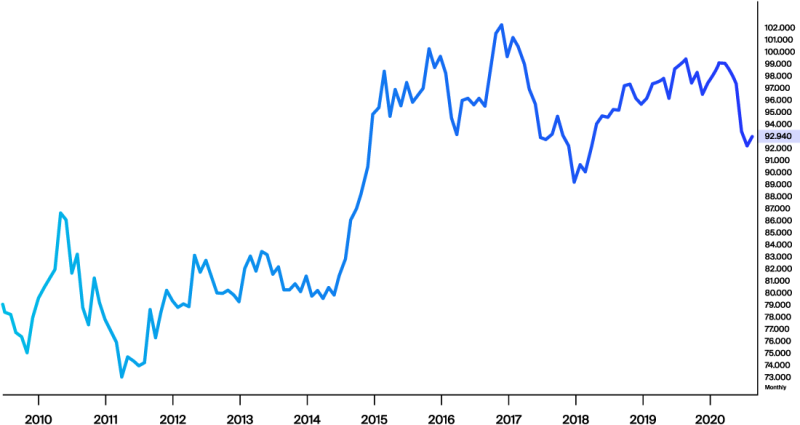
Because of that weighting, changes in European growth and monetary policy often influence the index almost as much as developments inside the United States.
Not Every Economy Responds the Same Way
Lower oil prices affect countries differently. For energy-importing economies, cheaper crude reduces inflationary pressure and supports consumer spending. For exporters, the picture is more complicated. Lower prices reduce export revenues, although easing geopolitical tensions can improve trade flows and reduce shipping risks.
Currency markets reflected those differences. Sterling recovered from recent lows as inflation concerns eased, while the Norwegian krone strengthened on expectations that improved market stability would offset part of the decline in oil prices. Japan remained an outlier. With the yen still trading near four-decade lows, the Bank of Japan continues to face pressure despite the broader improvement in market sentiment.
The Market Has Priced Less Risk, Not More Certainty
Recent price action reflects one conclusion: investors see a lower probability of further escalation than they did a week ago. That does not mean the underlying risks have disappeared. Brent remains elevated relative to its pre-conflict level. Shipping through Hormuz is still far below normal. Expectations for another Fed rate increase remain significantly higher than they were before oil surged.
Financial markets have removed part of the geopolitical premium, but the physical energy market has yet to confirm that the crisis is over.
Whether this repricing proves durable will depend less on political headlines than on three measurable indicators: the recovery of shipping through the Strait of Hormuz, the ability of Brent to remain below $90 per barrel, and whether central banks begin treating the recent energy shock as temporary rather than inflationary.
 Marina Lubimova